Get Full Government Meeting Transcripts, Videos, & Alerts Forever!
Get email alerts on the Elementary Teaming Model topic
No spam. Unsubscribe anytime.
Vail Farm Elementary adopts 4th–5th grade teaming model; school reports early gains in math and attendance
Summary
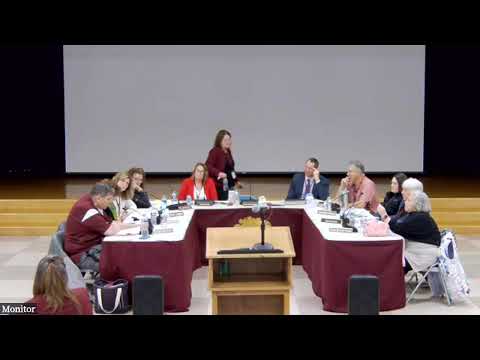
Vail Farm Elementary School Principal Claudia Kerr told the Arlington Central School District Board of Education that the school has implemented a teaming model for grades 4 and 5 intended to increase collaboration among teachers, personalize instruction and expand opportunities for students.
Vail Farm Elementary School Principal Claudia Kerr told the Arlington Central School District Board of Education that the school has implemented a teaming model for grades 4 and 5 intended to increase collaboration among teachers, personalize instruction and expand opportunities for students.
Kerr described the model’s structure: each grade is split into two teams (Maroon and Gold); students start and end each day in a homeroom and then travel together to subject‑specific classrooms; co‑teachers (general and special education) remain with the same group of students throughout the day; and a daily 40‑minute enrichment/intervention block uses dynamic grouping so students move to the teacher or classroom that matches their needs. Kerr said the district is using a consultant, Erica from the GNR Inclusive Group, and that the district has scheduled six site visits by the consultant this year.
“The goal is really simple, deeper learning,” Kerr said, summarizing the intention behind the change.
Kerr told the board the model is designed to promote equitable practices by enabling teams to share student knowledge and to provide targeted interventions. Teachers use frequent formative assessment data to regroup students; Kerr showed a sample weekly template used by a Grade 5 team to organize intervention and enrichment groups, and described how a formative assessment on order of operations produced four targeted groups that the team then addressed during the intervention block.
Kerr presented two early data points the school is tracking: a rise in the overall average on math summative unit assessments compared with 2023–24, and a change in chronic absenteeism for a small cohort. She said that of the 18 grade‑4/5 students who were chronically absent in 2023–24 (defined in the district as 18 or more absences), 13 “are no longer on track to be chronically absent” this year. Kerr emphasized the school will collect additional data before drawing firm conclusions.
Board members raised implementation and equity questions during a 30‑minute discussion. Eileen Snook asked how special education teachers were adjusting to co‑teaching across multiple general‑education partners; Kerr said special education staff were initially reluctant when the idea was introduced but that the district’s consultant is supporting co‑teachers in regular, daily collaboration so they can align roles and share responsibilities. Kerr told the board that special education teachers remain with the same student group throughout the day, which she said helps preserve continuity for students with IEPs.
Mark Thornethorn and several other board members asked about logistics and movement between classrooms. Kerr said teams are located close together in the building to reduce travel time and that teachers and teams have developed organizational routines (some teams use carry bags or binders) so students take only required materials to the next space. Jeff Tate asked whether having multiple teachers helps staff identify students’ learning styles; Kerr said daily collaboration supports that sharing of observations and strategies.
Kerr also described classroom design and resources: 4th grade received funds for flexible‑space furniture this year; other grades repurposed existing furniture to meet team needs. She said teachers are using Performance Matters and I‑Ready diagnostics along with formative assessments to guide grouping decisions.
Kerr closed by saying the model aims to build stronger teacher collaboration and more frequent, targeted instruction for students. She said Vail Farm will continue to gather benchmarks and parent feedback and will debrief with teachers after parent‑teacher conferences to refine scheduling and practices.
The presentation prompted substantive discussion but no formal board action; the board did not vote on the teaming model at this meeting.