Get Full Government Meeting Transcripts, Videos, & Alerts Forever!
Get email alerts on the Student Surveys topic
No spam. Unsubscribe anytime.
Wake County board adopts opt‑out permission for student health surveys after student appeals
Summary
After hours of student testimony, the Wake County Board of Education approved an opt‑out (passive permission) approach for the Youth Risk Behavior Survey and related tobacco survey as part of the meeting’s consent agenda.
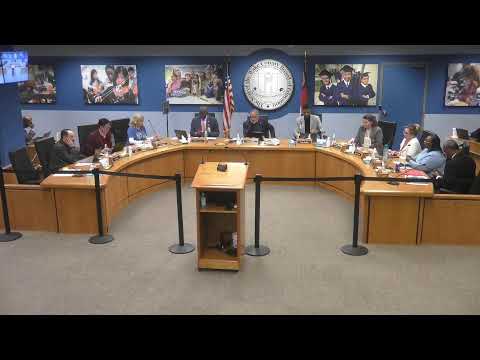
At its Jan. 7 meeting, the Wake County Board of Education approved a change to the district’s permission approach for school‑administered health surveys, adopting a passive permission (opt‑out) model for the Youth Risk Behavior Survey (YRBS) and related Youth Tobacco Survey (YTS) as part of the consent agenda.
The vote was taken as part of the meeting’s consent agenda, which board members adopted by voice vote after a motion by Board member Mahaffey and a second from Vice Chair Swanson. Chair Hegarty announced the consent agenda passed with no recorded opposition.
The decision follows repeated public testimony from high school students and community health advocates urging the board to move from an active (opt‑in) policy to passive (opt‑out) permission for the YRBS and YTS. Students told the board the current opt‑in system has resulted in low participation and therefore limited local data to guide school health programs.
"Tonight, I'm here to advocate for the adoption of passive permission or opt out policy when administrating the youth risk behavior survey, YRBS," said Arianna Armstrong, a senior at Knightdale High School and member of the Post Center's Youth Empowerment Teen and Teen Health Advisory Council.
Multiple student speakers and presenters said the opt‑in process — which requires parents to sign and return permission forms — has depressed participation. Kevin Ajmaline, a sophomore at Millbrook Magnet High School, told the board that Wake County has previously been designated as an oversample district but failed to reach the participation threshold needed for the Centers for Disease Control and Prevention (CDC) to provide weighted data. "Because Wake County District has not been able to obtain the standard requirement for participation, the CDC does not provide the county with weighted data," Ajmaline said.
Local public‑health presenters reinforced the message. Mikaela Hoenig, tobacco prevention and control coordinator for Wake County and a member of the School Health Advisory Council, told the board an opt‑out approach would raise participation and provide data needed to guide prevention programs and decisions about allocation of settlement or grant funds.
Board member Mahaffey noted the policy had already passed a first reading at an earlier meeting and that the item was placed on the consent agenda for final approval. The consent agenda, which included that policy change and other items, passed by voice vote.
Board members and presenters framed the change as a way to produce fuller local data so schools, nonprofits and county partners can better identify needs, apply for grants and measure program impacts. Several student speakers also said better data would enable schools and community organizations to respond earlier to mental‑health crises.
The board did not discuss text of the final administrative procedure in detail during the open session; the consent agenda motion bundled multiple items together and the vote recorded in the transcript was a voice vote on the full consent agenda rather than a roll‑call tally specific to the YRBS policy.
Speakers at the meeting urged clear communication to families about the nature of the surveys and how parents could opt out; Mikaela Hoenig said parents would continue to be able to opt their children out and that participation or nonparticipation would not affect students' education.
The board’s adoption means Wake County Public School System (WCPSS) will administer the YRBS/YTS under a passive permission model unless a separate administrative or legal step is later made public. Implementation questions — including the text of parent notifications, timelines and district outreach — were not specified in open session during the Jan. 7 meeting.
Votes at a glance: the consent agenda (which included the permission policy second reading) was moved by Mahaffey, seconded by Swanson, and approved by voice vote.
Why it matters: Local YRBS/YTS data are used by schools, the Post Center for Health Education and other community organizations to target prevention and services, seek grant funding and measure program effectiveness. Advocates at the meeting said Wake County’s prior permission approach limited the district’s ability to obtain the CDC’s weighted data set, which can affect grant competitiveness and program planning.
What’s next: The board approved the consent agenda; district staff will be responsible for carrying out the adopted administrative changes and for notifying families about the survey and opt‑out procedures as required. The transcript does not record further implementation details.