Get Full Government Meeting Transcripts, Videos, & Alerts Forever!
Get email alerts on the Famine Sudan topic
No spam. Unsubscribe anytime.
FAO tells U.N. Security Council famine has expanded in Sudan; urges immediate humanitarian access and emergency agricultural aid
Summary
A Food and Agriculture Organization representative told the U.N. Security Council that famine conditions in parts of Sudan have expanded, nearly 25 million people face acute food insecurity, and immediate humanitarian access plus emergency agricultural support are needed to avert further deaths and long-term collapse of livelihoods.
A Food and Agriculture Organization representative told the U.N. Security Council that famine conditions in parts of Sudan have expanded and nearly 25 million people now face acute food insecurity.
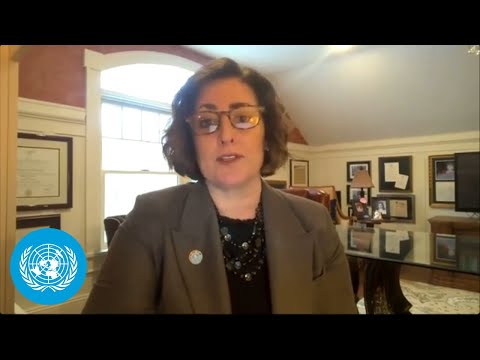
"The latest reports on food security are the worst in the country's history," the FAO representative said in a virtual briefing, calling for urgent political leverage to stop hostilities and for immediate, unimpeded humanitarian access.
The FAO presenter said the Integrated Food Security Phase Classification (IPC) analysis shows roughly 25,000,000 people facing acute food insecurity: about 15,900,000 in IPC 3 (crisis); 8,100,000 in IPC 4 (emergency); and just over 637,000 in IPC 5 (catastrophe). The briefing said famine was classified in August 2024 in Zamzam camp, North Darfur, and that famine conditions persisted and expanded through late 2024 into other sites in North Darfur and into the western Nuba Mountains in South Kordofan. The agency also said five additional areas were projected to face famine conditions and 17 areas had a confirmed risk of famine between last month and May 2025.
The FAO representative attributed the crisis primarily to sustained conflict and forced displacement, restricted humanitarian access, and economic disruption. The briefing said about 11,500,000 people have been internally displaced, that markets and staple prices have become unaffordable for many, and that nearly two-thirds of Sudan's population depend on agriculture. FAO reported production of the three primary cereal crops (sorghum, millet and wheat) at 4,100,000 tons for the 2023–24 season, a 46 percent reduction from the prior year; FAO said that production loss could have fed about 18,000,000 people for a year. The briefing also reported production declines for sesame, sunflower, groundnuts and cotton and cited erratic rains and security-driven disruptions to planted and harvested areas.
The FAO representative outlined three priority actions for the Security Council and member states: use political leverage to end hostilities and open access; ensure immediate and unimpeded humanitarian access and safe reopening of commercial supply routes; and deliver scaled, multisectoral humanitarian assistance that includes emergency agricultural support so farmers and herders can recover local production. "When farmers can access land and inputs, they will produce food," the representative said, adding that agricultural support is a cost-effective, sustainable way to meet immediate needs while helping rebuild.
FAO described recent agricultural interventions: more than 2,700,000 people in 11 states received over 5,000 tonnes of sorghum and millet seed (with okra seeds for IDP camps prioritized), and nearly 600,000 agro‑pastoral households benefited from livestock vaccinations, feed and veterinary services. FAO said it aims to scale up to reach more than 14,000,000 people in the coming year but noted funding gaps and heightened security risks for transport hinder access to vulnerable communities and limit timely action in the agricultural calendar.
The representative warned that failing to act now risks deepening food insecurity and long‑term damage to livelihoods, health systems and social structures. The briefing also referenced the Security Council's role under Resolution 2417 and echoed calls from U.N. partners — OCHA, WFP and UNICEF — for immediate access.
The Security Council presidency thanked the FAO representative for the briefing. No formal Council decision or vote was recorded in the transcript.