Get Full Government Meeting Transcripts, Videos, & Alerts Forever!
Get email alerts on the Pe Credit Club Sports Recess topic
No spam. Unsubscribe anytime.
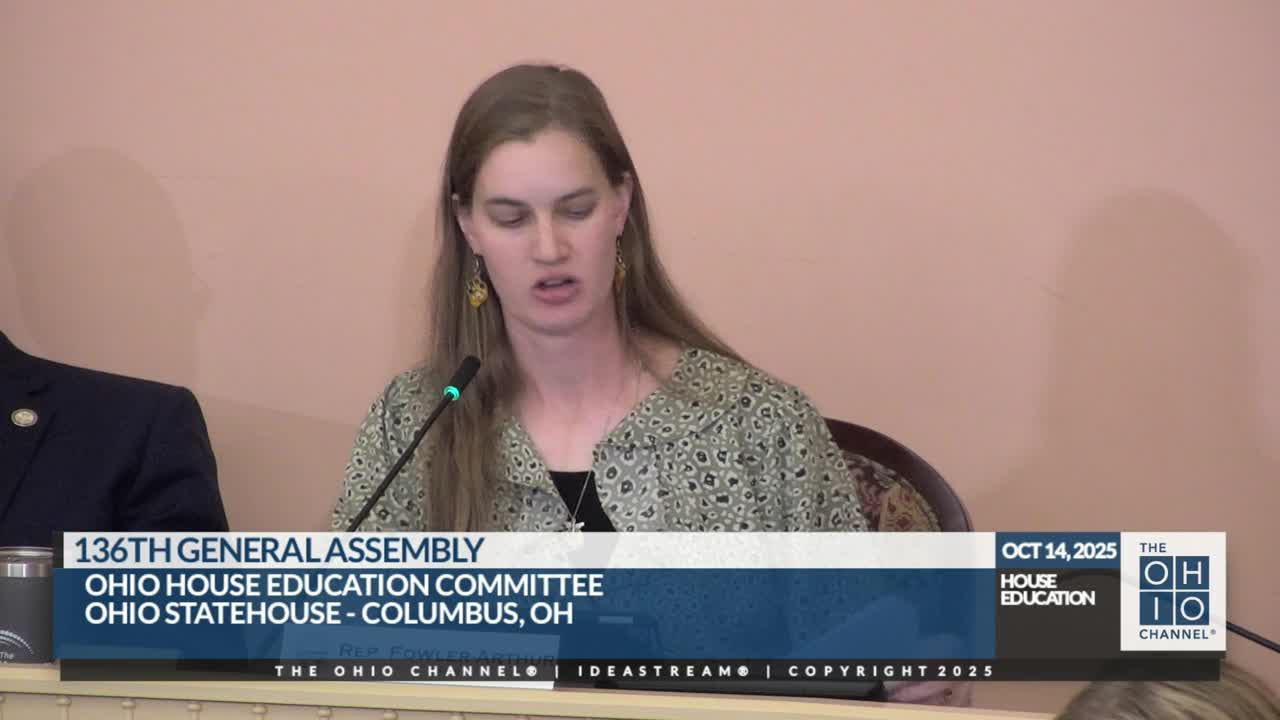
Committee hears bill to let club sports satisfy PE credit, mandate recess in K–8
Summary
The House Education Committee held a second hearing on House Bill 304, which would allow school districts to authorize organized club sports and other structured athletic activities to satisfy high-school physical-education (PE) requirements and would require K–8 schools to provide at least 60 minutes of recess daily.
The House Education Committee held a second hearing on House Bill 304, which would allow school districts to authorize organized club sports and other structured athletic activities to satisfy high-school physical-education (PE) requirements and would require K–8 schools to provide at least 60 minutes of recess daily.
Rachel Schlaghek, a sophomore at Centerville High School, testified in favor of the bill and described her travel-intensive schedule as a competitive hockey player. Schlaghek said club training sometimes keeps her out of school until after 11 p.m. and that counting club sport training toward PE would help her balance coursework and athletics. "If my hockey training counts towards PE, it won't have I won't have to squeeze in separate gym classes or risk missing instructional time in other subjects," she told the committee.
Kate Wallace, a second-year student at The Ohio State University and former Centerville student-body representative, told committee members the bill would address an “inequality” between school-team athletes and club athletes who commit comparable time to training. She said PE waivers free up schedule space for AP and career-tech courses and gave examples of students spending 30 hours a week in club training.
Nut graf: Sponsors and proponent witnesses said HB 304 would give districts flexibility to recognize varied forms of structured physical activity, easing scheduling conflicts for students with intensive off-campus training while seeking to promote daily activity for younger students through the K–8 recess mandate.
Committee members asked how districts would guard against fraud or improper certification when outside coaches certify a student's training. Rachel Schlaghek said schools could require evidence such as coach signoffs, video of practice, or multiple attestations from trainers. The committee asked the Legislative Service Commission (LSC) to clarify definitions in the bill; an LSC staffer explained that the draft defines “club sports” as sports sanctioned by a school but not regulated by the interscholastic athletic organization or a youth-sports group, and that “other athletic activities” would mean organized activities taught outside of school.
Several lawmakers expressed particular concern about the K–8 recess requirement. Representative Manning, Representative Brennan and others said mandating 60 minutes (30 minutes morning, 30 minutes afternoon as in the draft language) could be difficult for some schools to schedule and asked whether districts should have flexibility to schedule the time or limit the mandate to younger grades. Witnesses acknowledged the scheduling concerns and suggested district-level flexibility could address local conditions.
LSC clarified that the bill's language is primarily focused on organized club sports (as defined in the bill) rather than parental attestations of ad hoc activity. Committee members requested additional information from sponsors and LSC about the bill's definitions, the mechanics for verifying outside activities, and operational impacts on school schedules.
Ending: The committee concluded the second hearing with no formal action. Sponsors and student witnesses said they would provide additional implementation details to assuage members' concerns about verification and scheduling.