Get Full Government Meeting Transcripts, Videos, & Alerts Forever!
Get email alerts on the Veterans Services topic
No spam. Unsubscribe anytime.
Bannock County veterans services coordinator seeks pay-grade increase and second service officer in budget request
Summary
Melissa Hartman, Bannock County Veterans Services coordinator, told the Board of Commissioners her office needs a higher pay grade for the coordinator position and a second veterans service officer to handle growing caseloads and administrative work; she supplied county figures on veterans served and VA benefits flowing into the local economy.
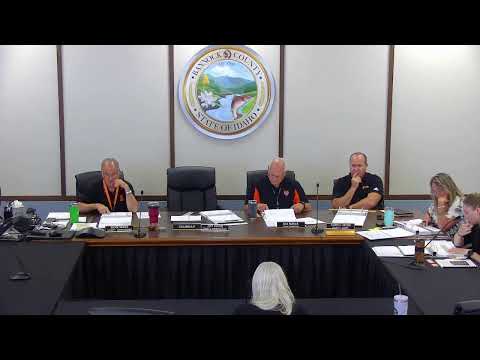
Melissa Hartman, Bannock County Veterans Services coordinator, asked the Bannock County Board of Commissioners to raise the pay grade for her position and to add a second veterans service officer as part of the county budget discussion. Hartman said the requests reflect the office’s caseload, specialized work and the economic impact of veterans’ benefits in the county.
Hartman told commissioners that Bannock County has 5,465 veterans and that 2,066 are enrolled in Veterans Affairs health care. She said her office maintains 2,426 active clients and cited U.S. Department of Veterans Affairs expenditure figures for fiscal year 2023 showing annual county-level flows of federal benefits: about $38,000,000 in compensation and pension payments, nearly $3,000,000 in education benefits, approximately $130,000 in life insurance payouts to beneficiaries and $31,000,958 in VA-covered medical expenses that she said supported local medical care in Pocatello and the VA community care program.
Hartman outlined workload and duties to justify the personnel requests. She said she met with more than 1,100 clients in February 2024, filed more than 461 claims and handled more than 1,900 phone contacts in that period. She described extensive subject-matter responsibilities, including knowledge of 38 CFR (the federal regulations governing VA benefits), participation in the Sixth District Veterans Treatment Court, and membership on multiple advisory committees and community events coordination. Hartman said those activities and casework mean the office is operating at capacity and that management and outreach tasks are not being completed at the level she considers necessary.
On compensation, Hartman said she initially requested a grade 14 but revised that request after consulting human resources and is now asking for a grade 12, step 4 for the coordinator position. She said current classification places the job at grade 10; she said HR’s recommendation was grade 11, step 5. Hartman said the difference between her requested grade 12, step 4 and HR’s suggested grade 11, step 5 would be roughly $1,000 a year in wages plus an estimated 40 percent additional cost for benefits.
On staffing, Hartman asked for a second full-time veterans service officer (VSO) rather than a second administrative assistant. She provided a time-use analysis to argue the office’s current staffing cannot absorb appointment time, case management, grant and partnership work, trainings and other program responsibilities. Hartman requested that the newly hired administrative assistant be reclassified from grade 5 to grade 6 (she had previously asked informally for grade 7 but clarified she meant one grade higher than the current 5).
Hartman also outlined operating-cost changes tied to an added employee: potential one-time laptop costs (she estimated $1,500 if provided through county IT, $3,500 if purchased separately), an ongoing software/connection budget of about $2,000 a year for three staff, a $3,000 increase to cover lodging and per diem for the Idaho Division of Veterans Services training if a third employee attends, $1,200 for memberships and online training (including a $65 annual membership to the National Association of County Veterans Service Officers for two employees and roughly $450 in training fees for two employees), and an estimated $600 increase in cellphone costs to provide county cell service to three staff. She also noted a reduction in copy-machine repair costs compared with last year due to a new contract, saving about $700.
Hartman said the state reimburses the county for per diem and mileage for one county employee to attend the state training, and she asked commissioners to confirm how reimbursements would be handled if a trainee attends under an outside veterans-service organization sponsorship (she cited AmVets Post 1 as an example). She did not request any immediate action at the meeting beyond inclusion of the positions and adjustments in the upcoming budget; no formal vote or decision was recorded during her presentation.
Hartman provided printed handouts to commissioners summarizing her data, job-family comparisons from county HR, a list of roughly 35 committees and programs her office supports or leads, and the line-item budget changes she proposed. She said she recently earned accreditation from the National Association of County Veterans Service Officers and that her work frequently intersects with county agencies including the coroner’s office, indigent services and the assessor.
The presentation closed with Hartman answering procedural questions about her paperwork and thanking commissioners for their time. The board did not take an immediate vote on the requests; the items will appear for consideration as part of the county’s budget process.