Get Full Government Meeting Transcripts, Videos, & Alerts Forever!
Get email alerts on the Public Art Site Selection topic
No spam. Unsubscribe anytime.
Public Arts panel defers storm-drain and utility-box art; asks staff for pedestrian-focused map
Summary
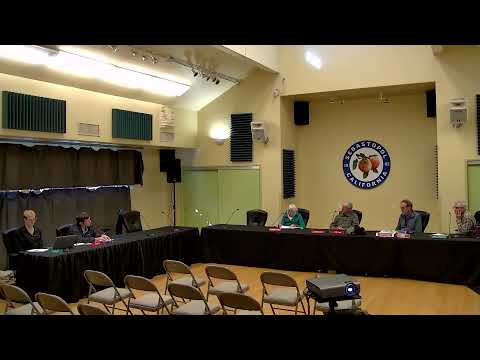
Sebastopol Public Arts Committee discussed storm-drain/manhole and utility-box artwork, debated murals vs. many small pieces, and directed city staff to produce a map of pedestrian-focused, non-Caltrans sites for review in March.
The Sebastopol Public Arts Committee discussed whether to pursue art on storm drains, manhole covers and utility boxes and asked city staff to prepare a map of pedestrian-focused, non-Caltrans sites for the committee’s March meeting.
The discussion on storm-drain and utility-box artwork centered on where public art would be most visible and how Caltrans ownership limits options along the city’s main thoroughfares. John (city staff member) said he and Eric from Public Works will work to produce a map that distinguishes city-owned, paintable assets from features in Caltrans right-of-way; he said he hopes to have a map for the March meeting.
Committee members argued that a small number of larger, highly visible murals could provide more long-term value than many small painted manhole covers. Barbara (committee member) urged caution about spreading the committee’s roughly $20,000 budget “across 250 or $500 manhole covers,” and suggested allocating funds toward a few larger murals with a maintenance reserve. Robert (committee member) and others said Sebastopol’s compact downtown and Caltrans-owned frontage make utility-box programs less impactful here than in larger towns.
Members raised three practical constraints that shaped their discussion: (1) visibility — storm-drain covers are often flush with sidewalks and are mainly seen by pedestrians; (2) ownership — many potential utility-box locations along the main road are on Caltrans property and require a separate negotiation; and (3) maintenance — painted surfaces and wooden installations need ongoing upkeep and clearly defined maintenance responsibility.
Committee members suggested concentrating on heavily walked areas not adjacent to Caltrans, including High Street and the Ives Park/Library corridor, Florence Avenue, Laguna Parkway, Covert, and Pleasant Hill between Bodega and Covert. John said he will ask Public Works to produce a map showing those pedestrian corridors and to attempt to isolate storm-drain inlets (the larger concrete drop-inlets, not small metal covers), with a goal of returning a draft at the March meeting.
Members also discussed outreach: several noted Windsor’s experience with utility-box art but observed Windsor’s work required lengthy negotiations with Caltrans. The committee agreed it would be useful to consult the Windsor staff contact and the city’s current Caltrans grant consultant as potential resources. John said staff can share a focused map rather than an inventory of every cover in the city to reduce workload.
Next steps: staff will work with Public Works to produce a map concentrated on pedestrian corridors outside Caltrans right-of-way, solicit committee input by email, and return the map for committee review in March. The committee also created a separate ad hoc site-inventory subcommittee (see separate article) to follow up on site identification and to walk candidate corridors with staff.