
Petersburg rolls out PowerSchool analytics dashboard to track attendance and chronic absenteeism
Get AI-powered insights, summaries, and transcripts
Subscribe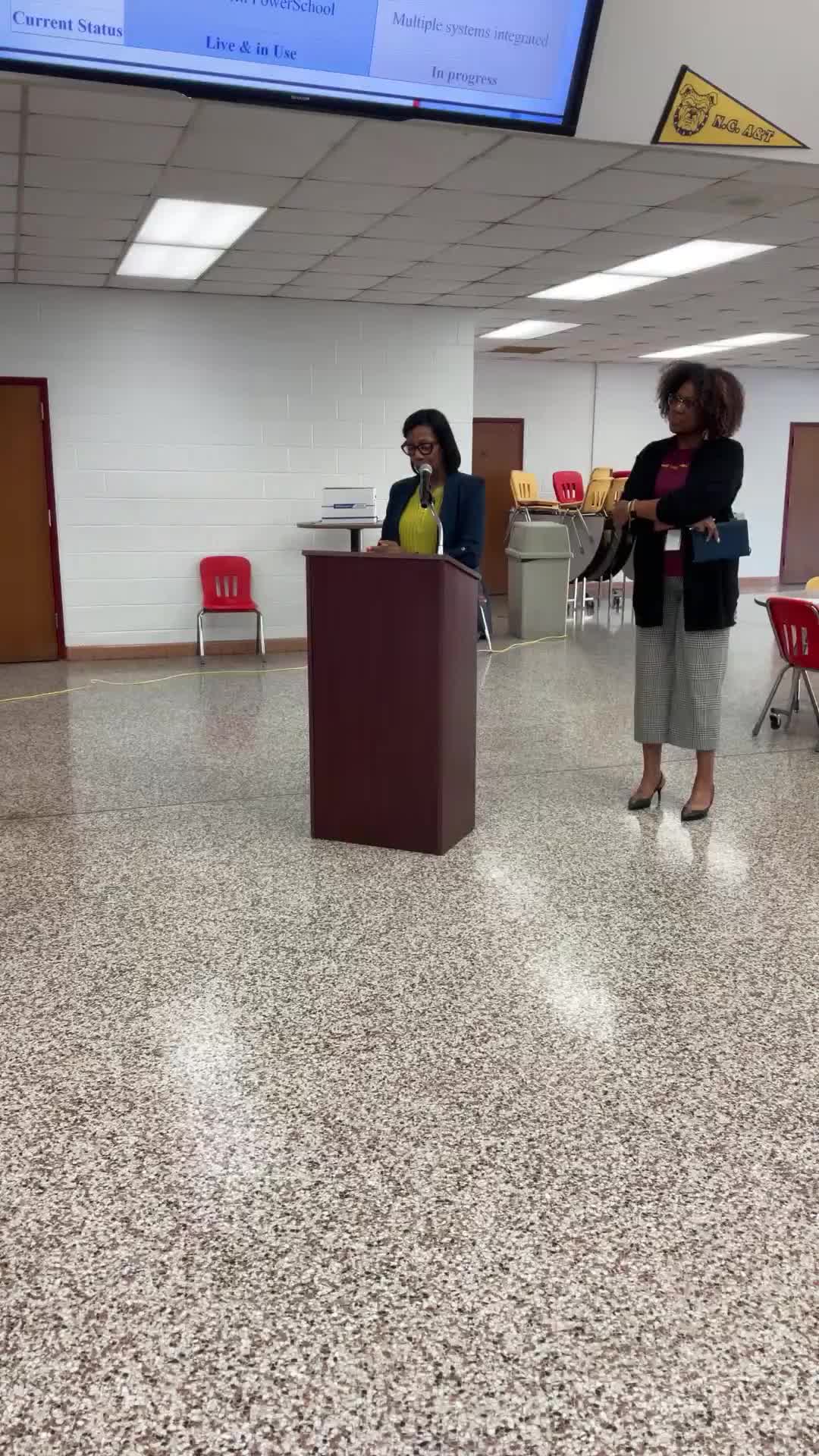
Summary
Petersburg City Public Schools demonstrated a new PowerSchool analytics dashboard at the Oct. 1 board meeting that district leaders say will give school- and district-level staff realtime access to attendance, chronic absenteeism and behavior data; the board heard the district’s chronic-absence target and next reporting steps.
PETERSBURG — Petersburg City Public Schools showed the board a new analytics dashboard tied to PowerSchool on Oct. 1 that district leaders say will let principals, coaches and central office staff monitor attendance, chronic absenteeism and school conduct in near realtime.
District leaders said the dashboard draws directly from PowerSchool, provides tiered access (school staff can drill to student-level records; board members see high-level summaries) and is already in use by some school teams. Superintendent Brown told the board the system will let staff spend less time compiling data and more time analyzing it to support schools.
The dashboard landing page displays enrollment counts and the division’s attendance metrics, including a daily absent total the presenter identified as 416 students for the previous day. The presenter demonstrated a chronic-absence box that showed a current figure of 29.81% and a comparative figure of 28.26% for the prior period. The presenter cautioned that some dashboard views compare only students currently active in the division while alternate views can compare the full cohort year to year.
District staff described training already completed and scheduled: an overview provided to assistant principals on Sept. 18 and professional development sessions planned for Oct. 7 (two sessions, one for counselors and behavior specialists and two for teachers), Oct. 9 (school leaders overview) and Oct. 17 (in-depth work with instructional coaches and specialists). The presenter said school-level staff who have the appropriate role-based access can drill from a division-level percentage down to individual student attendance records.
Board members and staff clarified definitions and goals. A district presenter explained chronic absenteeism is measured as missing 10% or more of school days for any reason (excused or unexcused); at the current early-year snapshot, missing two days in six weeks would trigger a chronic-absence flag. The board’s stated target was described as a 3 percentage-point reduction from last year’s chronic-absence rate, which the presenter said was 37.8% for the prior year; the district also described an internal goal of 95% average daily attendance.
District officials described operational steps tied to the dashboard: weekly attendance meetings that began earlier this school year, standardized school attendance meeting agendas, one-page standard attendance plans to support court referrals when necessary, early-identification flags in PowerSchool, home visits, 5- and 7-day notifications and referrals to the family assessment planning team for wraparound supports. The director of special education and mental-health staff were listed as participants in weekly attendance reviews.
Board members asked how the district will increase parental access to PowerSchool; staff said parent liaisons and engagement specialists will provide more individualized training and cited Parent University as a district-level training resource. The presenter said the division will wait until October to report a stabilized monthly chronic-absence snapshot because the school year’s early transfers can distort initial comparisons.
The presentation closed with a note that the district will continue monitoring the metrics, share updated September attendance and chronic-absence data at the next meeting, and recognize a school in October for attendance progress.
The dashboard demonstration and the chronic-absence presentation were presented during the Oct. 1 board meeting and are the district’s current operational tools for monitoring attendance and identifying students for early intervention.