Get Full Government Meeting Transcripts, Videos, & Alerts Forever!
Get email alerts on the Zoning Campgrounds topic
No spam. Unsubscribe anytime.
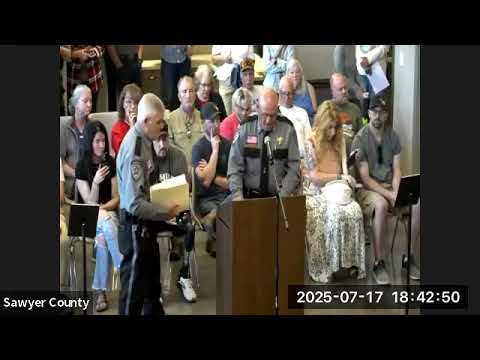
Sawyer County board removes proposed 30% cap on park models and camping cabins in licensed campgrounds
Summary
After public comment and lengthy debate, the Sawyer County Board approved an amended zoning ordinance allowing expanded camping-cabin features but voted to strip a proposed 30% cap on combined park model and camping-cabin sites for new campgrounds or expansions.
The Sawyer County Board of Supervisors approved changes to the county zoning ordinance affecting licensed campgrounds but voted to remove a proposed 30% cap on combined park models and camping cabins.
The vote came after public comment from multiple campground owners and operators and extended discussion among board members and staff. The board approved the ordinance changes as presented except for eliminating the 30% site cap; the roll-call vote on that motion was 8 in favor, 6 opposed.
The ordinance changes under consideration (referred to in staff materials as “Option F”) would: raise the maximum size of a camping cabin from 300 square feet to 400 square feet; increase maximum height to 16 feet while continuing to prohibit lofts; allow gas, water and sewer hookups in camping cabins (subject to state plumbing and sewer sizing rules); permit concrete slabs but not full foundations under camping cabins; and explicitly disallow slabs and foundations for park-model units. The draft also proposed adopting a 30% combined limit on park models and camping cabins per licensed campground; that 30% limit was removed by board action.
Zoning staff said the changes apply only within licensed, DNR/ATCP‑regulated campgrounds that have a conditional use permit. Zoning Administrator Jay (identified in the packet as the zoning administrator) told the board the county uses state definitions from ATCP 79 when drafting the language and noted that wastewater sizing and sewer compliance are regulated by state DSPS standards. County legal counsel, Rebecca, advised the board that it could adopt the ordinance as presented, amend it, deny it, or refer it back to the zoning committee with direction.
Several campground owners and operators spoke during public comment, saying park models and larger camping cabins are a market trend often called “glamping,” are built to RVIA/DSPS standards, and provide economic benefit to the county. Others — including town board representatives who responded to the town canvass — expressed concerns about groundwater, septic load (noting that Wisconsin typically uses a 30 gal/day design standard while nearby states use higher rates), shoreland impervious‑surface impacts, and loss of transient tent/trailer sites if campgrounds convert many sites to park models or cabins.
The zoning committee had previously sent Option F to the county board after a public hearing and a 4–1 committee vote. Jay told the board the 30% limitation appeared in committee-level drafts in 2016 but was not clearly adopted in the version the county board later ratified; zoning staff later reinserted the 30% limit when the committee returned a revised draft to the towns and received the minimal town support required by the county’s customary 50% town‑response practice.
During board discussion several supervisors said they opposed setting a percentage cap on business operations and raised questions about enforcement, ADA access, taxation and whether existing, permitted campgrounds would be grandfathered. Legal counsel said whether an existing campground is subject to the cap could depend on the specific terms of its conditional use permit; generally, the 30% limit would apply to new conditional use permits or expansions where the limitation was explicitly made a condition.
The board’s final motion, moved by Supervisor Cecil and seconded by Supervisor Carian, removed the 30% combined cap while leaving the other proposed changes intact. Roll call recorded 8 yes (Steve Carianan; Stacy Hessel; Randy Newman; Chuck Van Etten; Jeff Haney; John Ringheimer; Ron Kinsley; Dale Magnuson) and 6 no (Kay Wilson; Tweed Schuman; Marshall Savitsky; Jim Evans; Ron Buchholz; and one other). The motion carried.
Next steps: the ordinance language approved by the board (minus the 30% cap) will be incorporated into county code per the procedures discussed by legal counsel. Legal counsel said the board may also refer the ordinance back to the zoning committee for further edits if it desires.
Photos and technical exhibits attached to the county packet show town responses, draft ordinance language, and comparisons to state definitions.