Get Full Government Meeting Transcripts, Videos, & Alerts Forever!
Get email alerts on the Homelessness Services topic
No spam. Unsubscribe anytime.
DeKalb hires consultant to lead nine‑month planning process for unhoused services
Summary
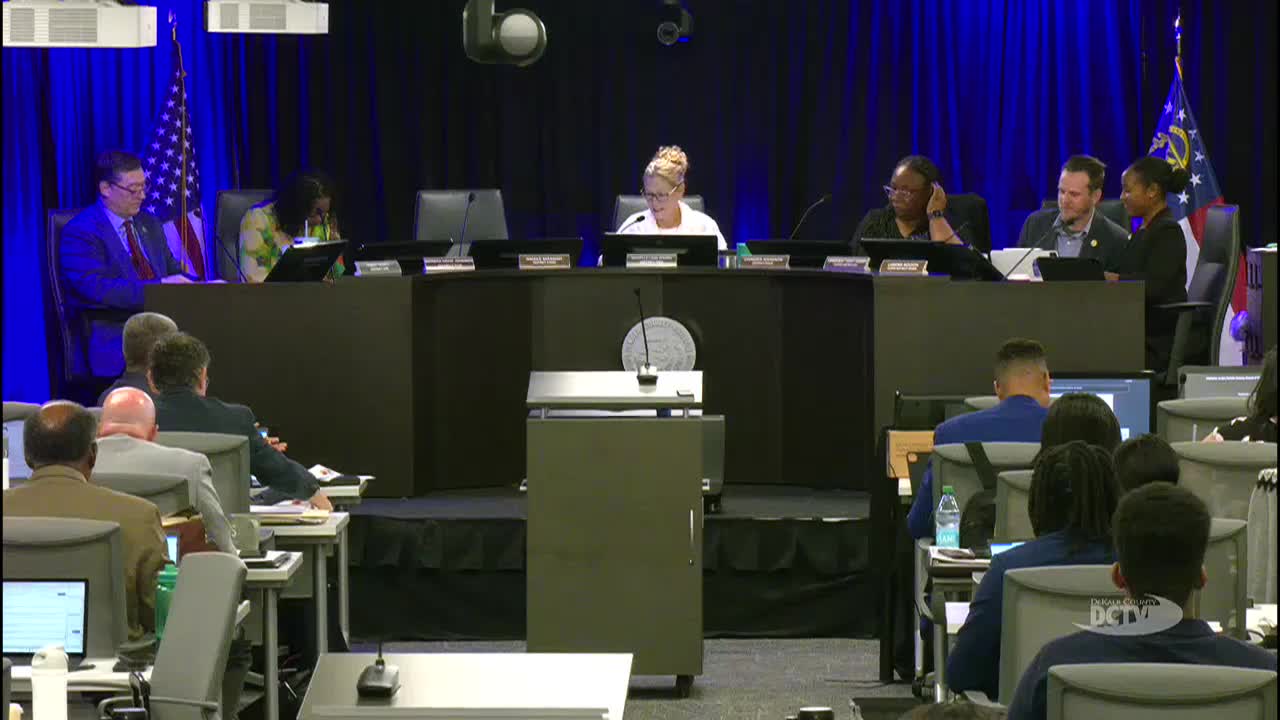
The DeKalb County Board of Commissioners on July 15 heard a presentation from Carol Cantor Dotson, CEO of IntelliJ Corporation, on a nine‑month planning process to produce a coordinated county plan for services to people who are unhoused.
The DeKalb County Board of Commissioners on July 15 heard a presentation from Carol Cantor Dotson, CEO of IntelliJ Corporation, on a nine‑month planning process to produce a coordinated county plan for services to people who are unhoused.
Dotson told the committee the work will center lived experience and pull together five work groups — client experience; support services; housing services; technology and measurement; and funding — and that the project will include discovery/listening sessions, draft recommendations and an implementation‑focused budget. "We're gonna make it happen in 9 months. The project will be complete in January of 20 26," she said.
The consultant said the effort is not an affordable‑housing development plan but rather a collaborative model to recommend how DeKalb should support and serve people while housing is produced. "We are here to help you create a plan for the unhoused support and services with the intent that affordable housing is being built or being worked on outside. This is not an affordable housing plan," Dotson said.
Dotson described recent discovery work: listening sessions with four distinct constituencies, including 14 adults currently living unhoused, families staying in extended‑stay motels, LGBTQ+ individuals, and faith‑based providers. She said the groups revealed common themes — notably the central role of affordable housing — along with varied needs across subpopulations, including some who were working while unhoused and others with behavioral‑health needs.
Dotson said the recommendation set will include (a) how people find and access services; (b) which support services to provide and how to connect people to them (temporary shelter, crisis housing, day‑to‑day supports); (c) a measurement approach and any necessary technology or data sharing; and (d) prioritized funding and budget estimates. She invited commissioners to nominate additional work‑group members and said work groups will begin meeting virtually next week, with in‑person sessions available if groups prefer.
Commissioners asked about expanding participation and bringing in business and philanthropic partners. Dotson and commissioners discussed the value of business representation on the client‑experience or funding groups and the possibility of a business‑sector survey. Commissioners also raised concerns about managing unintended consequences if DeKalb expands services and draws people from other jurisdictions; Dotson said the teams are prepared to consider those risks and develop mitigation approaches as part of recommendations.
The presentation said the Behavioral Health Coalition will receive progress reports and that the draft plan will be reviewed with stakeholders before finalization. Specific budget numbers for proposed programs were not provided during the presentation; Dotson said estimated costs and prioritization will be part of the recommendations.
The board did not take any final votes on the recommendations during the July 15 meeting; commissioners signaled interest in community review meetings once a draft is available.