Get email alerts on the School Consolidation topic
No spam. Unsubscribe anytime.
Superintendent presents three consolidation paths; trustees ask for more analysis and community input
Summary
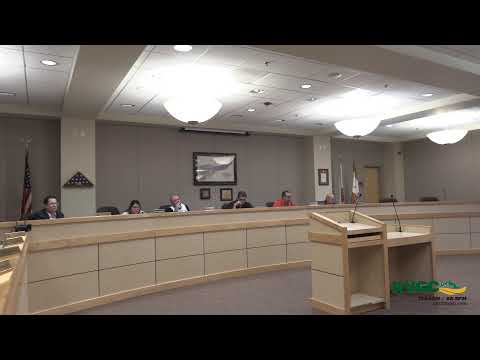
Superintendent Robert Critchfield reintroduced consolidation alternatives at the July 9 meeting, asking the board whether to proceed with the existing plan, to study a 7–9/10–12 grade reconfiguration, or to stop consolidation planning and pursue alternate funding strategies.
Superintendent Robert Critchfield reopened a districtwide consolidation discussion at the July 9 meeting, offering three broad options for further consideration: (1) continue with the approved consolidation plan adopted earlier in the year; (2) evaluate an alternative grade configuration that would group grades 7–9 at one campus and 10–12 at another; or (3) discontinue consolidation efforts and explore other facility investment strategies.
Why it matters: Consolidation decisions affect school sites, athletic programs, curricula and long‑term capital costs. The district’s previous resolution (February) to pursue consolidation remains on the books, Critchfield said, but it is not irrevocable. Trustees and members of the public pressed for further analysis on enrollment projections, classroom capacity, the Environmental Impact Report (EIR) updates, transportation impacts and potential financing options such as a citizen‑led sales tax.
What the board heard: Critchfield summarized the technical work behind the draft EIR and said several sections had been re‑studied (traffic, water/sewer and biology) and would be recirculated with focused updates, with a tentative re‑release of revised sections in late July and a target of presenting the full or recirculated EIR for certification in November. He said Option 1 as currently formulated is “a stretch financially,” given inflation and budget pressures. Staff also noted that recent traffic pre‑reviews had been shared with Caltrans and the district is coordinating with county and city jurisdictions about traffic and local developments such as Wicklow Way and Center Street extensions.
Trustee requests: Trustees asked staff to present specific comparative data if staff pursues Option 2 — the alternative 7–9/10–12 configuration — including: projected enrollment under that model; classroom utilization and whether new construction could be reduced; transportation and traffic modeling (including school drop‑offs and highway intersections); program implications (CTE, agriculture and athletics); and projected maintenance/repair costs if the status quo remains. Trustees also asked staff to compile case studies of districts that have used similar grade configurations.
Public comments: Public commenters raised alternatives to consolidation, including a citizen‑led sales tax initiative to fund improvements, and urged broad community outreach. Environmental advocates, including the Foothill Conservancy, urged the district to coordinate closely with local jurisdictions on traffic modeling and regional projects that could affect congestion at a consolidated high school site.
Next steps requested by the board: staff to provide an enrollment update that separates TK and K–12 counts, a teacher/pupil ratio analysis for potential reconfiguration, a facilities and maintenance cost projection for keeping the status quo, and comparison data and case studies about alternative grade configurations. The board did not take a final vote on consolidation at the July 9 meeting.
Provenance: discussion opened at the consolidation item introduction (block_11843.22) and continued through public comment and staff briefing; superintendent comments and trustee questions are recorded in the transcript (blocks_12338.87 onward).
AI generated
The text on this page is AI generated. Summaries, highlights, analysis, and video transcripts are all produced from the original source material.
AI can make mistakes, so if you spot one, and we will fix it for everyone.
Note: the source content is unaltered by us. Any content source we link to, be it a video, an audio recording, or a document, is presented exactly as its publisher released it. That publisher is usually a government body, sometimes an individual official or another organisation.