Lifetime Citizen Portal Access — AI Briefings, Alerts & Unlimited Follows
Sponsor says bill would seal eviction filings while cases pend and keep records sealed for tenants who prevail
Loading...
Summary
Senate Bill 204 would suppress public access to eviction filings while cases are pending and seal records permanently if tenants win or cases are dismissed; sponsor said the measure aims to reduce long-term housing barriers caused by public eviction records.
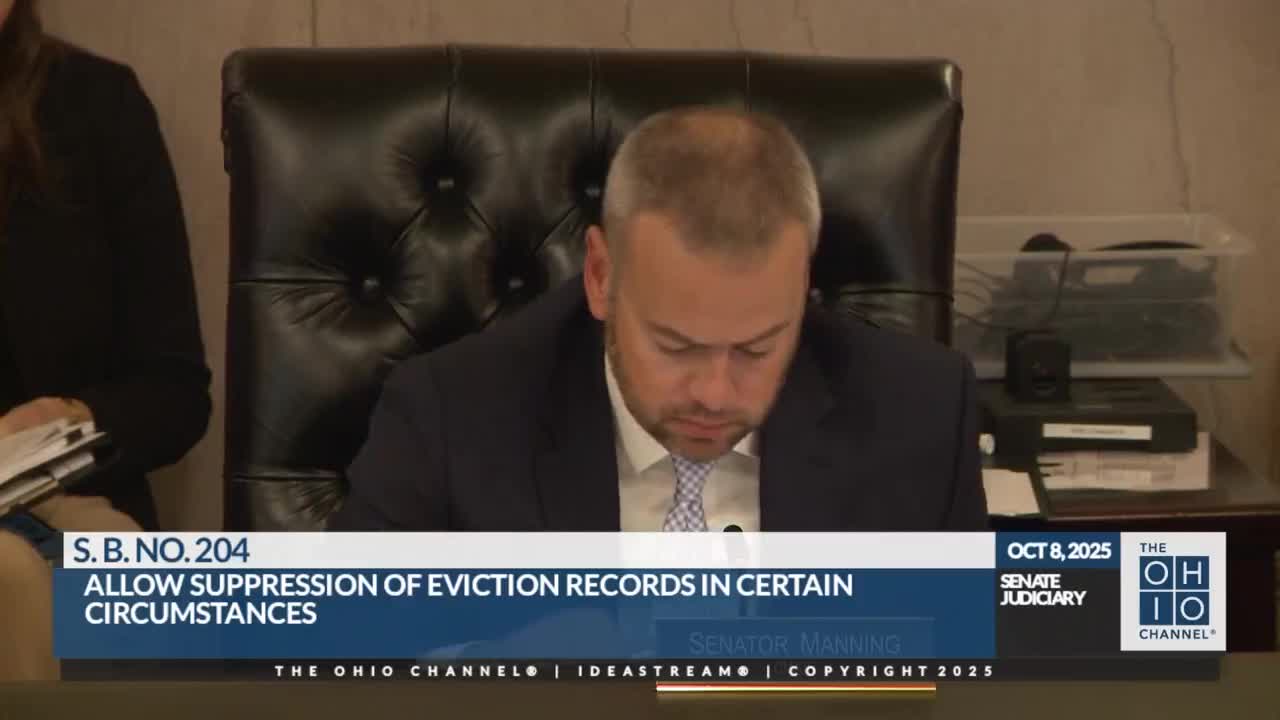
Senator Reynolds, speaking as sponsor, opened the committee’s hearing on Senate Bill 204 by describing the bill’s goal to reduce the long-term housing harm caused by publicly accessible eviction records.
Reynolds told the Senate Judiciary Committee that under current practice, an eviction filing remains public — even when a tenant wins or a case is dismissed — and that landlords and prospective landlords often treat a filing as a disqualifying mark. She said SB 204 would ensure that eviction court records are not publicly accessible while a case is pending, would permanently seal records if the tenant wins or the case is dismissed, and would make records public only when a landlord prevails unless both parties agree otherwise.
The senator said the bill would also change court summons language to inform tenants about their rights, including the right to a jury trial and legal assistance, and remind tenants to continue depositing rent with the clerk when residency continues. "This legislation helps to ensure that Ohioans have a fair shot at housing," Reynolds said, adding that it does not prevent landlords from enforcing their rights.
Committee response: Senators expressed support during questioning: Senator Blessing said he "loves this bill" and asked whether eviction filings remain on record for seven years; Reynolds said she believed filings remain on record and that is the problem SB 204 would address. Ranking member Hicks Hudson and others said they support making the measure statewide, noting local courts such as Toledo’s housing court already have analogous rules.
Why it matters: The bill addresses housing stability and access concerns by changing the public availability of eviction court records and by altering summons language to inform tenants of their rights. The hearing was recorded as the bill’s first hearing before the committee.