Get Full Government Meeting Transcripts, Videos, & Alerts Forever!
Get email alerts on the Supported Decision Making topic
No spam. Unsubscribe anytime.
Supporters say bill formally recognizes supported decision making; some parents warn protections are insufficient
Summary
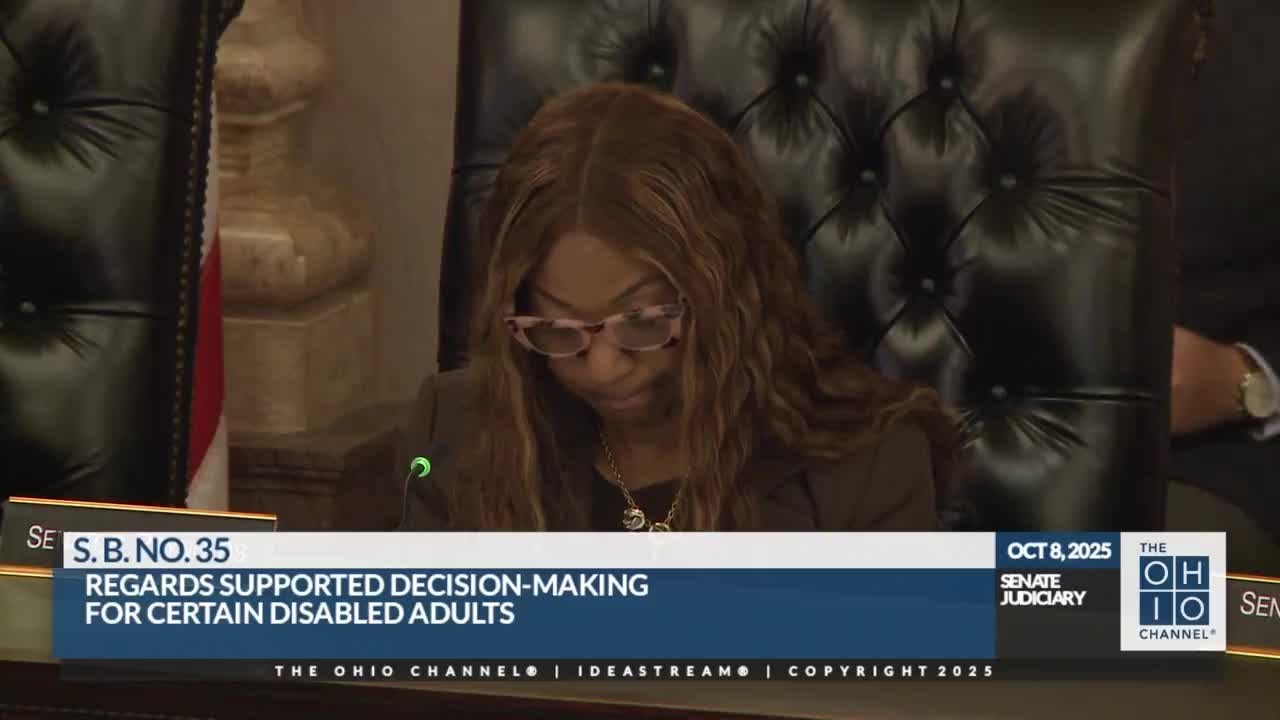
Senate Bill 35 returned to the Senate Judiciary Committee for a fourth hearing where testimony both for and against the bill addressed whether Ohio should statutorily recognize supported decision making (SDM) plans as an alternative to guardianship.
Senate Bill 35 returned to the Senate Judiciary Committee for a fourth hearing where testimony both for and against the bill addressed whether Ohio should statutorily recognize supported decision making (SDM) plans as an alternative to guardianship.
Kristen Henry, executive director of Advocacy and Protective Services, Inc. (APSI), testified in support and described SDM as a way for adults with developmental disabilities who have legal capacity to appoint trusted supporters to help them understand, communicate and implement decisions. "We see that SDM can benefit people who have the capacity to make decisions without reducing the effectiveness of the guardianship supports that others need," Henry told the committee. She said the amendment adopted in committee clarifies that SDM plans are written, formal documents and that a supporter has fiduciary duties.
Caroline Lerman, a parent and co-guardian for two adults with profound intellectual and developmental disabilities, testified in opposition. Lerman said the bill does not require a standard that a principal be "of sound mind" or otherwise able to understand the scope and consequences of an SDM agreement and warned this could leave highly vulnerable people without the protections that accompany guardianship. "There are thousands of people in Ohio who have never undergone a competency evaluation," she told senators, and without court vetting supporters could be appointed without oversight or adult-protective safeguards.
Committee action: Vice Chair Reynolds moved to substitute an amendment (identified in the hearing as Bill 2709-4) that clarified several drafting points including requiring written SDM plans and specifying that supporters owe fiduciary duties; the amendment was adopted with no objection recorded. The hearing record notes written opponent testimony from "A Voice of Reason." The hearing will stand as the fourth hearing on SB 35.
Why it matters: The bill would change how decision-making support is recognized under Ohio law, potentially expanding options for people who can make choices with assistance while raising questions about capacity determinations, safeguards against undue influence, and oversight mechanisms.