
Petersburg CFO briefs board on FY26 finances; members press to fund rising transportation costs and close grant reimbursements
Get AI-powered insights, summaries, and transcripts
Subscribe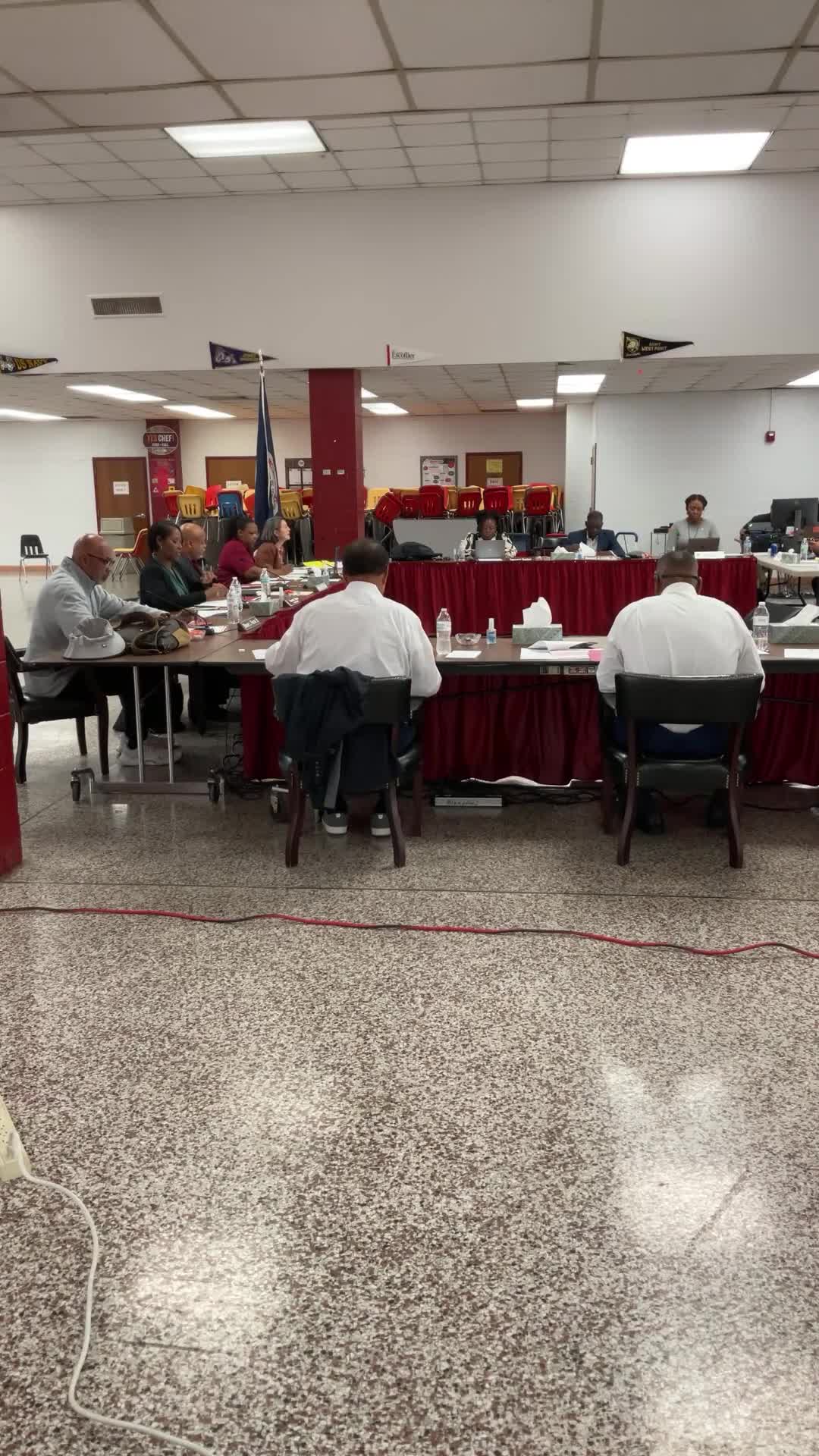
Summary
At an Oct. 15 work session, Dr. Matthias Greenwood, Petersburg City Public Schools chief financial officer, presented a monthly budget update through Sept. 30, 2025. Board members flagged rising transportation costs and outstanding grant reimbursements as issues to address during FY27 budget development.
Dr. Matthias Greenwood, chief financial officer for Petersburg City Public Schools, told the school board on Oct. 15 that the division’s FY26 finances are largely on track but that transportation costs, grant reimbursements and targeted investments will require attention as the district builds its FY27 budget.
Greenwood said the division’s FY26 all-funds budget is about $91.99 million, with year-to-date expenses near $25.3 million. He reported a FY26 city transfer budget of $12,980,000, of which three installments totaling $3,240,000 have been received, leaving $9,730,000 outstanding. General-fund instruction is budgeted at $48.2 million, with roughly $10.47 million spent to date.
Those high-level figures, Greenwood said, “reflect the transfers we’ve received so far from the city” and the division’s current spending across major funds such as food service, grants and Head Start. He added, “For Head Start (federal) personnel, we budgeted $1,330,000 and have spent about $184,000; overall Head Start federal and nonfederal totals are about $1,750,000 with roughly $242,000 expended so far.”
Why it matters: the board must set FY27 priorities within a limited revenue ceiling. Greenwood and budget staff stressed that salaries, benefits and SOQ-required positions consume the bulk of the division budget—leaving discretionary dollars for priorities such as transportation, fine arts and capital projects.
Rising transportation costs and grants backlog
Board members pressed Greenwood on transportation, which the CFO said was underbudgeted in the prior year and remains a monitoring concern in FY26. Greenwood told the board transportation expenses had increased and that the division will need to “invest more in transportation” for special-needs routing, alternative school schedules and private carriers used to transport some students. Board members said the division should plan to increase transportation funding for FY27 rather than relying on midyear adjustments.
Greenwood also reported progress on grant reimbursements. He said the division had approximately $3,000,000 in outstanding reimbursements earlier in the year and had collected about $2,100,000 to date, leaving roughly $900,000 still outstanding. He told members his goal is to bring the reimbursement cycle to 30–45 days from submission to payment.
Budget process, timelines and priorities
Superintendent Brown and senior budget analyst Patrice Gabel walked the board through the FY27 budget development timeline and parameters. Key calendar points the board received: enrollment projections finalized Sept. 30; budget requests from departments due Nov. 12; the governor’s budget typically released in mid-December; superintendent’s proposed budget presentation to the board on Feb. 4, 2026; and an additional work session added by the board on Feb. 18, 2026 to review the proposed budget.
Brown told the board the FY27 process will emphasize strategic alignment and greater transparency: “This is not the budget construction phase of the budget development process. This is a calendar of steps and things we need to do in order to build the budget, present it to the board so that it could be approved, and then finally sent to the city for approval.”
Staff described four core non‑negotiable budget parameters: revenue projections (state, local, federal), salary and compensation obligations (which account for roughly 85–90% of total spending), mandatory employee benefits and SOQ (Standards of Quality) compliance. After those fixed costs are accounted for, remaining funds will be allocated to board and superintendent priorities.
Proposed strategic priorities cited by the superintendent and cabinet include recruitment and retention of licensed teachers, compensation and classification reform, investments in fine and visual arts, expanded student experiences (during and after school), staff professional learning, efforts to reduce chronic absenteeism and continued work on capital and technology needs.
Board direction and next steps
Board members asked for follow-up analysis during the budget construction phase: an itemized estimate of the cost to reduce class sizes (for example to a 1:13 or 1:14 student-teacher ratio), an audit of SOQ staffing versus actual positions and a clearer projection for transportation costs in FY27. Greenwood and Gabel said staff will prepare more detailed data during phase 2 and 3 of budget development, and that budget holders’ requests turned in by Nov. 12 will inform the superintendent’s proposed budget.
Staff also said they are recruiting or contracting for consultant support to accelerate audit readiness and controls; Greenwood said the grants team has been restructured into fiscal and program units and that quarterly internal-controls assessments are planned once capacity is built.
Votes at a glance
- Motion to approve the personnel agenda (final personnel agenda dated for 10/2025): moved by Mr. Miles, second by Mr. Pierce; voice vote — motion carries. - Motion to approve proclamation recognizing Royal Baptist Church’s 87th (transcript text) anniversary and present the proclamation as provided: moved by Mr. Proctor, second by Mr. Pierce; voice vote — motion carries.
What’s next: department budget submissions are due Nov. 12, staff will return with additional transportation and SOQ staffing analyses during the budget construction phase, and the superintendent will present the proposed FY27 budget to the board on Feb. 4, 2026, with an added work session set for Feb. 18, 2026.