Get Full Government Meeting Transcripts, Videos, & Alerts Forever!
Get email alerts on the Windows And Roofs topic
No spam. Unsubscribe anytime.
Board discusses guidance for impact windows and code enforcement for damaged tile roofs
Summary
Board members urged staff to draft guidance or code revisions to ensure impact windows installed in historic districts better replicate historic divided‑light appearance and asked staff to explore code enforcement options for unrepaired tile roofs after recent storms.
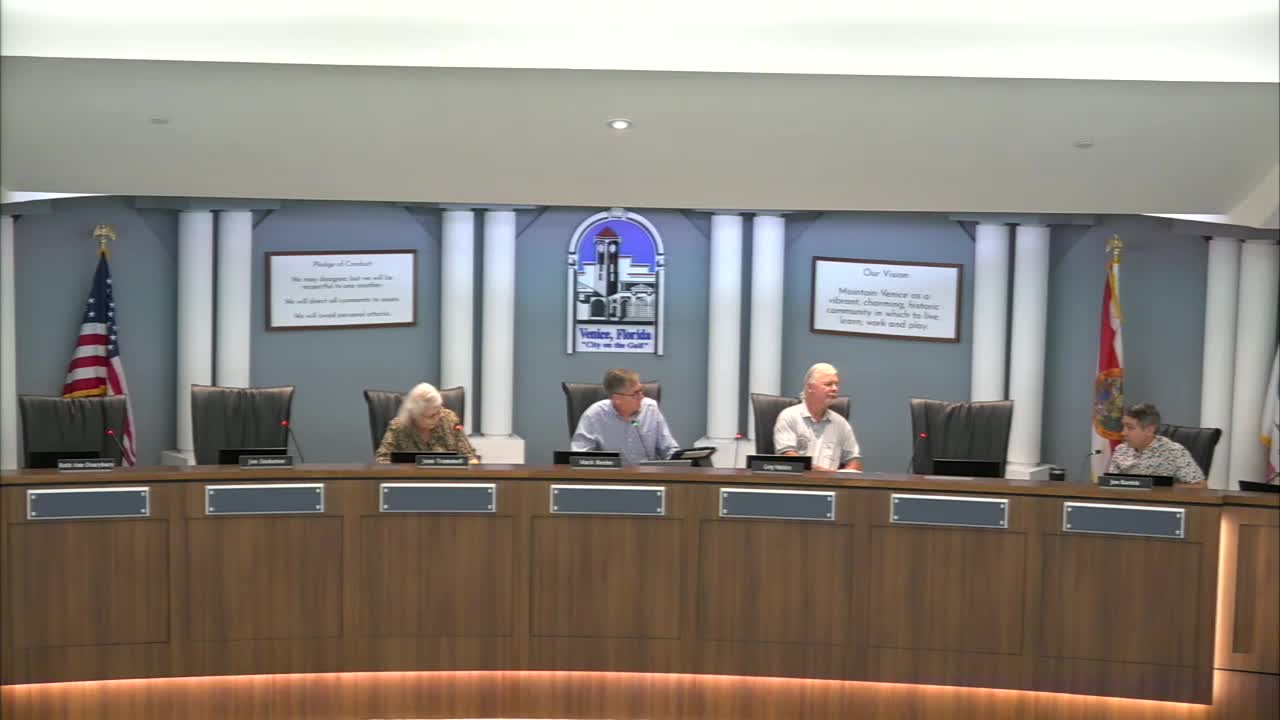
Members of the Venice Historic Preservation Board discussed concerns about recent wholesale replacement of windows in the historic district with contemporary impact glazing that does not visually replicate historic divided‑light windows, and they raised separate concerns about unrepaired tile roofs damaged by recent storms.
Board member John (board member) summarized the problem: modern impact windows typically use a single sheet of laminated glass and applied muntins that lack the exterior depth and shadow lines of historic divided‑light sashes. He said the board’s guidelines currently do not give contractors or homeowners enough direction on muntin placement or profile, which can result in replacements that are “visually incomprehensible to what historic window was.”
Nicole Tremblay, senior planner, said the board’s current rules treat smaller changes as “minor” and explained that fewer than three altered items do not require bringing the whole façade into compliance. She suggested the board might develop an interpretation or guidance—rather than a code change at first—so staff and the chair can decide whether some window changes should be referred for full review.
Board members stressed the need to avoid imposing requirements that would force homeowners into unobtainable or prohibitively expensive custom windows. One member said many manufacturers can meet impact standards but the board should study “what manufacturers actually can produce” so the city does not require proprietary or unavailable products.
Separately, members raised storm-damage concerns: missing or broken roof tiles have left some properties with precarious tiles and visible damage. Staff and the city legal representative noted code enforcement under Chapter 2 of the city ordinances governs property maintenance; enforcement typically focuses on whether a roof is weather‑tight and whether tarps or permits are in place. Harry Klinkhammer noted that roof tiles are primarily aesthetic and the watertight barrier is the underlayment, but prolonged exposure can degrade underlayment and create functional problems.
No formal motions were taken; board members asked staff to draft guidance and to research manufacturer capabilities and code-enforcement options so the board can consider concrete amendments in a future meeting.