Get Full Government Meeting Transcripts, Videos, & Alerts Forever!
Get email alerts on the Education Grammar Instruction topic
No spam. Unsubscribe anytime.
Scotia-Glenville presents grammar instruction review, highlights AI use and student assessment data
Summary
District staff reviewed K–12 grammar instruction, showed assessment results and described classroom uses of a district AI tool; board and public discussed upcoming budget vote and several routine motions, including one salary item that failed on a 3–3 tie.
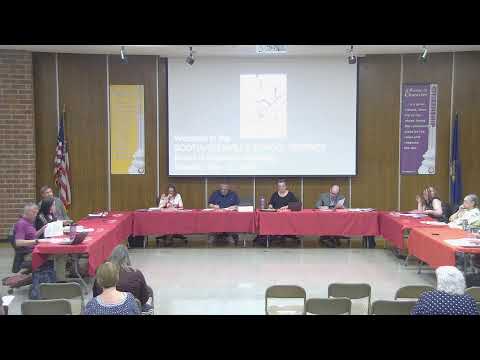
Scotia-Glenville Central School District officials reviewed the district's approach to grammar instruction and use of an in-district AI tool during a board meeting that also included public comments urging passage of the May 20 budget and several routine votes.
The district's K–12 English-language arts team presented assessment data, instructional practice guidance and next steps for curriculum mapping and common writing assessments. Samantha Deacon, identified as a consultant and K–5 ELA coordinator, said, "Grammar is the set of rules for how a natural language is structured as demonstrated by its speakers or writers." Marissa Gordon, the academic head of English and social studies, described classroom uses of the district's AI platform, Magic School AI, saying teachers and students use it within an editing cycle rather than as a substitute for instruction.
The presentation laid out three core points: grammar instruction is most effective when contextualized in reading and writing rather than as isolated drill work; district assessment data indicate comparatively strong performance on state and AP exams; and the district plans curriculum mapping, common writing assessments and targeted professional development next year.
Why it matters: Board members heard that grammar instruction is embedded across grades and assessments, and that new tools and common scoring will shape instruction and reporting. The discussion also came as the district prepares for a budget vote and potential follow-up actions if voters do not approve the proposal.
Key findings and classroom practice District presenters said it is difficult to isolate "grammar" in assessment results because grammatical skills are evaluated as part of broader writing rubrics. Deacon and Gordon showed New York State ELA and Regents data the district compiled, noting that Scotia-Glenville outperformed or tied comparable local districts on many measures and that 92 percent of the district's 11th graders passed the English Regents in 2023–24, with a 50 percent mastery rate (85 or higher) for that exam.
Gordon summarized classroom practices across levels: shorter daily lessons at K–5 through the Wonders curriculum, phonics instruction with Foundations in early grades, and mini-lessons, writer's resource packets, teacher-student conferences and AP-level units at the secondary level. She said that in more than 50 classroom observations this year, teachers organically raised grammar-related issues in roughly 21 visits.
On research and pedagogy, the presenters referenced recent scholarship arguing that contextualized grammar instruction—embedded in authentic reading and writing—is more likely to transfer to students' work than isolated "skill-and-drill" approaches.
Use of AI in instruction Presenters described Magic School AI, a district-managed platform available on student Chromebooks, as a classroom tool with built-in restrictions. Gordon said the district treats the tool as "AI with guardrails" and stressed it is part of an editing cycle: students might peer-review, confer with a teacher, then use the platform to catch remaining clarity or grammar issues.
Gordon offered classroom examples: advanced students asked the tool to serve as a counterargument generator during research projects, and fifth graders used the platform to compare their writing to a sample that represented a higher rubric level. She added that the platform can provide brief explanations for edits; one example produced a note that read "these adjustments include adding periods to the end of bullet points for consistency and making slight grammatical changes for clarity." Teachers retain discretion to require pen-and-paper work or to set limits for assessments that must be completed without AI.
Assessment and next steps The teaching team said they are moving to identify common writing assessments across the district's four buildings and to align rubrics vertically. They plan to purchase a professional text for middle and high school English and social studies teachers, continue curriculum map work, and explore pilot uses of third-party tools (for example, NoRedInk) over the summer while evaluating cost and effectiveness.
Public comment and budget context In public comment preceding the presentation, resident Karen Bradley urged voters to support the May 20 budget, saying the district "put children first" and urging the board to prioritize "academics, support services and our teachers." Bradley said her household estimated the school-tax increase would amount to about $15 a month based on a $199,000 assessment. Another resident, Mike McDermott, urged simple, persuasive messaging to support the budget in upcoming community letters.
Board actions and administrative updates The board approved several routine items including a resolution to withdraw and amend school tax rolls and acceptance of multiple gifts and donations. Board members also moved and approved communications, staffing items and student placements, with one payroll-related item failing on a tied vote. The board heard updates about a potential regional UPK partnership and an upcoming meeting about the district's current SRO contract.
Votes at a glance - Resolution to withdraw and amend school tax rolls: motion approved (vote: unanimous as recorded; individual names not specified). - Acceptance of gifts and donations (multiple items): motion approved (vote: unanimous as recorded; individual names not specified). - Communications, staffing, placements and minutes (items grouped, excluding 13a1): motion approved (vote: unanimous as recorded; individual names not specified). - Approval of 2025–26 salary list, rates and stipends for management/confidential employees (item 13a1): motion failed on a 3–3 tie; at least one "nay" vote recorded as Forbes.
What’s next The presenters said curriculum mapping and selection of common writing assessments will continue over the summer; the district will purchase an instructional text for secondary teachers and examine pilot options for writing/grammar supports. The board encouraged turnout for the May 20 budget vote and signaled further administrative follow-up on UPK partnerships and the SRO contract.