Get Full Government Meeting Transcripts, Videos, & Alerts Forever!
Get email alerts on the Off Duty Police Carry topic
No spam. Unsubscribe anytime.
Hearing on SB 279 would make businesses liable for denying armed off-duty officers; bill would add penalties
Summary
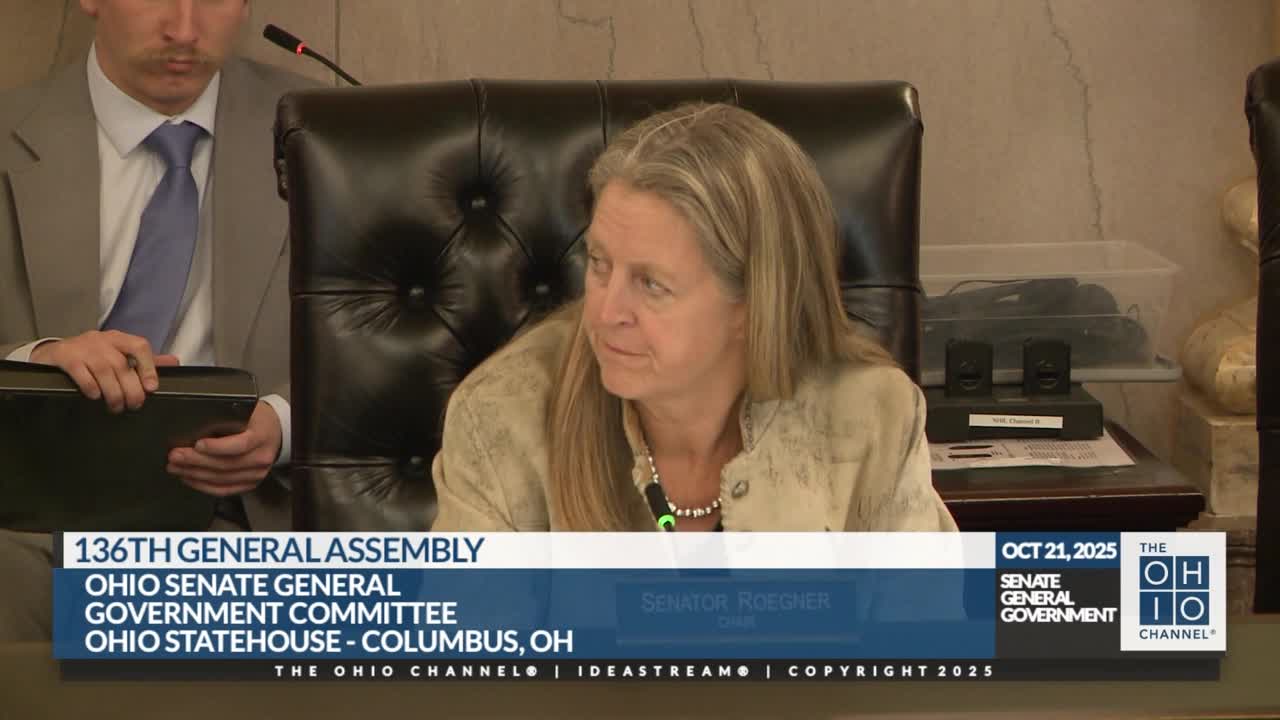
Senate Bill 279, discussed in the General Government Committee, would clarify that off-duty law enforcement may carry firearms in places open to the public, shield admitting businesses from liability, and impose a $10,000 civil penalty and attorney-fee liability on businesses that deny entry to armed off-duty officers, according to proponents.
Senate Bill 279 received proponent testimony in a second hearing before the Senate General Government Committee. Robert Sexton of the Buckeye Firearms Association testified in support, describing the bill as providing enforcement tools to an existing Ohio policy that permits off-duty police officers to carry firearms in public places.
Sexton told the committee SB 279 would address three items: clarify that businesses which admit an off-duty, armed officer are shielded from liability; impose a $10,000 civil penalty per occurrence on businesses that deny entry to such officers; and require businesses that lose a complaint to pay the complainant’s attorney fees. “Senate bill 2 79 addresses this issue in 3 fashions,” Sexton said, describing the liability shield as the “carrot” and the civil penalty and fee award as the “stick.”
Sexton said Ohio already grants broader carry rights to law enforcement than to private citizens and framed the bill as a safety measure so trained officers can be armed off duty. He said the bill would apply when an officer provides identification and is not under the influence of alcohol.
Committee members raised legal and phrasing concerns. Senator Mora questioned the bill’s use of the term “discourage” and asked how that standard would affect private businesses’ property rights and expose the measure to litigation. “I’m worried that discourage is not usually in legal purposes that strong of a word,” Mora said, and noted precedent allowing private businesses certain exemptions under the U.S. Supreme Court.
Sexton deferred phrasing and legal drafting questions to the Legislative Service Commission and said BFA would consult its attorneys. The committee was also directed to written proponent testimony from Chief Ed Kinney of the Medina Police Department and Heinz von Eckertsberg of the Ohio Association of Chiefs of Police.
The hearing ended with no vote. Proponents asked the committee to report the bill favorably to the full Senate for further consideration.