Get Full Government Meeting Transcripts, Videos, & Alerts Forever!
Get email alerts on the Sewer Rates topic
No spam. Unsubscribe anytime.
Greenfield reviews proposed sewer-rate hikes as city pursues new wastewater plant
Summary
At a Sept. 30 special workshop, Greenfield City officials outlined a plan to replace a failing 1978 wastewater plant and reviewed rate scenarios that would raise sewer bills about 65% in year one under the study’s baseline. Council members and staff said state grant decisions will determine how steep future increases are; a building moratorium the
Greenfield City held a special City Council workshop on Sept. 30 to review a draft sewer rate study and discuss financing for a replacement wastewater treatment plant after officials said the town’s existing 1978 plant is failing and at permitted capacity.
City staff told residents the city needs roughly $111.3 million to build a new plant and presented three funding scenarios: a “best case” that assumes a $75 million state grant plus a low-interest loan and bonds; a “worst case” with no grant that relies on a larger mix of low- and market-rate borrowing; and an intermediate outcome. Staff said the rate study models the worst-case scenario for next year and shows an overall 65% average increase in sewer charges in the first year, followed by smaller annual increases under the preferred option or much larger increases in the alternate scenario.
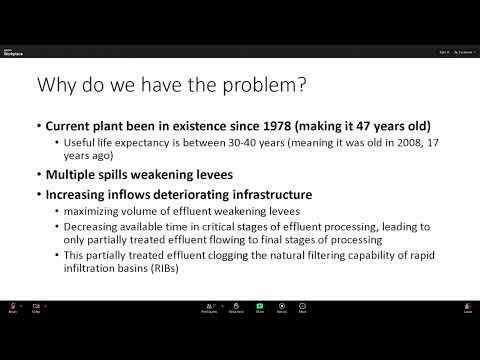
Why it matters: officials said the current plant’s age and capacity shortfall are producing noncompliant effluent and increasing operational failures as inflows grow. The council previously passed a building moratorium intended to limit new development while the wastewater issue is resolved, but staff said that moratorium is not in effect until the state’s Housing and Community Development (HCD) office signs off.
Staff presentation and funding scenarios City staff described the plant as roughly 47 years old, beyond its 30–40 year useful life, and currently at its permitted daily inflow limit (about 1.2 million gallons per day). Staff said the city completed a wastewater master plan in 2021 recommending options; Greenfield has proposed a membrane bioreactor (MBR) system, which staff said has a smaller footprint, produces higher-quality effluent, is modular for staged expansion, and can produce recycled water. Staff also discussed an alternative — building a long pipeline to convey wastewater to Soledad — and said that option would involve substantial unknown costs, environmental review, and political and operational risks.
Staff presented two numbered rate scenarios used in the rate study documents and an open “scenario x.” The study’s figures shown at the workshop include: - Estimated total project need: $111,300,000. - Scenario 1 (preferred/best case): $75,000,000 in state grants + ~$31,000,000 low-interest loan + bonds for remaining costs. - Scenario 2 (worst case): no state grant + maximum allowable low-interest loan of $50,000,000 + a market-rate loan (identified in the presentation as about $61,000,000) to fund the remainder.
The study models a 65% average increase in sewer rates in year one under both scenarios; subsequent years diverge: the preferred funding mix showed roughly 5% annual increases in years two through five, while the worst-case path showed a 25% increase in year two and about 20% increases in the following three years (the presentation displayed these percentages in the executive summary tables).
Examples and customer impact Staff walked through example bills included on a handout. For a single-family residence using 3,000 gallons in a month, staff showed current sewer charges that sum to about $63.36 and a projected charge under the proposed structure of about $68.74 (roughly a $5.38 monthly increase in that example). For a single-family residence using 15,000 gallons, staff explained the new structure’s fixed monthly charge ($34.99) plus a variable usage component; the presentation also noted a policy cap on the variable portion for single-family homes at 5,000 gallons to reflect outdoor water uses that do not reach the sewer system.
Staff also described proposed capacity/connection charges for new development. Example figures shown: current capacity charge for a new single-family home of about $3,574 and a proposed capacity charge of about $7,286.
State funding, approvals and schedule Staff said the city has submitted applications for the state funding the presentation assumes and that one condition the state has set is approval of the local rate study and the maximum rates the city would seek. Staff said the application is under review and that the state’s timing for awarding funds — including environmental review and other steps — is uncertain. Staff reported ongoing contact with Assembly Member Rivas’s and Senator Laird’s offices and regular outreach to the California State Water Board and other state agencies.
Next local steps described at the workshop include bringing the draft rate study back to City Council on Oct. 14 with a staff recommendation to approve the draft (so the city can start the Proposition 218 property-owner protest process). Staff described Prop 218 as the statutory protest process in which ballots are mailed to property owners (a mailed protest counts as a “no” vote) and said the protest threshold for blocking the increases would be a majority (50% plus one) of ballots weighted as prescribed by the law. If the council approves the draft rate study, staff said the typical Prop 218 mailing and protest period is about 45 days.
Public questions and council/staff responses Residents raised questions about whether contamination had reached groundwater (staff said monitoring is done at the plant and that the effluent-quality issue has been longstanding but the state and plant sampling/permit results are tracked), whether seniors on fixed incomes could receive assistance (staff said other nearby cities are considering targeted programs and Greenfield could explore similar relief), and what would happen if the grant award is smaller than $75 million (staff said any lower award would change the required bond/loan mix and staff would return to the council with revised projections).
Residents asked why a pipeline to Soledad was not the chosen solution; staff replied that building an eight‑mile conveyance would raise environmental, ownership and operational questions and could be more expensive and time-consuming than building a local plant. Staff and at least one city official told the audience the city has a shovel-ready plant design and could be under construction within roughly 60–90 days of securing financing and required approvals.
Equity and outreach Several Spanish‑speaking residents requested translated materials and more in-person assistance. City staff said the executive summary and rate schedules would be made available in Spanish for the next public session and offered one-on-one bill reviews after the workshop; staff identified Jamie Tugel (Public Works Director), the city clerk (Paul Mugen), and other staff as contacts for bill questions.
Formal actions and status - Building moratorium (previous council action): Council adopted a building moratorium ordinance/resolution at a prior meeting; staff said that moratorium is not in effect until the state’s Housing and Community Development office approves it. (Status at workshop: passed locally; pending HCD approval.) - Draft sewer rate study: staff plans to present the draft rate study to the City Council for approval on Oct. 14; if the council approves, staff will proceed with the Prop 218 protest/ballot process. (Status at workshop: draft under review; council action scheduled.) - Grant application: the city has submitted applications for state funding (including the $75 million request referenced in the presentation) and staff said the applications are under state review. (Status at workshop: submitted/under review.)
What the workshop did not decide No final council vote on the rate study or project financing took place at the Sept. 30 workshop. Staff emphasized that the city needs to approve a local rate structure and complete the Prop 218 process to become eligible for certain state grants and that failing to approve the rate study could jeopardize grant eligibility.
Next opportunities and how to follow up City staff said the draft sewer rate study and the 45‑page rate-study report and executive summary are posted on the city website under the Public Works department page (staff identified that location at the workshop). The council will consider the draft rate study at its Oct. 14 meeting; if approved, paper ballots under Prop 218 would be mailed, triggering the 45-day protest period. Staff also scheduled an additional workshop on Oct. 6 and said they will provide more Spanish translations and in-person bill help at upcoming meetings.
Speakers quoted or referenced in the workshop include Mayor White; Mayor Pro Tem Rodriguez; Council members Ortiz, Jones and Garcia; Public Works Director Jamie Tugel; City Attorney Jennifer (last name not given in the transcript); City Clerk Paul Mugen; and several named residents including Beatrice Diaz and Senior Vasquez. Many other residents made comments during the public Q&A.
Ending The City Council’s next scheduled decision point on the rate study is Oct. 14; residents who want to review the full report or request bill assistance were directed to staff contacts or the Public Works page on the city website. The workshop closed after staff reiterated the need for funding options and offered further Spanish-language materials and on-site help for residents to review individual bills.