
Wheat Ridge council adopts $2026 budget, adds $35,000 for cultural training and community-garden planning
Get AI-powered insights, summaries, and transcripts
Subscribe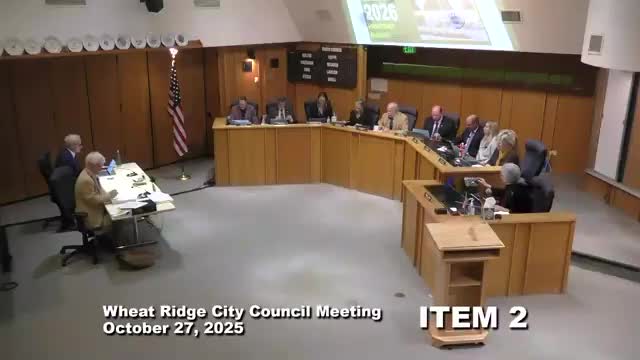
Summary
The Wheat Ridge City Council adopted its 2026 budget on Oct. 27, approving roughly $101 million in appropriations within a $126 million total program and passing a last‑minute $35,000 amendment to fund cultural-awareness training and planning for community gardens.
The Wheat Ridge City Council on Oct. 27 adopted the city—s 2026 budget and approved a $35,000 amendment to fund cultural-awareness training and strategic planning for city community gardens.
The adopted 2026 budget, presented by City Manager Patrick Goff, shows about $126,000,000 in available funding across the general fund, special funds and capital funds, with just over $101,000,000 appropriated and an ending balance forecast of roughly $24,000,000. Goff told council the overall budget grew about $5,800,000, or roughly 6 percent, from the adopted 2025 budget and that general-fund revenues are expected to be about $51,000,000 with proposed general-fund expenditures just over $53,000,000.
Why this matters: the budget funds core city services, major capital projects and community partners while responding to council—s stated strategic priorities. The late $35,000 amendment was intended to support reconciliation and garden programming after recent public attention to conflict at Happiness Gardens and to provide training and planning that advocates said would help repair community relationships.
The amendment was proposed by Councilor Rachel Holtein and seconded by Councilor Janice Hoppe. Holtein described the proposal as "a $35,000 budget amendment proposal" that would pay for two cultural-awareness trainings (one for city officials and staff, one for the public), a needs assessment and partnership recommendations for parks and recreation to support food‑sovereignty and community-garden programs, relationship-building with tribal partners, and stipends for BIPOC participants in planning. Councilor Holtein said the work is intended to "increase land access and food sovereignty" and to ensure community voices are included in planning.
Council debate and votes: the amendment passed on a recorded voice vote, 6 to 2. Multiple council members who spoke in favor cited recent public comments about community gardens and the importance of investing in relationships and sustainable operations. Councilor Dan Larson said he was not prepared to support the late amendment and opposed it because he felt it was presented too late in the budget process. After the amendment passed, council approved the full budget (as amended). The final vote on the budget adoption was recorded as unanimous.
Key budget figures and priorities: Goff told council that the city is proposing roughly $9,800,000 for capital improvement program projects, including a $7,000,000 multi-use path on Wadsworth (30th Avenue to 305th Avenue) largely covered by grant revenue. The 2J bond projects include $11,000,000 for the 30th Avenue West corridor (Youngfield to Kipling) and $3,900,000 budgeted for drainage projects. The renewal Wheat Ridge bond fund shows $2,200,000 for projects including Youngfield aesthetics and sidewalk design. The city also budgeted $2,000,000 in open-space acquisition funds for potential park/open-space purchases at two former elementary-school sites (Wilmore Davis and Colorstrand) and $800,000 to start design work for a new outdoor pool at Anderson Park.
The budget preserves a targeted general-fund unrestricted reserve (the presentation noted a current unrestricted fund balance at about 17 percent, which will rise to about 19 percent once proceeds from the Fruitdale School Lofts sale are received). Councilor Janice Hoppe said the Fruitdale sale is expected to return about $1,800,000 to the city and that those proceeds will go back to the capital-improvement funding source from which they originated rather than being swept into the general fund.
Community and partner funding: the 2026 budget continues community-partner grants and direct support, including $100,000 for the Carnation Festival, $120,000 for the Wheat Ridge Business District (including a new $75,000 grant program for businesses impacted by the Wadsworth improvement project), and $326,200 to a local workforce organization (listed in the budget as "Friends and Local Works" in the presentation). The community-partners program totals roughly $203,000 awarded across 33 partner organizations in the most recent cycle.
What happens next: With council approval, the 2026 budget goes into effect as adopted. City staff said they will continue grant-seeking and coordinate capital project schedules with grant partners. Council members asked staff to schedule future study sessions to detail items raised during the adoption process, including an equity audit and longer-term garden operations planning.
Ending note: Councilors and staff repeatedly praised the budget team for the level of detail and public engagement. Councilor Holtein and others framed the amendment as a modest, targeted investment to follow up on community concerns that had surfaced publicly in recent weeks.