
Lakeville assessors adopt plan to raise assessment level toward 95% after 10‑year market study
Get AI-powered insights, summaries, and transcripts
Subscribe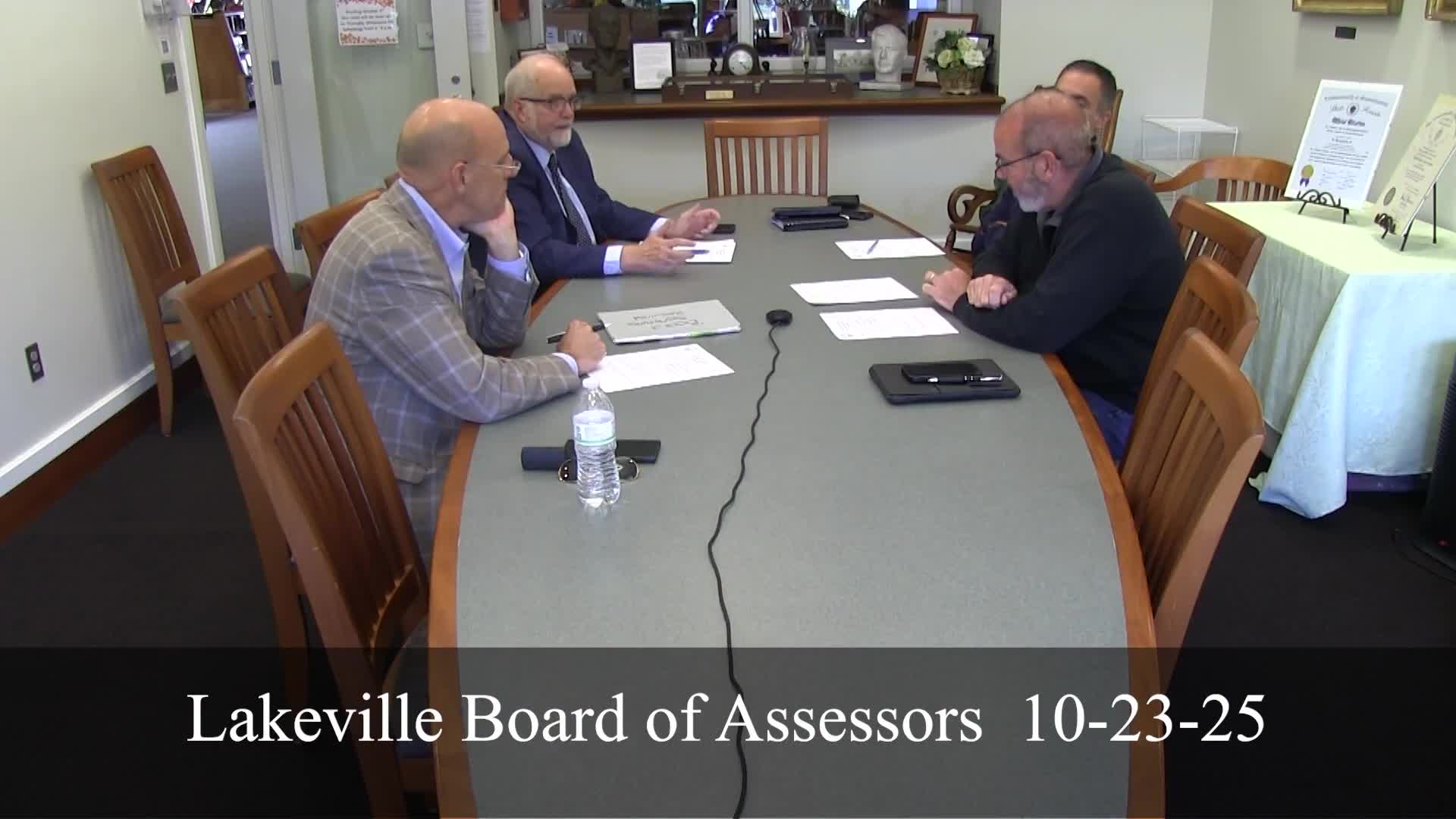
Summary
The Town of Lakeville Board of Assessors reviewed a 10‑year assessment‑to‑sale (ASR) study and voted unanimously to instruct the interim assessor to target a 95% assessment level, citing an overall assessment level of about 88% based on 2024 sales and recommendations to correct undervaluation in waterfront and cottage neighborhoods.
The Town of Lakeville Board of Assessors voted unanimously Oct. 23 to instruct the interim assessor to target a 95% assessment level after reviewing a 10‑year ASR (assessment‑to‑sale ratio) study presented by the interim assessor from RRG.
The ASR study uses time‑adjustment factors applied to nearly 1,100 single‑family sales across a 10‑year period to increase the effective sample size available for valuation decisions. Board members were told the town’s assessment level calculated from 2024 sales is about 0.88 (88%), below the board’s historical target of roughly 0.95 (95%). The board asked staff to raise assessed values to move the town closer to that target.
The study, presented by the interim assessor from RRG, described the methodology: plotting median assessment‑to‑sale ratios by quarter over 10 years, deriving a trend line, and producing time‑adjustment factors that convert earlier sale prices into present‑day equivalents. The presenter said that applying those factors to resale pairs (properties that sold more than once during the 10‑year window) yielded an average variation of about 6% between time‑adjusted earlier sales and later sales, which the presenter said supported the reliability of the approach.
Why it matters: assessment levels affect how the town allocates tax burden across properties and must be reported to the state Department of Revenue (DOR). If assessments systematically lag market values, the town can raise individual assessments to meet the DOR target without necessarily increasing total tax dollars if the tax rate is adjusted proportionally; however, board members noted the town budget and any overrides also affect taxpayers’ final bills.
Key figures and findings reported to the board: - The presenter said the town has roughly 4,021 single‑family parcels in the residential inventory. - In 2024 there were 105 valid single‑family sales in the town’s sales set; the 10‑year expanded set had nearly 1,100 sales for trend analysis. - The presenter reported the average single‑family assessed value rose from about $336,100 in January 2015 to about $638,600 a decade later. - Using only 2024 sales, the assessment level was about 0.88 (88%); the board’s historical target is approximately 0.95 (95%).
The board discussed property classes that appear most out of line: waterfront properties and small older cottages. The presenter noted waterfront properties showed a large variance when measured by short windows of sales (for example, seven recent waterfront sales produced a 0.72 ASR), but the 10‑year view expanded that sample to 59 sales and produced a 0.87 ASR for waterfront over the full decade. Board members debated whether to apply a uniform adjustment (the presenter cited a roughly 7% overall lift to reach the 95% target) or a slightly larger targeted lift for certain neighborhoods; one board member suggested a larger incremental correction — roughly 12% for waterfront — to reduce the need for larger corrections in future certification years.
Board members also discussed statistical choices used in the study: use of medians to limit the influence of outliers, stratification by economic neighborhood, style (cottages), and year built, and the limited sample sizes for some strata. The presenter and members agreed that small strata (for example, two sales of cottages in a single year) should be treated cautiously and that the 10‑year aggregation reduces volatility.
Commercial property sales were limited; the presenter reported a 2024 commercial assessment level near 0.89 but said the small number of sales makes multi‑year review advisable before any large commercial adjustments.
Formal action: the board moved, seconded and voted unanimously to instruct RRG, acting as interim town assessor, to target an approximate 95% assessment level in the upcoming valuation work and related rate updates. The motion was recorded as carried unanimously; individual roll‑call votes were not specified in the transcript.
The board closed the agenda item by directing staff to include adjustments derived from the ASR study in the land and building rate tables used to update assessments and to continue refining the analysis, especially for waterfront and cottage neighborhoods, before final certification to the DOR.
The meeting also included smaller administrative items earlier and later on the agenda (approval of minutes, signatures for statutory exemptions and motor vehicle reports).