Get Full Government Meeting Transcripts, Videos, & Alerts Forever!
Get email alerts on the Agriculture Potato Industry topic
No spam. Unsubscribe anytime.
Committee hears bills to repeal Wholesale Potato Dealers licensing
Summary
The Michigan House Agriculture Committee heard testimony on House Bills 4881 and 4882, which would repeal the state licensing requirement under the Wholesale Potato Dealers Act; witnesses said the $100,000 bond requirement is outdated, the program covers few dealers and the committee did not take a vote.
The Michigan House Agriculture Committee heard testimony on House Bills 4881 and 4882, which would repeal the state's licensing requirement under the Wholesale Potato Dealers Act, during a committee hearing. The bills' sponsor said the laws are outdated and redundant given federal protections and industry changes.
The bills are part of what the sponsor described as a "red tape" package intended to remove regulations that no longer serve Michigan's potato industry. The sponsor said the licensing regime grew out of concerns that wholesalers might fail to pay growers, but that a $100,000 bond requirement "doesn't even cover a fraction of the cost of what the dealers handle in transactions" and is now ineffective. The sponsor asked the committee to support the bills so the Michigan Department of Agriculture and Rural Development (MDARD) can focus resources on other programs.
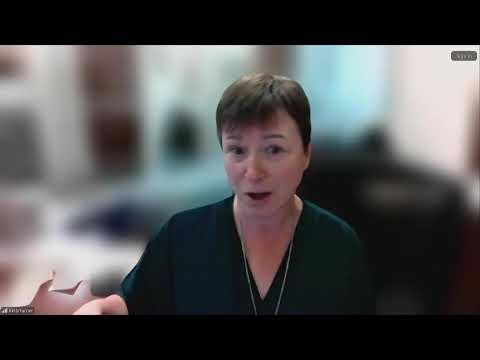
Dr. Kelly Turner, testifying on behalf of potato growers, told the committee there are currently "between 18 and 20 wholesale potato dealers" in Michigan who meet the statute's definition. Turner said growers and industry representatives reviewed the program at a recent commission meeting and agreed the licensing requirement no longer functions as intended. Turner cited a bankruptcy of the Jack Mall Potato Company in the early 1990s, when the bond program would not have covered the bulk of growers' losses, as an example of the bond's limited protective value.
Representative Skaggs questioned whether the surety bonds had been used since the statute's origin in 1964, asking, "Before 1964, were potato wholesale dealers frequently, not paying for potatoes?" Turner said she did not have specific instances at hand but summarized that the supply chain has shortened and the program has not kept pace with industry changes.
The committee accepted written testimony cards indicating support: Makayla from MDARD filed a card in support, and Tim Golding and Sunny Koch of Americans for Prosperity Michigan also filed cards supporting the bills. Committee members asked clarifying questions but did not vote on either House Bill 4881 or House Bill 4882 during the hearing; the record shows the committee took testimony and returned the matter to committee consideration without a formal vote.
Committee business at the meeting included adoption of the minutes (moved by Representative Coutts and approved by unanimous consent) and a motion to excuse absent members (moved by Representative Alexander and approved by unanimous consent). The committee adjourned after completing the scheduled items.
The bills seek to repeal state-level licensing for wholesale potato dealers; the transcript and witnesses indicate the program currently covers relatively few dealers, requires a $100,000 bond, and generates minimal fee revenue in the fiscal records. No implementation timeline or committee action on the bills was recorded in the hearing.