Glynn County staff proposes comprehensive rewrite of animal-control code including spay/neuter, tethering and registration rules
Loading...
Summary
County animal services staff proposed Oct. 21 to repeal and replace Glynn County's animal-control ordinances, seeking expanded running-at-large rules, mandatory spay/neuter in certain cases, stricter tethering standards and new registration and breeder rules.
Glynn County Animal Services staff presented a proposal at the Oct. 21 work session to replace the county—9s existing animal-control ordinances with a single, modernized code intended to reduce overpopulation, clarify enforcement and improve animal welfare.
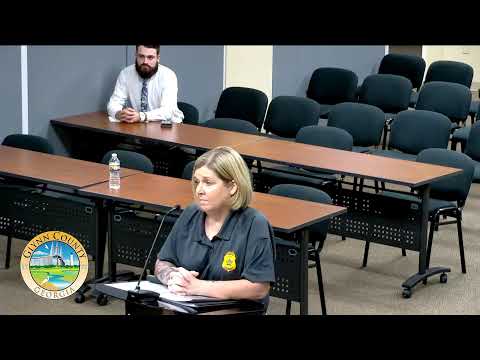
Gloria Austin, who presented the proposal, said several existing provisions conflict or are outdated and that the county has limited ability to enforce certain behaviors under current language. "If you look at the current ordinance, it actually says every animal that's feeded up, if they're not claimed within 7 days, that we shall euthanize them. We don't do that," Austin said, explaining why she proposes a full rewrite.
Key proposed changes Austin described include:
- Expanding the running-at-large prohibition to include dogs, cats and other animals commonly kept as pets (for example, goats and pigs) when not kept in proper enclosures. - Requiring spay/neuter for any cat kept outdoors and, after repeated picks-up for running-at-large, requiring spay/neuter for dogs at the owner's expense unless exempt for medical reasons or show registration. - Stricter tethering standards modeled on Chatham County provisions: animals at least 6 months old, not tethered when sick, 10-foot trolley/cable systems with mounting height and a tether length proportional to the animal, and prohibitions during extreme weather. - New prohibitions on leaving animals unattended in parked vehicles without ventilation and limitations on transporting animals in open truck beds unless contained safely. - Breeder regulations designed to limit unregistered backyard breeding and requirements for transfer or spay/neuter of litters. - A registration requirement to provide proof of rabies vaccination to county animal services within 30 days of moving to Glynn County.
Austin said the proposed changes would allow animal-control officers to cite a wider range of conduct (including abandonment at boarding clinics or veterinarians) and to require surgical sterilization in repeat cases. She described practical enforcement concerns and proposed volunteer assistance programs to help elderly or low-income residents comply with equipment upgrades such as trolley tethering systems.
Commissioners asked several operational questions: who to call about loose animals (the presenter provided the nonemergency dispatch number (912) 554-3645), whether county staff could offer spay/neuter services to the public (staff said the shelter does not currently provide community spay/neuter but adoption fees include sterilization and the county is pursuing hiring a veterinarian), and how the county would coordinate with the city (staff said they had met with city officials and would attempt to mirror ordinances by intergovernmental agreement).
Austin said some enforcement authority differs from state-level statutes (for example, state law forbids livestock on public roads but county animal-control officers cannot directly enforce some state statutes), and she proposed local ordinances to fill enforcement gaps so the county could issue citations rather than waiting for state agencies to act.
No formal ordinance vote occurred at the Oct. 21 work session; commissioners thanked staff, suggested fine-tuning and asked staff to coordinate with the county attorney and city leadership for draft language and implementation planning.