
Behavioral health advocates ask Glynn County to join national '7Stepping Up'7 initiative to reduce jailings of people with mental illness
Get AI-powered insights, summaries, and transcripts
Subscribe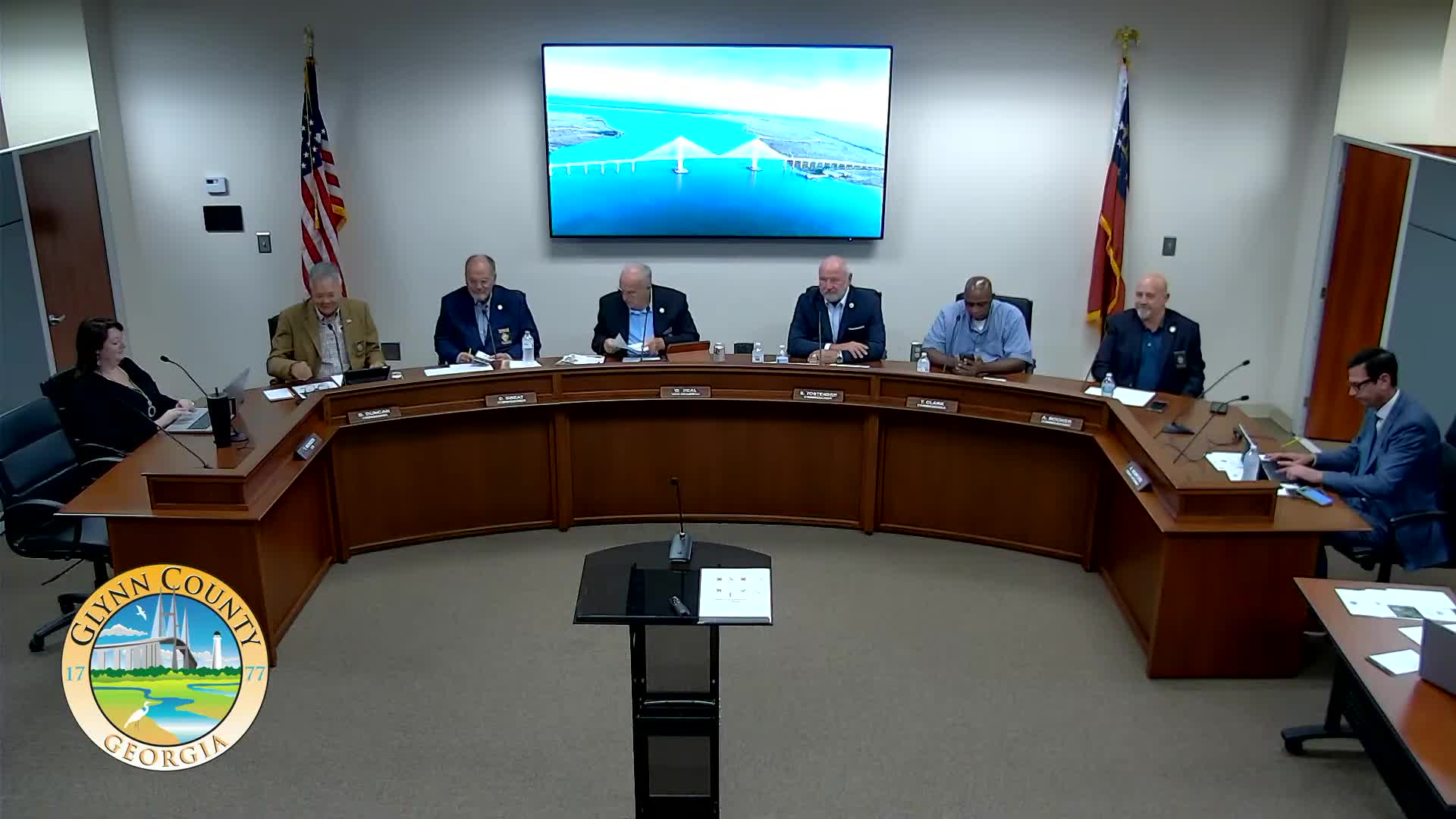
Summary
Glynn County behavioral health advocates asked the board to pass a resolution joining the national Stepping Up initiative, seek baseline jail-screening data and form a local leadership team; presenters said the sheriff and local provider Gateway have been engaged but no formal vote or funding commitment was taken on Oct. 21.
Representatives of Glynn County Behavioral Health Advocates urged the Glynn County Board of Commissioners at a work session Oct. 21 to pass a resolution joining the national Stepping Up initiative, a data-driven framework designed to reduce the over-incarceration of people with mental illness.
Christine Glover, a lead presenter for the advocates, described Stepping Up as a national framework launched in 2015 that has been adopted by more than 570 counties nationwide and provides technical assistance and tools to reduce jail bookings of people with mental illness. "Signing this resolution for Glynn County would mean a formal commitment, a multi-agency, data-informed action plan with clear accountability," Glover said.
Glover told commissioners that local partners including the county jail, the sheriff—9s office and Gateway (a local behavioral health provider) have participated in planning meetings and that the sheriff "wants us to come in to the jail to begin a mental health intake form." She said the group has not yet established baseline data and that collecting intake screen data at booking is a priority.
Presenters told the board they were not seeking immediate county funding. "We are not getting you to commit fiscally to anything," Glover said; the immediate request was for the board to adopt the Stepping Up resolution and designate local leadership to coordinate implementation, data collection and stakeholder engagement.
Commissioners expressed general support, asked for data and suggested follow-up small-group meetings with the sheriff—9s office, Gateway and county staff. One commissioner asked whether the initiative would be a public-private partnership; presenters said they sought county endorsement and multiagency collaboration but that a physical facility was not part of the initial request. The sheriff was described as cooperative but did not present numbers at the meeting.
Presenters cited nearby examples they said had measurable results: Chatham County (Savannah) was reported to have a 20% reduction in jail bookings of people with mental illness in two years after adopting the framework. Commissioners asked staff to gather data on local costs and jail counts so they could evaluate next steps before taking formal action.
No formal vote to adopt the Stepping Up resolution occurred at the Oct. 21 work session; advocates requested a formal resolution and a designation of a local leadership team for implementation pending further staff follow-up.