Get Full Government Meeting Transcripts, Videos, & Alerts Forever!
Get email alerts on the Community Solar Lease topic
No spam. Unsubscribe anytime.
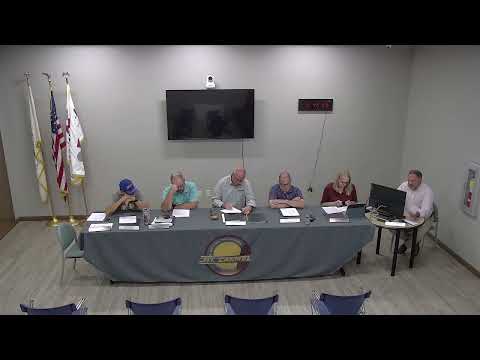
Mount Carmel council authorizes letter of intent for 40‑year solar lease at former Snap‑on site
Summary
Mount Carmel city leaders on a special meeting authorized city staff to sign a nonbinding letter of intent to participate in a proposed 40‑year lease of the former Snap‑on property to host a community solar installation, city officials said.
Mount Carmel city leaders on a special meeting authorized city staff to sign a nonbinding letter of intent to participate in a proposed 40‑year lease of the former Snap‑on property to host a community solar installation, city officials said.
The move is intended to let the developers apply for grant funding that requires an anchor‑tenant letter by mid‑October. A city official said the developers project the installation as a $5,000,000 project that would deliver roughly $40,000 in energy savings to the city each year for the first 15 years — about $600,000 over that period — while serving about 130 low‑income households and qualifying nonprofits through Mount Carmel Public Utility.
The council’s authorization was limited to signing a nonbinding letter of intent; the city would return to the council for any final lease or contract if the grant application succeeds. "They basically have to have a letter of intent to participate as an anchor tenant, by October fifteenth to get everything done," the city official said. The official added that the letter would be null and void if the developer did not obtain the grant.
Council discussion focused on financial and legal details the city wants resolved before a final contract. Council members asked that the developer cover any real property taxes once the solar equipment is assessed, and to pay a minimum yearly lease amount rather than a nominal $1 per month. "For it to be profitable for us, I mean, we'd still make money. But I think we need to probably set whatever our taxes are on that property right now is 0. Whatever that goes up to really needs to be paid by them," the city official said.
Council members also raised long‑term cleanup and liability concerns if the lessee abandons the site after the 15‑year payment period. The council discussed bonding or another guarantee to ensure funds would be available for site cleanup. "We may want to look at bonding the property in case of a site cleanup ... we need to have some type of guarantee that funds will be there to clean up the property afterwards," the city official said.
The developers said they would fence, mow and maintain the property and be responsible for site improvements. The city official said some uses remain ineligible under the grant: water and sewer enterprise customers could not be served by the program because of their enterprise status, but city buildings such as city hall and the fire station could qualify. Enrollment for households would be by application; the developer expects to have at least 130 households signed up before the system goes online and would remove participants who fall behind on payments and replace them from a waiting list.
Councilmembers asked for clarifications about tax assessment and potential rent structure. The city official said the value of the installed solar system would be assessed after installation and that the city would not know the new assessed value until that process occurs. The official also said that tax increment financing (TIF) would likely not be appropriate for this project because the city would still own the land and would not realize the tax returns TIF typically requires.
After discussion, a council member moved to authorize city staff — including Ron and the speaker who requested the special meeting — to proceed with signing a nonbinding letter of intent so the developers can pursue grant funding; the motion was seconded and approved by roll call. The council did not approve a final lease or contract and will consider any contractual documents only after the grant application and further staff review.
Next steps: staff will provide the letter of intent to the developer ahead of the grant deadline and return to the council with a proposed lease, tax‑assessment estimates and draft bonding/cleanup guarantees if the grant is awarded.