
Guam Legislature approves up to $13.1 million to temporarily fund SNAP and WIC during federal shutdown
Get AI-powered insights, summaries, and transcripts
Sign Up Free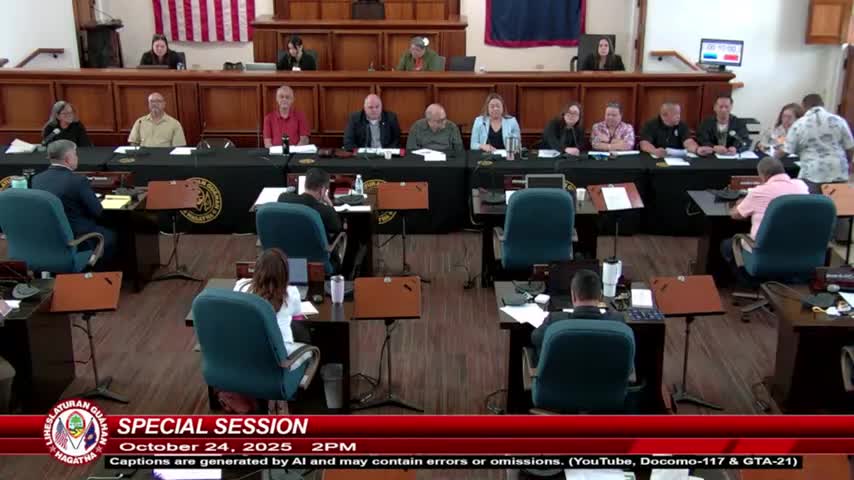
Summary
The Committee of the Whole and later the full Legislature approved an emergency appropriation of up to $13.1 million from FY25 net unobligated excess revenue to cover November SNAP and WIC benefits amid a federal funding pause announced Oct. 10 by USDA Food and Nutrition Service.
The Guam Legislature on Oct. 24 approved an emergency appropriation of up to $13,100,000 from fiscal year 2025 net unobligated excess revenue to fund Supplemental Nutrition Assistance Program (SNAP) and Women, Infants and Children (WIC) benefits for November 2025, after testimony from Department of Public Health and Social Services officials that the U.S. Department of Agriculture had paused benefit releases amid a federal government shutdown.
Public-health officials told the Committee of the Whole that USDA’s Food and Nutrition Service sent notice on Oct. 10 instructing states and territories to pause November benefit releases. "On October 10, we received notification from the USDA Food and Nutrition Service that instructed all state and territories to pause on the release of November benefits," said Francine Salas, chief human services administrator, division of public welfare, DPHSS, during the committee hearing.
The appropriation was amended in committee to allow “up to $13,100,000” — $12.3 million estimated for SNAP and an additional $800,000 estimated for WIC — and to require that federal funds be used first if a continuing resolution or final federal appropriation is enacted. The bill passed the floor roll call with 13 yays and two excused and was placed in the third-reading file.
Why it matters: DPHSS officials and the Legislature said an interruption in SNAP and WIC would leave thousands without their regular benefits at the start of November, risking food insecurity just before the holiday season. DPHSS estimated the SNAP caseload at a three‑month average of 40,328 individuals comprising 14,739 households, and WIC enrollment at about 6,200 participants as of September. Department staff warned local vendors and nonprofit food banks could not fully replace the programs’ monthly cash flow to households.
What lawmakers heard and decided DPHSS officials described two related problems: a pause in federal electronic benefit transfers for SNAP and limited cash on hand to keep WIC food redemptions and staff payroll operating through November. "We need money because these individuals, we need to give them some sort of benefits," Salas told senators, explaining that program benefits are loaded to recipients' EBT cards through the state's vendor, Fidelity Information Services (FIS), but that USDA directions had caused a pause in federal funding flows.
Acting DPHSS director Peter John Camacho and other DPHSS staff outlined the cost estimates that shaped the request. DPHSS projected roughly $12.3 million would be required to cover SNAP issuance for November based on recent monthly averages and anticipated new enrollments tied to the shutdown; WIC officials asked for about $800,000 to cover expected redemptions and to provide a cushion. "We did receive some funding...total current funding status of the WIC program is $806,228," Mike Gallo, acting WIC administrator, said, adding the program’s daily settlement rate meant available WIC funds could be exhausted near Oct. 26 without supplemental appropriation.
Budget office staff told senators the requested funds can be provided from FY25 net unobligated excess revenues. "The CRER shows a net unobligated amount at 33,044,179," said Lester Carlson of the Bureau of Budget and Management Research, explaining that using that pool would leave a remaining balance after the appropriation.
Legislative safeguards and implementation steps Committee amendments added language requiring DPHSS to use federal funds first if they become available and to reimburse the general fund promptly if federal reimbursements are later received. An amendment also specified that funds appropriated for the emergency be available until fully expended or until federal funding resumes, whichever occurs first; and that DPHSS report within 30 days after issuance on households served, amounts distributed and any reimbursements received or pending.
DPHSS and the budget office said the administration and the EBT vendor can stagger releases and work with the Legislature on a two‑installment approach: an initial release to cover the start of November and a hold for the remainder pending federal action or need. "There is a planned approach to be a little bit more conservative in how the funds are released...to make sure that we don't overspend if federal reimbursement is not possible," Salas said.
Outstanding uncertainties DPHSS staff said federal guidance about reimbursement remains unclear because many USDA staff are not working during the shutdown. "We have received no guidance," the department said. Several senators urged the administration to coordinate with Guam’s congressional delegate and federal partners to seek confirmation on reimbursement and to minimize repeated appropriation requests if the shutdown persists.
Ending note The appropriation passed with the Legislature instructing DPHSS to report back on issuance and any federal reimbursements. DPHSS officials said the supplemental funds are intended solely to prevent a gap in benefits for November while federal funding remains paused, and that the department will return unused local funds should federal payments be restored and reimbursements made.