
CMH Access Center reports 3,183 navigator contacts in FY25; 88% of eligibility assessments found people eligible for services
Get AI-powered insights, summaries, and transcripts
Subscribe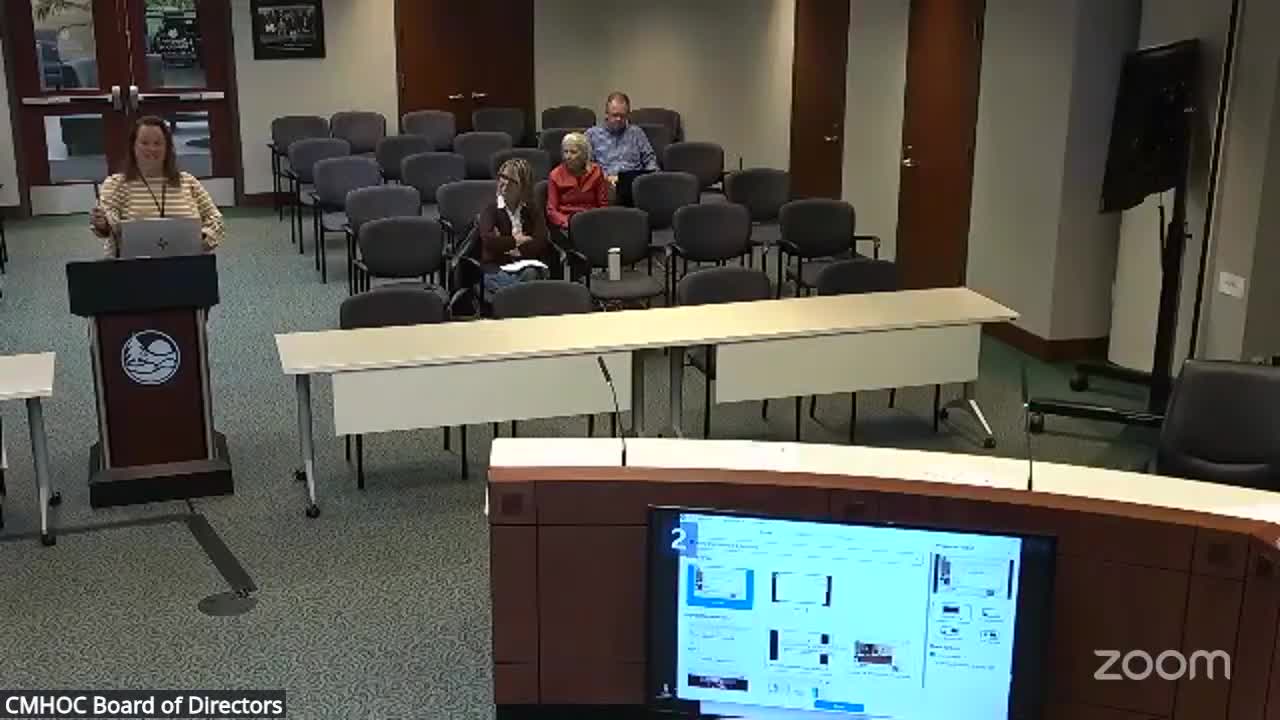
Summary
Director Carrie Korneski described the Access Center and Connections work, explained how CMH determines eligibility, and reported navigator program statistics and outreach to veterans and people experiencing homelessness.
Carrie Korneski, director of Access Center and Connections at Community Mental Health of Ottawa County, told the board on Oct. 24 that the access office is the agency's frontline for intake, eligibility determinations and community resource navigation.
Korneski described two primary roles for access: the gatekeeper role that makes eligibility determinations using standardized tools such as the Level of Care Utilization System (LOCUS), and a connector role that links people to housing, food, medical care and community providers. She also explained the state's separate criteria for intellectual and developmental disability (IDD) eligibility, which come from the Michigan Mental Health Code: the condition began before age 22, is likely to continue, and causes substantial functional limitation in at least three of seven major life areas (self‑care, communication, mobility, learning, self‑direction, independent living and economic self‑sufficiency).
Korneski said the millage‑funded navigator program — a local initiative that spends more time on complex cases than Medicaid alone typically permits — provided 3,183 services in fiscal year 2025, including 1,579 unique first‑time contacts. She said navigator work includes crisis follow‑up within 24 hours after a crisis contact, in‑person outreach at shelters and coordination with the Lakeshore Regional Entity and county veteran services for veteran outreach. "The navigators take the time to listen, support, advocate, and guide folks to the most appropriate services so that they can get the help that they need," Korneski said.
Korneski provided eligibility figures for FY25: access completed 595 eligibility assessments; 521 people (88%) were found eligible and connected to a treatment team, while 74 people (12%) were not eligible. She said the most common reason for ineligibility is that people asked for services not in CMH's service array (examples given included acupuncture and equine therapy). When people are not eligible, Korneski said staff provide a reason, offer a second opinion process and refer to community resources.
Korneski also noted CMH administers a Department of Housing and Urban Development grant that she estimated at about $1 million per year and said that program houses roughly 125 people who are literally homeless and permanently disabled.
Provenance: Presentation and Q&A began with Korneski's remarks at 31:59 and continued through Q&A ending at the conclusion of the presentation (meeting transcript, Carrie Korneski presentation starting at 3179.22; presentation Q&A ending at 4334.42).