
McPherson board hears community preference for renovating high school, directs staff to refine plan and schedule additional workshops
Get AI-powered insights, summaries, and transcripts
Subscribe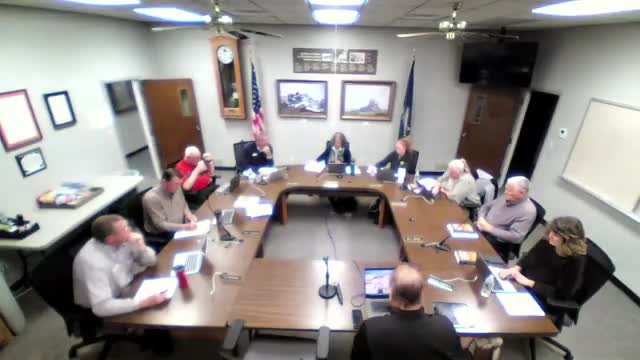
Summary
After community meetings and 160 survey responses, board members heard that renovating and renewing the existing high school ranked ahead of building a new high school; the board asked staff to refine Option 2 cost and program details, to research potential land for a future site, and set two special work sessions.
McPherson school board members heard detailed results from recent committee and community meetings on facility planning and moved to schedule additional work sessions while directing staff to refine a preferred renovation plan.
Dwayne Cash, a district staff member leading the facility-planning engagement, summarized feedback from committee and three community meetings and a telephone survey. He said the largest group of respondents preferred Option 2: “renovate and renew the existing high school,” and recommended the board treat Option 2 as a baseline while the district refines program and cost estimates. “Our recommendation right now is that we, you know, refine option 2 as a baseline scenario,” Cash told the board.
Nut graf: The presentation quantified community responses and trade-offs. When respondents saw price estimates, renovate-and-renew rose in preference, a phased Option 3 stayed low, and building a brand-new high school dropped in rank. Board members asked staff to produce tighter cost models, clarify what a bond proposition would buy, and gather property-price information if the district wants to keep a future new-site option open.
Cash told the board that committee meetings and two public sessions attracted roughly 120–130 attendees per session and that the district collected about 160 survey responses: 52 students, 41 parents, 46 community members and 21 staff. In combined results presented by staff, Option 2 was the top choice (about 47 percent of respondents by participant), Option 1 (new high school on a new site) trailed, and Option 3 (a smaller $50M–$65M phase 1) received the least support across groups. Cash presented cost ranges staff used for public discussion: Option 1 roughly $160,000,000; Option 2 roughly $95,000,000–$110,000,000; Option 3 roughly $50,000,000 (Cash described the figures as estimates that require further refinement).
Board members asked specific follow-up questions about program configuration and costs. Several trustees pressed staff to quantify what would be included in each dollar figure (for example, how much of an elementary-suite budget would be storm shelters or secure entries) and to tighten square-foot estimates used in the cost model. One trustee warned that voters will expect concrete, itemized descriptions when the district requests bond funding.
Trustees also discussed grade-configuration alternatives raised by the community. Cash said meeting participants showed notable support for a model that separates fifth- and sixth-grade students from seventh- and eighth-grade students (a 5–6 center and a 7–8 center), and staff noted that incorporating a 5–6 configuration would increase project cost because it requires additional classroom space.
The board asked staff to: (1) refine Option 2 into one or more clearer, community-ready concepts with updated cost models and contingencies; (2) verify the assumptions behind the estimates (square footage, site work, contingencies for inflation/ tariffs); (3) secure property-price information and preliminary availability if the board wishes to preserve Option 1 as a long-range possibility; and (4) share raw survey data and the telephone-survey instrument with the board for independent review. Cash said the telephone-survey vendor is Excellence K-12 and that the vendor will use a call center; he offered to confirm whether calls are recorded and to share raw response data with the board.
Trustees emphasized transparency. One board member said she wants the district to make clear to voters what specific improvements a bond would fund and noted the community’s repeated request to show evidence of financial stewardship before asking for additional tax revenue. The district presented an estimate of potential mill-levy increases tied to the scenarios: staff said Option 2 would be about a 9.5-mill increase (approximately $19 per month for the district median home value cited by staff), while Option 1 would be far larger (staff noted a roughly 21.1-mill increase estimate). Staff and trustees repeatedly said those mill estimates are illustrative and depend on final scope, assessed valuation and bond structure.
Votes at a glance: The board approved the meeting agenda at the start of the session (vote recorded as 7–0). Later the board approved a motion to schedule two special board work sessions to continue facility planning: November 25 at 6 p.m. and December 1 at 6 p.m.; that motion passed, 7–0.
Ending: Cash and district leadership said they will bring refined concepts, a higher-fidelity cost model, and any available property-price information to upcoming meetings. Trustees asked staff to ensure the next rounds of public outreach and any ballot language make clear what voters would receive for the bond ask, including which buildings would receive storm shelters, secure entries, additions, or demolitions. The board also asked staff to coordinate schedules so trustees can review telephone-survey results before taking a final direction on December timelines.