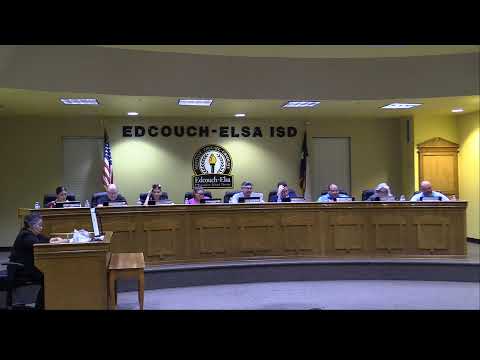
South Texas College pitches center for short-term workforce certificates at district facility
Loading...
Summary
South Texas College representatives proposed a partnership with Edcouch-Elsa ISD to offer dual credit and short-term workforce certificates at district facilities, including welding, construction and health programs; an MOU is being drafted.
South Texas College representatives told the Edcouch-Elsa Independent School District board on Monday that the college is ready to partner with the district to offer dual-credit courses and short-term workforce certificates at district facilities.
The announcement came during a presentation by Dr. Solis and South Texas College staff, who said the college has enrolled about 200–220 Edcouch-Elsa students in dual-credit courses this semester and that the institution has saved local families approximately $6,500,000 over the past 11 years by offering dual credit.
The college outlined several program areas it said could begin quickly, including welding (with a first cohort expected to complete a certificate), OSHA 10 and 30 safety training, certified customs specialist courses, certified production technician and heavy-equipment operator training. The college’s presenters said many of the offerings are short-term, noncredit certificates or registered-apprenticeship pathways that can also be available to students age 16 and older.
"This semester alone, you all have over 200 close to 220 students enrolled taking dual credit courses," said Dr. Rebecca Delano, identified as an associate vice president from South Texas College. "This past May, you had 53 graduates who earned an associate's degree with us."
College staffors said they had toured district facilities and viewed the elementary campus space and gym as potential lab areas. Carlos Margo, introduced as the dean for the proposed Center for Advanced Programs, said the district’s gym could be adapted into a lab for construction- or heavy-equipment training and that the college can register apprenticeships for high-school students.
Presenters said an MOU is being developed. "I know that there's an MOU that is that is being, developed right now," Dr. Solis told the board. Board members and attendees asked questions about timing and the MOU; Dr. Solis confirmed the MOU had not been finalized and said the college planned to brief its board the next day.
Board members expressed both cautious optimism and historical wariness: several members said previous efforts to place a college presence in the Delta area had stalled in the past. Trustee remarks emphasized transportation and access as major local barriers to higher education and said short-term, career-focused credentials could help local residents find work without leaving the area.
No formal board action on the MOU was taken at the meeting; trustees indicated the district’s staff and legal counsel would continue final negotiations.
Ending: College presenters invited further campus visits and said they would return as the MOU moves toward finalization. Board members thanked the presenters and said they looked forward to more detailed implementation and the final MOU review.