Get Full Government Meeting Transcripts, Videos, & Alerts Forever!
Get email alerts on the Restorative Justice topic
No spam. Unsubscribe anytime.
Middlesex DA urges wider use of restorative justice for antisemitic incidents; commission explores state office
Summary
Middlesex County District Attorney Marian Ryan told the commission that restorative justice—used in Massachusetts since the 2018 criminal justice reforms—improves victim satisfaction and lowers recidivism, and she urged broader adoption and statutory changes to enable education and restitution as part of dispositions.
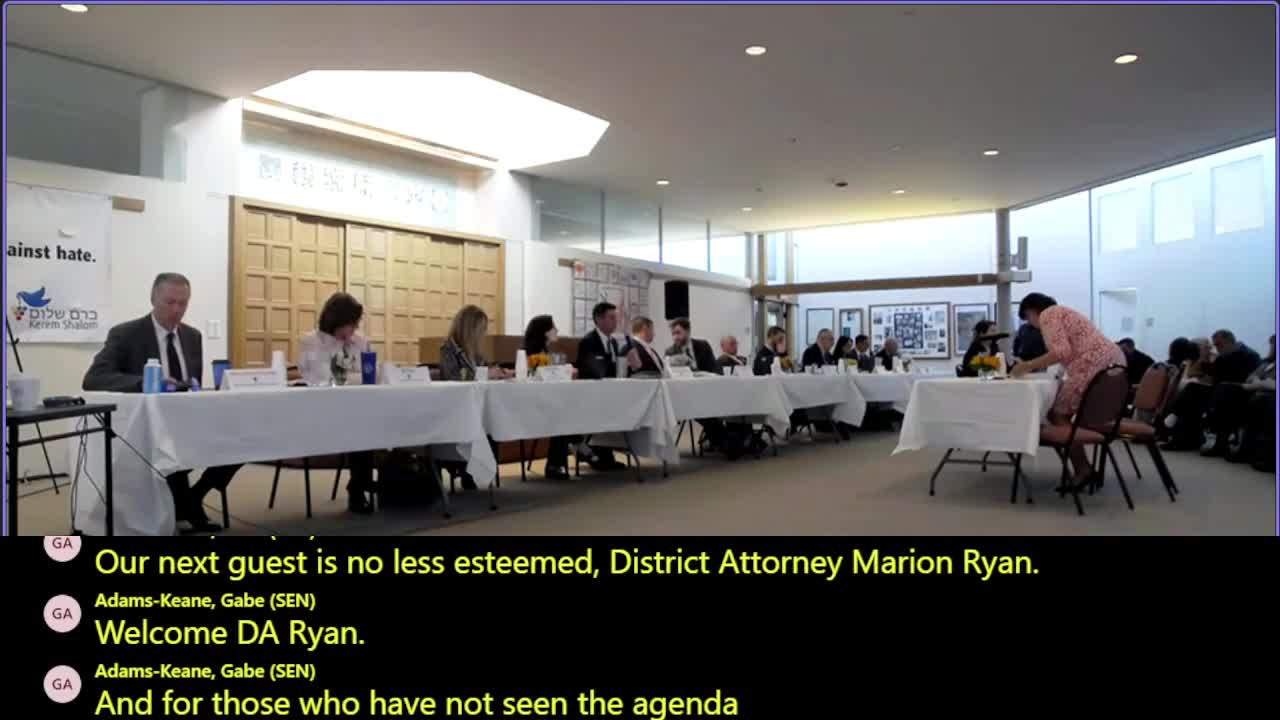
District Attorney Marian Ryan described Middlesex County—s multiyear use of restorative justice circles for bias and hate incidents and told the commission those programs increase victim satisfaction and reduce repeat offending.
"Restorative justice gives a person who has been victimized an opportunity to really share what that impact has been, and it also gives them an opportunity to ask questions of the person who has wronged them," Ryan told commissioners. She said victims' satisfaction in cases that included restorative processes rose from about 57% to about 89% and that reconviction rates in cases with restorative justice dropped from roughly 39% to about 16% in the samples she cited.
Ryan described the statutory framework the office helped develop after 2018 criminal justice reform and said restorative justice can be used at multiple stages: for diversion of young people, as a disposition condition alongside more serious sentences, or as a community response for harms that do not meet criminal thresholds. She noted practical limits: some hate‑crime statutes limit who the legal victim may be in certain offenses and restitution processes do not always remit funds to community amelioration; she urged statutory fixes so education and restitution can be required in more outcomes.
Commissioners noted a separate 2025 bill proposal to create a state office of restorative justice; Ryan welcomed that option and provided to the commission her recommended bills and statutory drafting notes.
Ending: Commissioners asked Ryan for follow‑up materials; she said she would submit bills and background. The commission—s public record will consider those materials when weighing recommendations about statewide restorative programs.