Get Full Government Meeting Transcripts, Videos, & Alerts Forever!
Get email alerts on the Tolling Express Connector 241 91 topic
No spam. Unsubscribe anytime.
California Transportation Commission holds informational hearing on SR 241–SR 91 express connector tolling application
Summary
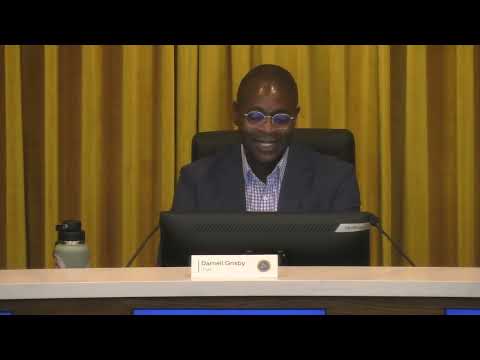
The California Transportation Commission held an informational hearing Sept. 29 in Yorba Linda to receive public comment on an application from the Foothill Eastern Transportation Corridor Agency to authorize tolling for an express connector linking State Route 241 to the SR‑91 express lanes. The commission's chair, Darnell Grisby, opened the hearing and emphasized that it was informational only and that “no action will be taken today.”
The California Transportation Commission held an informational hearing Sept. 29 in Yorba Linda to receive public comment on an application from the Foothill Eastern Transportation Corridor Agency to authorize tolling for a proposed express connector linking State Route 241 to the SR‑91 express lanes. The commission's chair, Darnell Grisby, opened the hearing and emphasized that it was informational only and that “no action will be taken today.”
The application, which the commission received Sept. 17, would create a new tolled express connector that drops into the SR‑91 express lanes in the corridor median. Paul Gee, the commission’s chief deputy director, summarized the review process under Assembly Bill 194 and said commission staff are “reviewing the application and will be taking into consideration all of the public comment” before presenting a recommendation at a future publicly noticed meeting.
Why it matters: supporters say the connector would reduce long queues on northbound SR‑241, shorten travel times on the 91 corridor and reduce dangerous weaving where traffic merges at the county line between Orange and Riverside counties. Opponents (in this record, none of whom registered a formal opposition at the hearing) have previously raised concerns about the connector degrading performance on the existing 91 express lanes; agency leaders described technical and governance measures intended to prevent that outcome.
Project overview and claimed benefits Ryan Chamberlain, chief executive officer of the Foothill Eastern Transportation Corridor Agency (TCA), described the connector as a 7‑mile package of improvements that would include a distinct toll point for the connector and would drop traffic directly from the 241 into the SR‑91 express lanes in the center median. Chamberlain said the connector would not use state or federal funds for construction or operations and that TCA plans to fund delivery with a loan from its unrestricted cash reserves. "There will be no use of state and federal funds or liabilities to the state for the construction, operations, or maintenance of the 241/91 Express connector," he said.
Stephanie Blanco, TCA’s chief capital programs officer, detailed operations and pricing. The connector would require FasTrak transponders and use dynamic pricing with a progressive demand management (PDM) system that pairs congestion pricing with tools such as connector metering, HOV‑only restrictions and bus/van‑pool priority. Blanco said the agency’s modeling anticipates typical tolls in the single digits most of the week, with higher prices likely on Thursday and Friday afternoon peaks. She said TCA’s financial plan assumes roughly $30 million in average annual revenue and a $516 million project development and construction cost to be repaid to TCA over the facility’s operating term.
Partnerships, governance and protections Representatives of the three regional operators — Orange County Transportation Authority (OCTA), Riverside County Transportation Commission (RCTC) and Caltrans District 12 — spoke in support while stressing safeguards. Kirk Avila, OCTA general manager for express lanes, said the agency would “retain authority over these demand management tools to ensure operational performance is protected.” Aaron Hake, executive director of RCTC, said the commission’s unanimous vote to approve master and operating agreements followed years of technical work and was aimed at protecting existing 91 express‑lane users and Riverside County taxpayers from unintended impacts.
Caltrans District 12 Director Lan Zhao said Caltrans is the project’s environmental lead and will approve design, advertise and administer construction, and provide maintenance. Zhao described the connector as aligning with Caltrans’ goals to improve safety and reliability in a corridor she characterized as among the state’s busiest.
Equity, enforcement and successor operations Blanco described equity measures TCA plans to carry forward from its existing programs — including PayNearMe retail payment for unbanked customers and free passage for registered buses, vanpools and disabled‑veteran license plates. TCA intends to allow HOV‑3+ users free access during off‑peak periods but not during the most congested peak hours.
Enforcement would use the California Highway Patrol initially, with automated enforcement considered when technology permits. Blanco also explained a successor‑operator plan: TCA expects the connector to remain in operation in coordination with the SR‑91 express lanes through 2067; if TCA sunsets before then, OCTA is identified as the prospective successor operator subject to meeting toll‑authority and operational requirements.
Public comments and local support More than two dozen representatives of business groups, city governments, labor and regional planning agencies spoke in favor during the public comment period. Organizations and officials registering backing included the Orange County Business Council, Southern California Association of Governments (SCAG), the Association of California Cities‑Orange County, chambers of commerce, local city councilmembers, labor union representatives and former CTC commissioner Lucy Dunn. Supporters cited reduced congestion, travel‑time savings, improved safety and regional economic benefits. Paulina Alvarez of the Orange County Business Council said OCBC “urges approval to ensure this critical connector can move forward.”
Next steps and staff direction Commission staff will consider the oral comments from tonight’s hearing and any additional written comments submitted during the public comment window. Paul Gee told the commission that staff will prepare a recommendation on whether to approve the tolling application for a future CTC meeting; the hearing record and the staff recommendation will be publicly noticed before any decision. Chair Grisby closed the hearing after public comment and reiterated that the commission will take no action at this meeting.
Provenance: The commission received the application Sept. 17 and convened the public hearing Sept. 29 in Yorba Linda to accept comment. The applicant and partner agencies repeatedly described program elements (progressive demand management, FasTrak requirement, HOV discounts, no state/federal construction funding) and the planned governance approach to protect 91 express‑lane performance.