Get Full Government Meeting Transcripts, Videos, & Alerts Forever!
Get email alerts on the Public Health topic
No spam. Unsubscribe anytime.
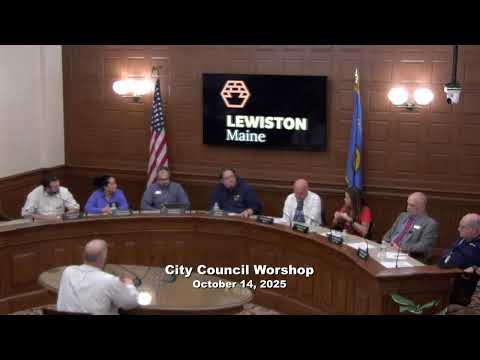
Lewiston councilors coalesce on syringe-services ordinance: one local licensee with up to two sites; 1:1 exchange left to providers
Summary
Lewiston councilors signaled agreement during a workshop on a draft syringe service program ordinance to limit local licensing to one provider with up to two brick-and-mortar sites, to omit a city-mandated 1:1 syringe exchange ratio, and to defer mobile-unit rules to a separate ordinance.
Lewiston — Councilors at a workshop on the city’s proposed syringe service program ordinance agreed on several policy points that staff will draft into a consolidated amendment for the city council’s next meeting.
Director Connor told the council the discussion would focus on four primary topics: “the 1 to 1 exchange requirement, the number of licenses, the zoning restrictions, and the allowance for mobile services.”
Why it matters: the ordinance would create local licensing, zoning and operational guardrails for syringe service programs (SSPs) in Lewiston, supplementing state and federal guidance. Councilors emphasized they want local authority to inspect and set conditions while avoiding prescriptive operational rules best left to public-health professionals.
Most significant outcomes from the workshop
- Licensing: Councilors signaled a preference to limit local licensing to a single licensee (one provider) while permitting up to two brick-and-mortar locations under that license. Councilors and staff agreed the ordinance language can specify one licensee with up to two fixed locations; mobile services will be addressed in a separate ordinance. Director Connor said staff would draft language and consult the city attorney to implement the approach.
- 1:1 exchange ratio and syringe caps: The council reached a working consensus to remove city-required 1-for-1 exchange language from the ordinance and to leave distribution decisions to licensed SSPs and CDC/state guidance. Councilor Chittum cited program data, saying the latest CDC-reported figures show Spurwink distributed 104 syringes for every 100 collected, and other councilors noted the state currently caps distributions at 100 syringes per visit. Several councilors asked staff to leave the ordinance silent on a distribution cap so it can adapt to evolving CDC or state rules; others said they would prefer a local cap (figures floated during discussion ranged from about 30 up to the state cap of 100).
- Zoning and hospitals: Councilors agreed to allow SSP operations on hospital campuses and to define those permitted areas explicitly (by street addresses or parcel IDs) so that hospital main campuses such as Central Maine Medical Center and St. Mary’s could host licensed SSP activity without creating broad new zoning entitlements across the city. Councilors also emphasized the license would still be a city license and that hospitals would not be free to sublease unlimited locations to third parties without review.
- Mobile services: Mobile SSP operations will be addressed in a separate ordinance. Councilors said the workshop’s ordinance should regulate fixed, physical locations and that a later regulation would set rules for mobile units.
- Good-neighbor policy and buffers: The council agreed to remove the ordinance’s 1,320-foot-radius language and instead require each licensee to propose a good-neighbor policy as part of its operations plan; staff would review and recommend whether the policy is acceptable. Councilors said the requirement should focus on what happens on or immediately adjacent to the provider’s property rather than a broad quarter-mile zone.
- Hours of operation: Councilors directed staff to remove specific hour and weekend restrictions from the ordinance; operators would include proposed hours in their operations plan for staff review and city approval with each license application.
- Age and state/CDC alignment: Councilors agreed to remove local age-specific distribution language (references to 18 years) and rely on CDC/state participant requirements instead, to avoid conflicts if higher-level guidance changes.
- Licensing fees and administration: The council discussed license fees at length but made no final decision at the workshop. Proposals on the table ranged from keeping an existing higher fee (mentioned in the packet) to lowering it (suggestions included $50 or waiving renewal fees). Staff said fee schedules are set in the city’s policy manual, not the ordinance, and that staff would return with estimated administrative costs (inspection and review time) so the council could set a fee that reflects city costs while not unduly burdening nonprofit providers.
- Drafting and wordsmithing: Councilor Chittum and others raised numerous non-substantive editorial and clarity edits. Staff proposed consolidating substantive policy directions into a single amendment and, separately, presenting clerical/wording corrections as a block amendment for council consideration; city attorneys will review language changes that could have legal effect.
What speakers said
Director Connor (city staff) summarized the meeting goal: to get “clear and final direction on several key policy points, within the proposed SSP ordinance” so staff “can prepare a final draft of the ordinance for a public hearing, and continue the first reading at next week's regular city council meeting.”
Ernestine Peralta of Spurwink, a local SSP provider, told councilors the number of syringes distributed varies by client and clinical judgment: “It is based on their individual circumstances.”
Councilor Chittum cited program data: “The latest data that's been reported to CDC indicates that Spurwink has distributed a 104 needles for every needle that they've collected.”
Councilor Gallant urged the council to write rules that would work even if the current local provider were not operating in the city, saying the council should not craft policy that relies solely on a known provider’s current practices.
Next steps and timeline
Staff will prepare a consolidated amendment reflecting the policy directions from the workshop for the council’s packet ahead of the next regular meeting (the director said the consolidated amendment will be circulated and that staff will consult with the city attorney). The council will consider the continued first reading, the carried-over motion concerning 1:1 exchange, and the consolidated amendments at the next meeting. Staff also will return with estimated administrative costs for inspections and licensing to inform the fee discussion.
Ending note
Councilors characterized the workshop as a step toward local oversight and clearer operational expectations rather than an effort to supplant public-health practice. Several members emphasized the ordinance’s inspection and licensing authorities as the primary local benefits: local staff would be able to review operator plans and inspect facilities while leaving day-to-day clinical decisions primarily to licensed public-health providers and existing CDC/state guidance.