Get Full Government Meeting Transcripts, Videos, & Alerts Forever!
Get email alerts on the Historical Documents Display topic
No spam. Unsubscribe anytime.
Kern County trustees hear divided testimony on proposed historical documents display including Ten Commandments; vote scheduled for November
Summary
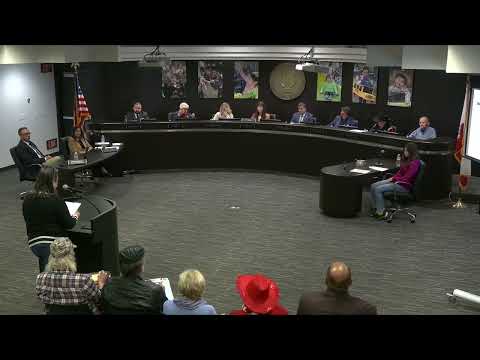
Trustees of the Kern County Board of Education heard nearly two hours of public comment and a legal presentation Tuesday on a draft resolution to adopt a public display of historical documents — including the Ten Commandments — at schools under the county board’s jurisdiction.
Trustees of the Kern County Board of Education heard nearly two hours of public comment and a legal presentation Tuesday on a draft resolution to adopt a public display of historical documents — including the Ten Commandments — at schools under the county board’s jurisdiction.
The proposal, presented to the board as “a historical documents display,” was defended by Mariah Gondaro, litigation counsel for Liberty Counsel, who told trustees the resolution as drafted is "litigation proof" and said Liberty Counsel would represent Kern County "free of charge" if a lawsuit were filed. Gondaro said the packet of documents proposed for the display includes the Declaration of Independence, the Bill of Rights, the Pledge of Allegiance and the Ten Commandments, and that she and her colleagues have litigated similar displays in other jurisdictions.
The presentation followed public comment that was sharply divided. Reverend Angelo Frazier, who has previously spoken to the board, thanked trustees for their consideration of a Ten Commandments display and urged adoption. Several parents and local organizations opposed the proposal at the meeting, citing constitutional and inclusivity concerns. "Posting the Ten Commandments in public school classrooms violates the establishment clause," speaker Laurie Braschler told trustees, citing Stone v. Graham. Building Healthy Communities Kern representative Brian Ossorio urged the board to prioritize students' mental health and an inclusive environment. Parent Lindsay Parker said classrooms should be neutral: "When we put one religion's commandments on a classroom wall, even with good intentions, it sends the wrong message."
Board members and staff asked clarifying questions about scope, funding and legal exposure. Trustee questions and staff comments clarified that, as currently drafted, the resolution would apply only to schools directly under the county board’s jurisdiction (for example, county-operated alternative education and community schools), not to every district-run campus in Kern County. Board members asked staff to provide a list of the specific schools under county jurisdiction to make that scope clear at the next hearing.
Paul Linfesti, speaking during public comment, urged trustees to consider litigation costs and recommended the board not divert funds from teachers and student supports to defend a challenged display. Several trustees also asked for a clearer attorney engagement agreement; one trustee said the agreement posted with the packet appeared to be an earlier document and asked staff to supply the correct agreement before the next meeting.
Gondaro cited a series of court decisions in explaining the legal theory behind the proposed display and the office's readiness to litigate; she told trustees Liberty Counsel had prevailed in litigation over similar displays in Kentucky and Giles County, Virginia, and cited Supreme Court precedent and Ninth Circuit cases she said were favorable. She also advised trustees that placement (outside common areas versus inside classrooms) and the surrounding context were legally significant.
Trustees directed staff to return next month with a revised working draft, a corrected attorney engagement agreement, and a list of the county-operated schools that would be affected if the board adopts the resolution. The item was scheduled for formal consideration and possible vote at the board's next regular meeting on Thursday, Nov. 13.
Why this matters: The proposed resolution raises issues of constitutional law, district fiscal exposure and student inclusion. If adopted for county-operated campuses, the resolution could prompt litigation and will shape public discussion about what material is displayed on public-school property.
What the board will do next: Staff will circulate the corrected attorney engagement agreement and a clarified draft of the resolution, list the specific county-operated schools covered, and return the item for official consideration at the Nov. 13 board meeting.