
San Francisco Health Commission hears warning of large federal and state Medicaid cuts, local impacts uncertain
Get AI-powered insights, summaries, and transcripts
Sign Up Free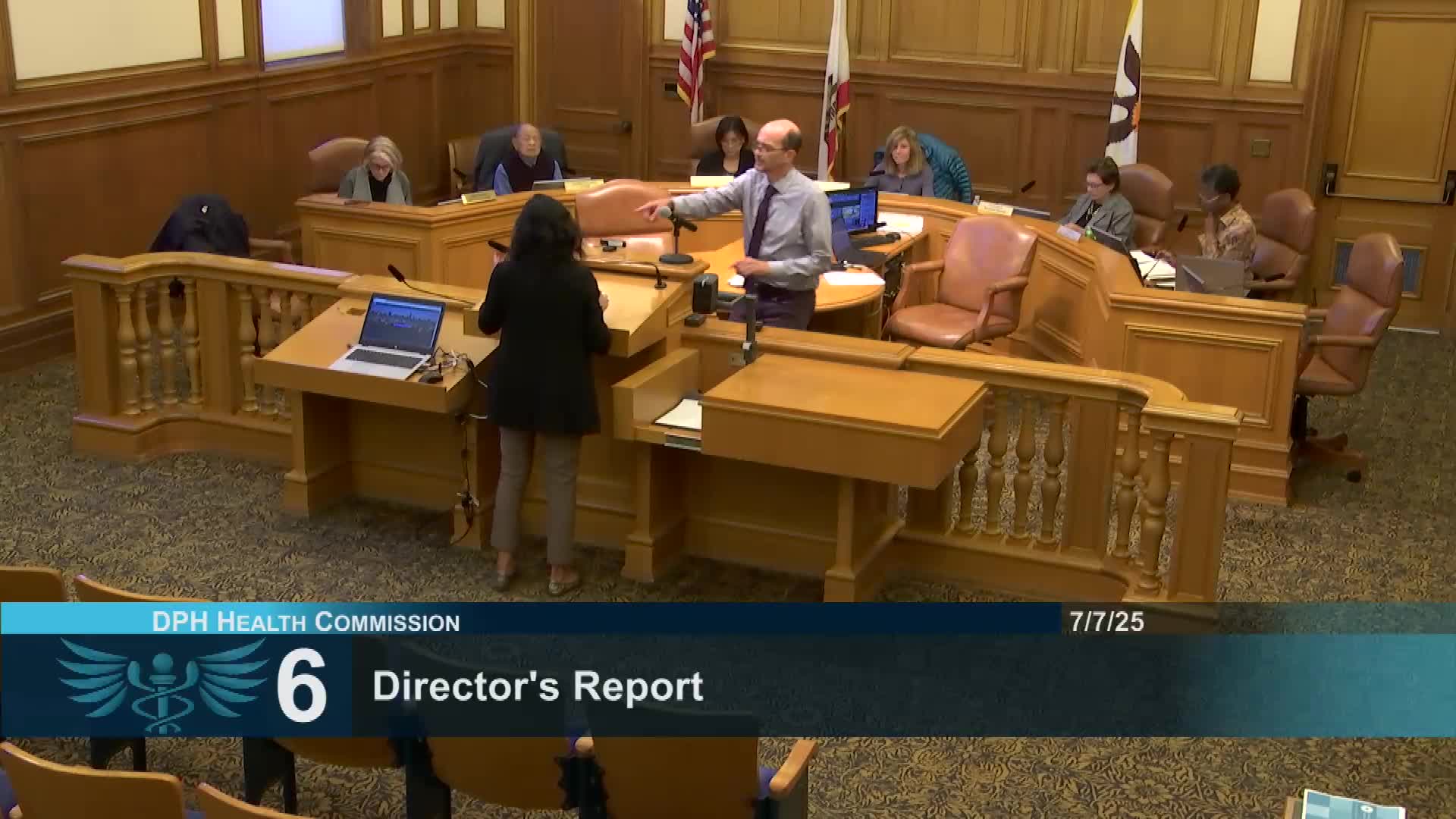
Summary
Deputy Director Naveena Baba told the Health Commission that recent federal reconciliation legislation and the state budget will reduce Medicaid funding and eligibility in stages beginning in 2026, potentially shrinking coverage and shifting costs to local providers and the city.
At a San Francisco Health Commission meeting, Deputy Director Naveena Baba of the Department of Public Health briefed commissioners on recent federal and state budget actions she said will shrink Medicaid coverage and change payment rules, with effects beginning as early as 2026.
"These are the most significant cuts that Medicaid has faced since its inception," Baba told the commission, summarizing the federal reconciliation bill and the California budget actions she has reviewed. She said the department is still completing fiscal analysis and will return with more precise local estimates.
Baba outlined a multi-year timeline the department expects based on current federal and state proposals and passage to date. Among the items she described: a January 2026 state restriction that would freeze Medi‑Cal enrollment for adults 19 and older with what the state calls "unsatisfactory immigration status" unless they were enrolled prior to that date; a shift for that population from prospective payment system rates for federally qualified health centers to fee‑for‑service; a freeze on adult dental coverage taking effect July 1, 2026; and a federal reduction in the federal medical assistance percentage (FMAP) for emergency Medicaid from 90% to 50% beginning in 2026.
Baba said further changes would follow in 2027 and 2028, including a January 2027 state requirement for a $30 monthly premium for certain adults (described in the presentation as the UIS population), the start of federal Medicaid work requirements in January 2027 (80 hours per month for adults 19–64), and more frequent eligibility redeterminations (every six months). She said federal directed payments to states would be reduced starting in 2028, declining in stages until managed‑care payments are tied closer to Medicare benchmarks, and that the federal provider tax would be lowered incrementally until it reaches 3.5 percent.
Baba and commission members cited broad national estimates presented in the briefing: about 12 million people could lose Medicaid over the next decade because of the federal changes, and the likely end of enhanced ACA premium tax credits could lead to about 5 million more people losing coverage, for a combined estimate of roughly 17 million people nationally. Baba cautioned these are national estimates and that local effects depend on state actions and implementation details.
Locally, Baba said the city and county are already preparing: the Board of Supervisors was voting on the city's budget the next day and the city has set aside a contingency fund she described as roughly $400 million to mitigate some federal cuts. She said DPH has begun fiscal modeling but that the final local impact depends on pending state emergency sessions and any changes legislators make in response to federal action.
Commissioners asked for the department's written notes and for outside summaries from lobbying and public‑policy groups; Baba said DPH would distribute analyses and follow up with more detailed presentations once federal and state details firmed up.
The commission did not take formal action on Baba's report during the meeting; commissioners thanked staff for the update and requested continuing briefings as the fiscal picture evolved.
The presentation and discussion emphasized the need for more precise local modeling and further outreach to partners and commissioners once the state and federal implementation plans are finalized.