Get Full Government Meeting Transcripts, Videos, & Alerts Forever!
Get email alerts on the Cte Exemptions topic
No spam. Unsubscribe anytime.
CTE providers ask PELSB to revise rule that adds extra alignment requirement for Tier 2/3 licensing
Summary
Lakes Country Service Cooperative asked the board to begin a rule-change process to remove an added PELSB rule requirement that Career and Technical Education candidates hold degrees or certifications aligned to each licensure area, arguing the rule creates unnecessary barriers and conflicts with how teacher-preparation programs operate.
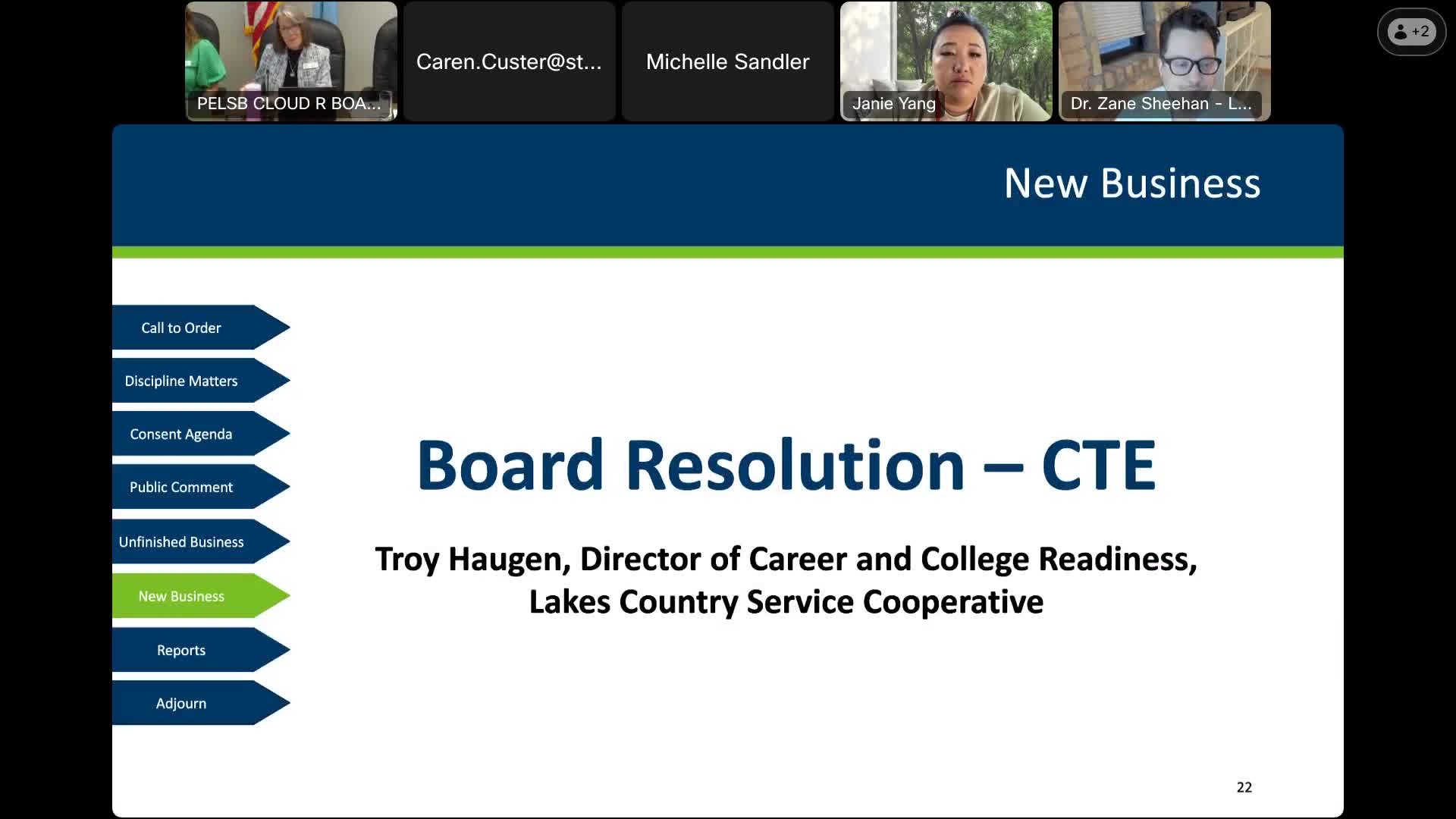
At the Oct. 10 meeting the Professional Educator Licensing and Standards Board heard a report from Dr. Sheehan, associate director of teacher licensure at Lakes Country Service Cooperative, asking the board to support a resolution to amend PELSB rules that add conditions beyond state statute for Career and Technical Education (CTE) licensure.
Dr. Sheehan told the board that Minnesota statute (cited in the presentation as Minnesota Statutes 122A.181–122A.183) provides three paths (associate degree, industry certification, or five years of experience) to meet the bachelor‑degree exemption for CTE teachers. But the board’s current rule language effectively requires a degree or certification aligned to each licensure area a candidate seeks, Dr. Sheehan said. She described a recent candidate who was enrolled in a Tier 2 program and making progress but was held at Tier 1 because the candidate did not hold an aligned associate degree for a second license being pursued.
Dr. Sheehan said that requirement imposes unnecessary paperwork and may discourage candidates from completing licensure in high‑need CTE fields such as construction, manufacturing and digital technology. She asked that the board adopt a resolution applying to Tier 2 and Tier 3 rules so staff can update decisions that may have been affected by the current wording while the board undertakes full rule revision.
Board staff said the rule was earlier reviewed in administrative proceedings and is not currently deemed to conflict with statute by that administrative process, though staff agreed to bring clearer language to the board. Several board members signaled they wanted to consider resolution language at a future meeting; staff will prepare formal language and return it to the board for a vote.