
Puerto Rico agencies back protection orders for people with disabilities but warn of implementation gaps
Get AI-powered insights, summaries, and transcripts
Sign Up Free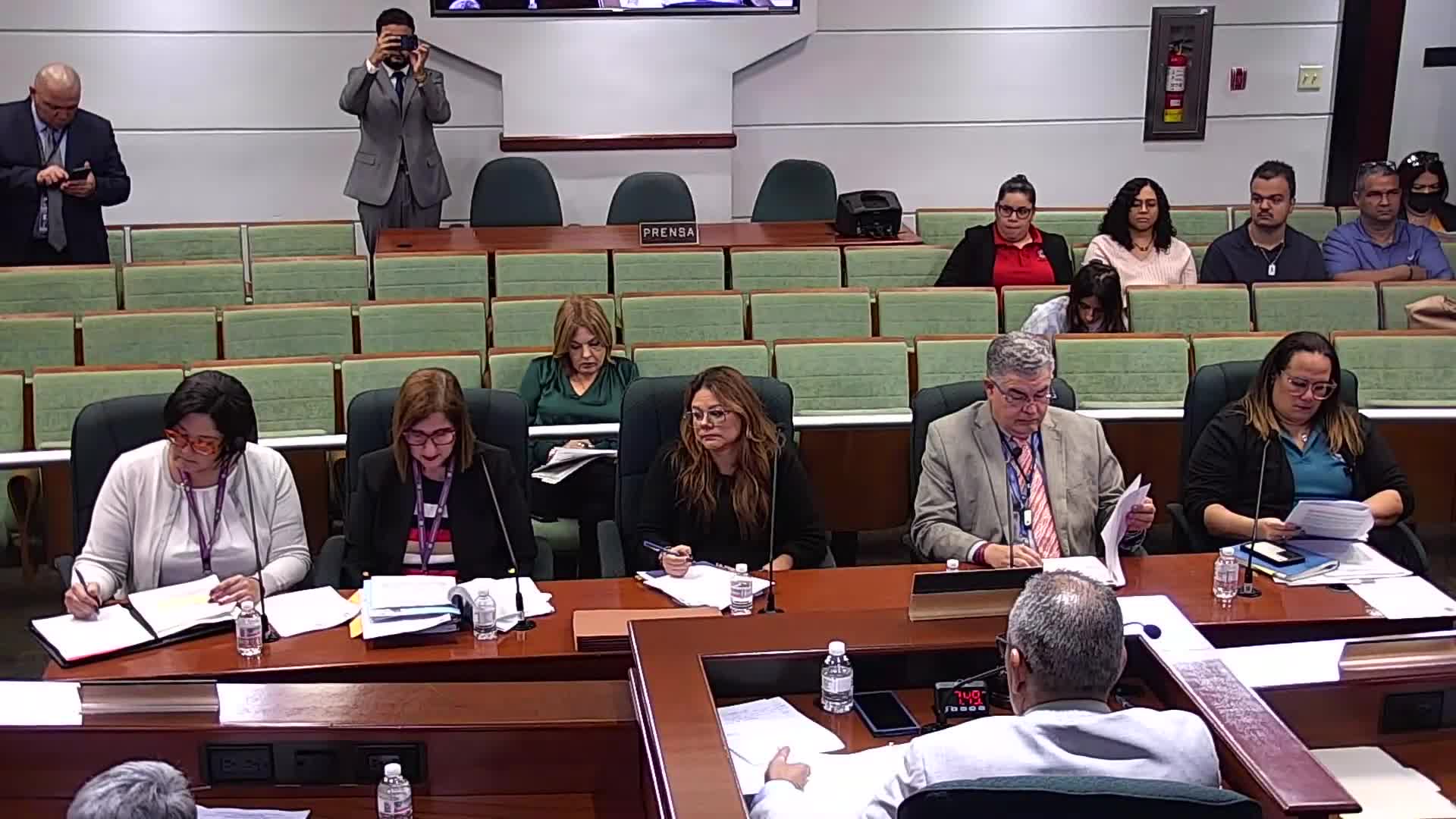
Summary
Puerto Rico officials and disability advocates told a Senate commission hearing that Proyecto del Senado 521, which would amend Law 238 of 2004 (the "Carta de Derechos de las Personas con Impedimentos"), would fill a gap by allowing people with disabilities to seek protective orders and by proposing new criminal penalties for maltreatment and neglect.
Puerto Rico officials and disability advocates told a Senate commission hearing that Proyecto del Senado 521, which would amend Law 238 of 2004 (the "Carta de Derechos de las Personas con Impedimentos"), would fill a gap by allowing people with disabilities to seek protective orders and by proposing new criminal penalties for maltreatment and neglect.
The Department of Justice, the Office of Administration of the Courts, the Defensora de las Personas con Impedimento and nonprofit service providers said the bill could expand access to immediate civil protections but flagged open questions about definitions, interagency coordination, accessibility of forms and the budget and staff needed to implement the changes.
Why it matters: The measure would create an explicit procedure for people with disabilities to request orders of protection and would add several conduct types as potential crimes or aggravating factors. Supporters said the change could help victims who currently fall outside existing remedies, while agencies warned that unclear statutory language and insufficient resources could leave implementation incomplete.
Support, with caveats
Annette Este9vez Serrano, acting secretary of justice, characterized the bill as "una medida consona con la poledtica pfablica vigente" but urged amendments before final passage to clarify definitions and align penalties with the penal code. Este9vez Serrano also recommended interagency consultations with the Defensoreda, Department of Family, Department of Health, Rehabilitation Administration, Department of Labor, Puerto Rico Police and the Administration of Courts prior to final action. "Una vez atendidas y acogidas a nuestras recomendaciones, no tendreda objecif3n legal que oponer a la continuacif3n del tre1mite legislativo," she told the committee.
The Office of Administration of the Courts, represented by Danira Muf1iz Flores, supported measures to facilitate access but urged realistic implementation timelines and accessible materials. The courts noted the bill calls for "formularios sencillos" to request orders of protection and recommended replacing that phrase with "formularios accesibles" and granting the judiciary a reasonable period to prepare templates, digital systems and staff guidance. On timeline, the administration recommended a period for entry into force and told the committee it could take about 60 days to update forms and related procedures.
Defensoreda and service providers: roles and limits
The Defensoreda de las Personas con Impedimento, represented by Jose9 Antonio Montalvo Vera, said it supports greater protections but cautioned the agency does not have the prosecutorial role envisioned by the bill. "Nuestra agencia nunca ha manejado causas de delito dentro de sus funciones," Montalvo said, explaining the Defensoreda's primary mandate is civil oversight of public services and not criminal prosecution. He warned the agency would need recurrent funding and additional attorneys to handle an expected caseload if the measure created new judicial duties for the office.
MAVI and disability advocates echoed that the measure is a step forward but pushed for accessible forms, alternate filing routes (telephone or video for people who cannot appear) and an explicit consent requirement when third parties file on behalf of a person with disabilities. Solian Josino (coordinator, MAVI services, eastern region) said the bill "representa un avance significativo" but urged accessible formats (Braille, large type, pictorial materials and sign language) and protocols to avoid shifting responsibility among agencies.
Key implementation concerns
- Definitions and scope: Witnesses urged the bill adopt a broad, clear definition of "persona con impedimento" that includes cognitive impairment and undiagnosed conditions and referenced Law 158-2015 and the United Nations Convention on the Rights of Persons with Disabilities as drafting guides. Several speakers recommended replacing the term "grave daf1o corporal" with "daf1o emocional" to avoid restrictive interpretations.
- Overlap with existing laws: Panelists noted overlaps with Law 54 (domestic violence), Law 100-21 (protections for older adults) and existing penal-code provisions (articles 127, 127A and 127B). Legal staff suggested the committee consider whether amendments to those statutes or to the penal code might be a more precise vehicle than altering the Carta de Derechos.
- Access and forms: The Administration of the Courts recommended forms be explicitly accessible (including multiple formats and notice options by email, text or phone) and proposed a reasonable implementation window (the courts estimated roughly 60 days to adapt forms and train staff).
- Budget and staffing: The Defensoreda said it currently has two attorneys in its legal unit and estimated that implementing the bill could create hundreds to thousands of new matters for agencies if protections are widely invoked; it recommended identifying recurrent funding and staffing before a final vote. The Department of Justice and the Administration of the Courts also asked for written estimates of fiscal and operational impact.
Committee requests and next steps
During the hearing committee members asked agencies to submit additional information in writing. A committee member specifically asked the Department of Justice and other witnesses to provide written comments and fiscal or operational estimates within five days. The hearing record closed with the chair thanking panelists and ending the session.
What remains unresolved: The hearing did not record any committee votes or final amendments. Major open issues are statutory definitions, how criminal penalties would align with the penal code, required interagency protocols for continuity of care when a caregiver is removed, binding accessibility standards for forms, and identification of recurring funds and staff to handle new caseloads.
Ending
Supporters and agency representatives told the committee that Proyecto del Senado 521 could expand access to protective remedies for people with disabilities but said lawmakers must resolve definitional, procedural and resource questions before the measure can be implemented effectively.