
Petoskey City holds special training on Michigan open‑meetings and FOIA rules
Get AI-powered insights, summaries, and transcripts
Subscribe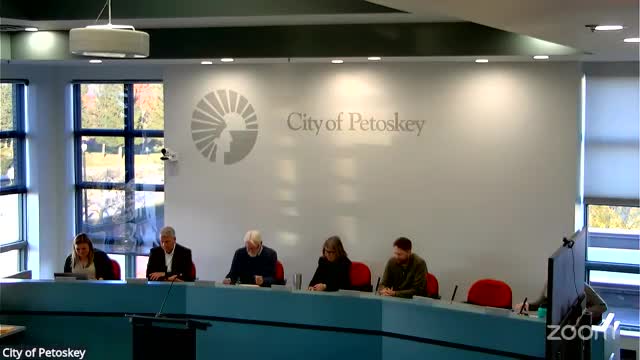
Summary
City officials and staff attended a Michigan Municipal League training covering the Open Meetings Act, Freedom of Information Act, ethics, closed‑session rules, and parliamentary procedure; no formal council votes were taken.
Petoskey City convened a special session Oct. 28, 2025, for a training presentation by Michigan Municipal League representatives on public‑meetings law, records requests and parliamentary procedure. The council established a quorum and heard presentations from Chris Johnson, general counsel for the Michigan Municipal League, and Bob Slattery, past president and a registered parliamentarian with the League.
The training reviewed Michigan’s Freedom of Information Act (FOIA) and Open Meetings Act (OMA), including common FOIA exemptions (bid documents, tentative bargaining agreements, attorney‑client privileged communications, certain police investigative records and medical or social‑security data), statutory FOIA response timelines (five business days with a possible 10‑business‑day extension), and how courts have applied those laws to email, text and other electronic records. "Where the message is stored is not as important as what the message is about," Johnson said about records on personal devices that relate to city business.
Johnson outlined the OMA’s scope and limits, including that discussions that amount to deliberation toward a decision fall within the OMA and that subcommittees of a public body can trigger the statute’s requirements. He summarized the six statutory reasons the OMA permits a closed session (discipline, strategy for collective bargaining, purchase/lease of real estate, pending litigation, employment applications, and FOIA‑exempt matters such as security plans) and noted courts narrowly interpret lawful closed sessions. He also described recent legal developments that affect remote meeting authority, citing Public Act 228 of 2020 and related court rulings on emergency powers and virtual meetings.
Slattery covered parliamentary procedure and minute‑keeping. He recommended that councils adopt a clear agenda (including a formal vote to adopt the agenda), keep minutes concise (date, time, members present/absent, actions taken and purpose of any closed session) and avoid detailed, verbatim minutes that can prolong meetings. He recommended using a brief, widely used summary form of Robert’s Rules for routine meeting practice and keeping longer explanatory material in a separate "summary" document if desired.
Presenters warned that electronic communications (reply‑all emails, councilmembers’ posts and replies on social media, and texts during meetings) can create OMA or FOIA issues when they amount to deliberation among a quorum. Johnson advised officials to use official city email and route records to the FOIA coordinator when there is an outstanding request, because discovery can reach personal accounts and devices in some cases. He reviewed FOIA exceptions and the city’s duty to appoint a FOIA coordinator and meet statutory response deadlines.
The presenters discussed remedies and penalties for violations of the sunshine laws, including civil remedies, invalidation of actions taken in violation of the OMA, and that the OMA contains criminal penalties for intentional violations. They urged officials to consult the city attorney when in doubt.
The session also covered ethical appearance and conflicts of interest, including disclosure and recusal when a council member has a financial interest in a matter or when a family member or employer could benefit. Slattery and Johnson emphasized treating each other and members of the public with civility and handling public comment in a way that is consistent with council rules and the OMA.
Council roll call was completed at the start of the meeting and a quorum was reported by the presiding officer; the session included instructions to sign in, an evaluation form for attendees, and the meeting was recorded. No formal motions or council votes on ordinances or resolutions were reported during the training session.
The presentation closed with reminders about available Michigan Municipal League resources (model ordinances, fact sheets and an inquiry service) and with an invitation for attendees to sign the meeting sheet and return evaluations.