
Committee reviews proposal for property tax deferral program targeted to low‑ and moderate‑income homeowners
Get AI-powered insights, summaries, and transcripts
Subscribe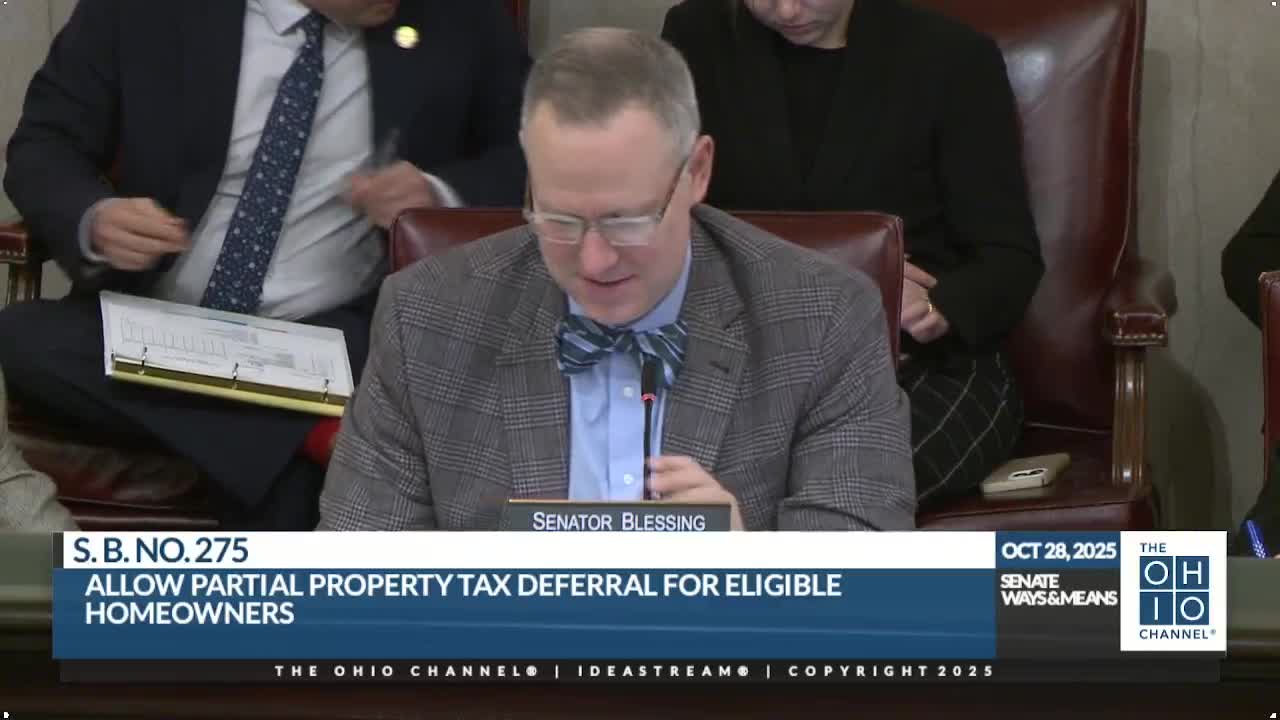
Summary
Senate Bill 275, sponsored by Senators Craig and Reynolds, would create a property tax deferral revolving fund for homeowners at or below 250% of the federal poverty level, add a manufactured‑home exemption, and require residential rental owner registration. The bill would reimburse counties through a revolving fund and make deferred taxes payable
Senators Craig and Reynolds jointly presented sponsor testimony for Senate Bill 275, which would establish a property tax deferral program for low‑ and moderate‑income homeowners and create a county revolving fund to reimburse local taxing districts.
Sponsors said the program would let eligible homeowners postpone payment of a portion of property taxes rather than risk delinquency or foreclosure. The bill also would create a manufactured‑home tax exemption, require registration of residential rental property ownership with county auditors for transparency, and strengthen auditing and fund‑management procedures. Eligible households would be those with total household incomes at or below 250% of the federal poverty level, and deferred taxes would become payable on sale, transfer or other triggering events.
Committee members discussed seed funding for the revolving fund; Chair Blessing noted similar programs in Maine and Minnesota and suggested unclaimed funds could be a potential seed source. Sen. O'Brien expressed concerns that deferral could complicate closings for new buyers if unpaid taxes are reconciled at closing and questioned whether rental registration is an unnecessary regulatory burden. Sponsors replied that county treasurers would still receive funds via the revolving‑fund reimbursement mechanism and that tax reconciliations at closings already occur under current practice.
The committee did not vote; sponsors said additional hearings and fiscal analysis would be appropriate.