
Committee advances bill limiting inside millage growth, adds county budget-commission safeguards
Get AI-powered insights, summaries, and transcripts
Sign Up Free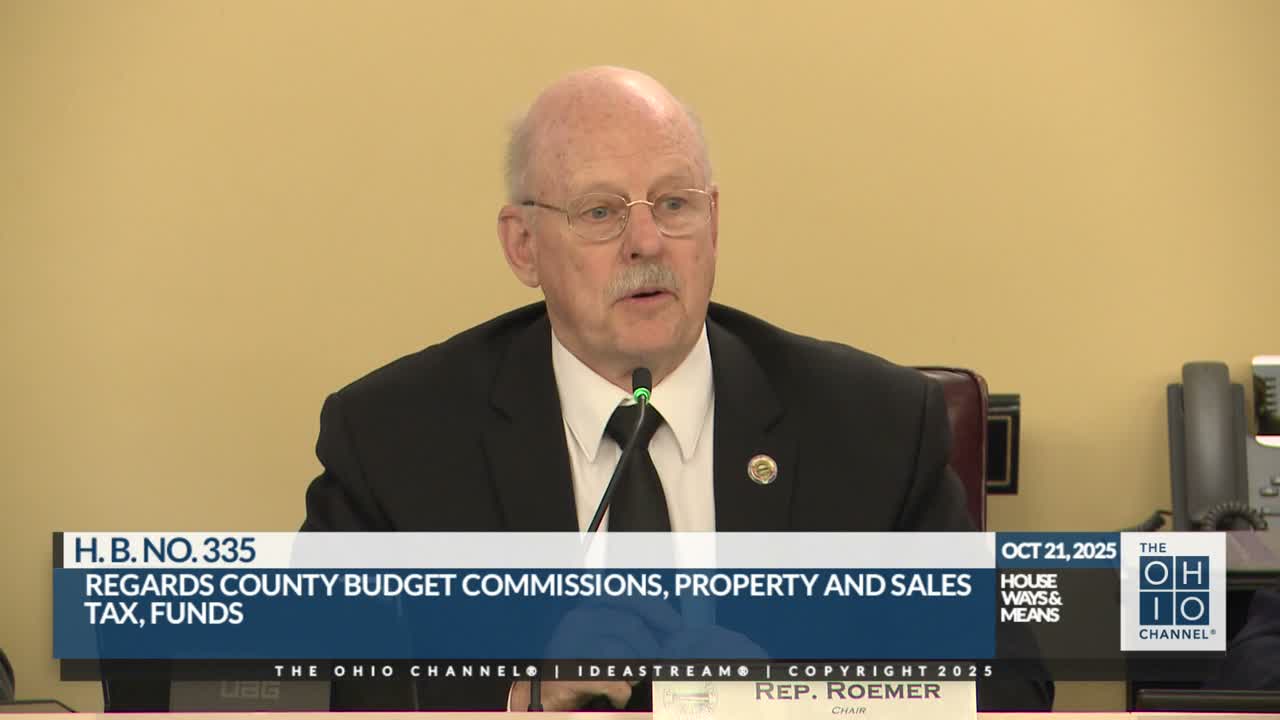
Summary
The Ohio House Ways and Means Committee favorably reported House Bill 335 after adopting amendments that would cap growth of inside millage, protect inside millage from being reallocated without budget commission oversight, and exclude new construction and abatements from the cap.
The Ohio House Ways and Means Committee on March 1 favorably reported House Bill 335 after adopting a package of amendments that would limit growth of inside millage, add oversight by county budget commissions over replaced inside millage, and exclude new construction and expiring abatements from the millage cap calculation.
Policy Matters Ohio Research Director Zach Schiller testified in opposition to broad, across-the-board limits on inside millage, saying inside millage provided nearly $4 billion statewide in tax year 2024 and that curbing its growth would reduce funding for school districts, townships and other local services. Schiller told the committee the state should consider targeted relief such as a “circuit breaker” that directs state dollars to households paying an outsized share of income on property tax rather than broad cuts that can harm local services.
What the committee adopted Representative Thomas moved an amendment that, among other changes, copied county language to protect inside millage from being reallocated by overlapping entities and required county budget commission approval if an entity sought to restore previously reduced inside millage collections. The committee adopted that amendment by voice and asked LSC to harmonize agreed changes.
Representative Troy offered and the committee accepted two amendments: one ensuring new construction and tax abatements falling off the rolls are excluded from the cap so growth from new construction produces revenue, and another to allow entities to swap inside millage for new or increased income tax revenue in certain circumstances — extended to school districts with the safeguard that voter approval is required for income-tax increases and county budget commission oversight would serve as an additional check.
Testimony and concerns Zach Schiller of Policy Matters Ohio summarized data showing inside millage produced nearly $4 billion in 2024, with roughly half going to schools and $457 million to townships statewide. He warned that limiting growth to a GDP-deflator style cap would reduce local revenue (Policy Matters’ analysis estimated a $230 million annual reduction by tax year 2024 had the cap been in place) and could prompt more local levies.
Representative Rogers asked Schiller about the circuit-breaker alternative; Schiller replied the circuit breaker is widely used across states and targets households paying too high a share of income to property tax, leaving local levies and services intact while the state funds targeted relief.
Votes and formal actions - Motion: Amend HB335 with AM136-97011 (package of amendments including county budget-commission protections). Outcome: Amendment accepted (voice/consent as announced).
- Motion: Amend to exclude new construction and abatements from cap (mover: Representative Troy). Outcome: Amendment accepted.
- Motion: Extend municipal swap option to school districts (mover: Representative Troy). Outcome: Amendment accepted; the provision requires voter approval for income-tax increases and county budget commission oversight.
- Motion: Favorably report House Bill 335 and recommend passage. Mover: Representative Thomas. Outcome: Favorably reported by committee, 11–1.
Why it matters Inside millage is a key source of local revenue for school districts, townships and other entities; committee amendments aim to limit unvoted growth while adding administrative checks to prevent entities from restoring previously reduced inside millage without oversight. Supporters argued the changes protect taxpayers by preventing unvoted spikes; opponents warned the cap could reduce funds for essential local services and prompt more local levies.
Next steps LSC was directed to harmonize and engross the accepted amendments. The committee chair said the bill package was another step in ongoing property-tax reform work and that further measures, including targeted relief proposals, remain under consideration.
Ending note The committee’s favorable report advances HB335 to the next stage of the legislative process, with LSC to produce engrossed language reflecting the amendments the committee adopted.