Get Full Government Meeting Transcripts, Videos, & Alerts Forever!
Get email alerts on the Inside Millage Cap topic
No spam. Unsubscribe anytime.
Committee adopts amendments to cap inside millage increases and to harmonize caps across local governments
Summary
The House Ways and Means Committee accepted amendments to House Bill 186 and House Bill 335 to limit inside millage increases to an inflationary cap tied to the three-year revaluation cycle and to avoid penalizing entities that voluntarily reduce tax rates.
The House Ways and Means Committee on Oct. 30 adopted amendments to two bills that would limit increases in inside millage and harmonize caps across local governments.
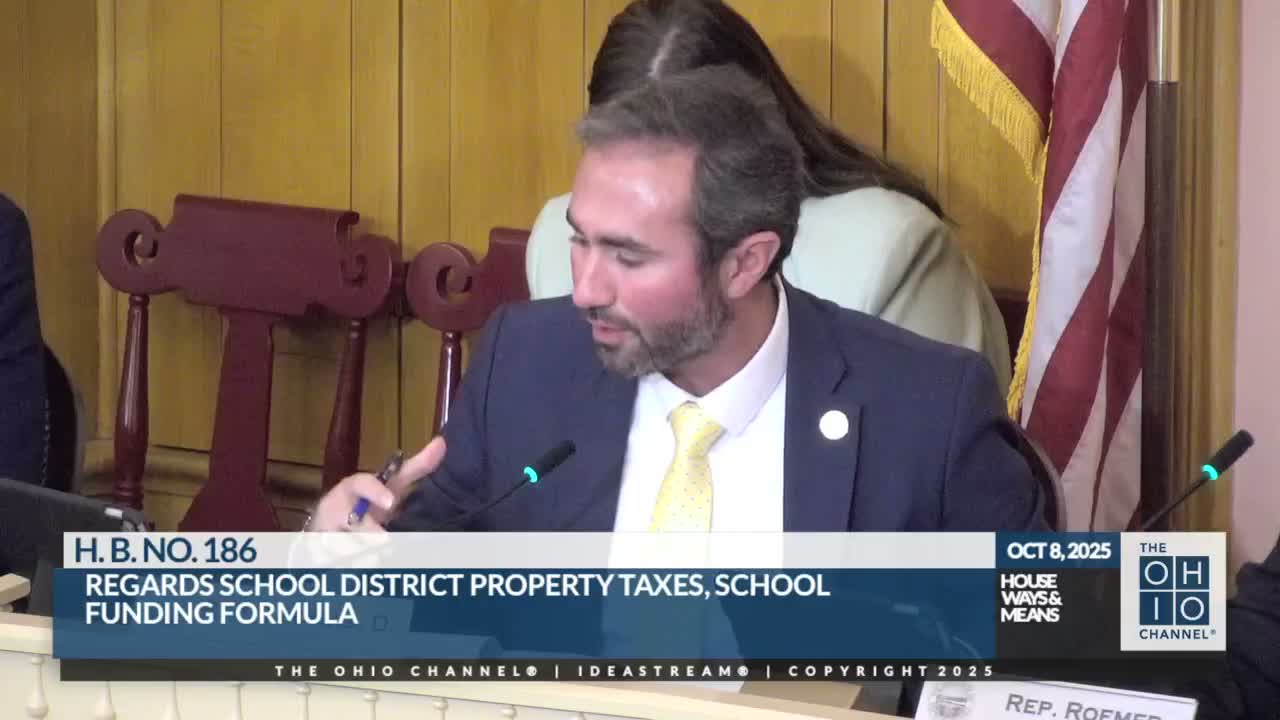
Representative David Thomas explained an amendment to House Bill 186 that ensures entities that voluntarily reduce tax rates are credited and that such reductions are accounted for when calculating January credits. The committee accepted that amendment without objection during the bill’s seventh hearing.
The committee also amended House Bill 335 to harmonize an inside-millage cap with the GDP-deflator-based limit used at revaluation cycles. Under the change, inside millage revenue for counties, cities, villages, townships and schools cannot exceed an inflationary increase measured over the revaluation cycle (generally three years). Representative Thomas said the amendment seeks to prevent tax bills and revenues from increasing above inflation at revaluation.
Committee members acknowledged concerns about glide paths and transition planning for local governments but said the intent is to prevent multi-year spikes in tax bills that occurred in recent years. Representative Glassburn and other members thanked staff for incorporating feedback; the committee asked Legislative Service Commission staff to harmonize and engross accepted amendments and substitute language where applicable.
Ending: Both items remain in committee for further consideration; members signaled intent to hold future hearings on related bills and to welcome testimony from affected joint vocational and other district types.