Get Full Government Meeting Transcripts, Videos, & Alerts Forever!
Get email alerts on the Zoning Data Center topic
No spam. Unsubscribe anytime.
Board denies rezoning request that would have removed protective proffers near Concord; data center concerns factor in debate
Summary
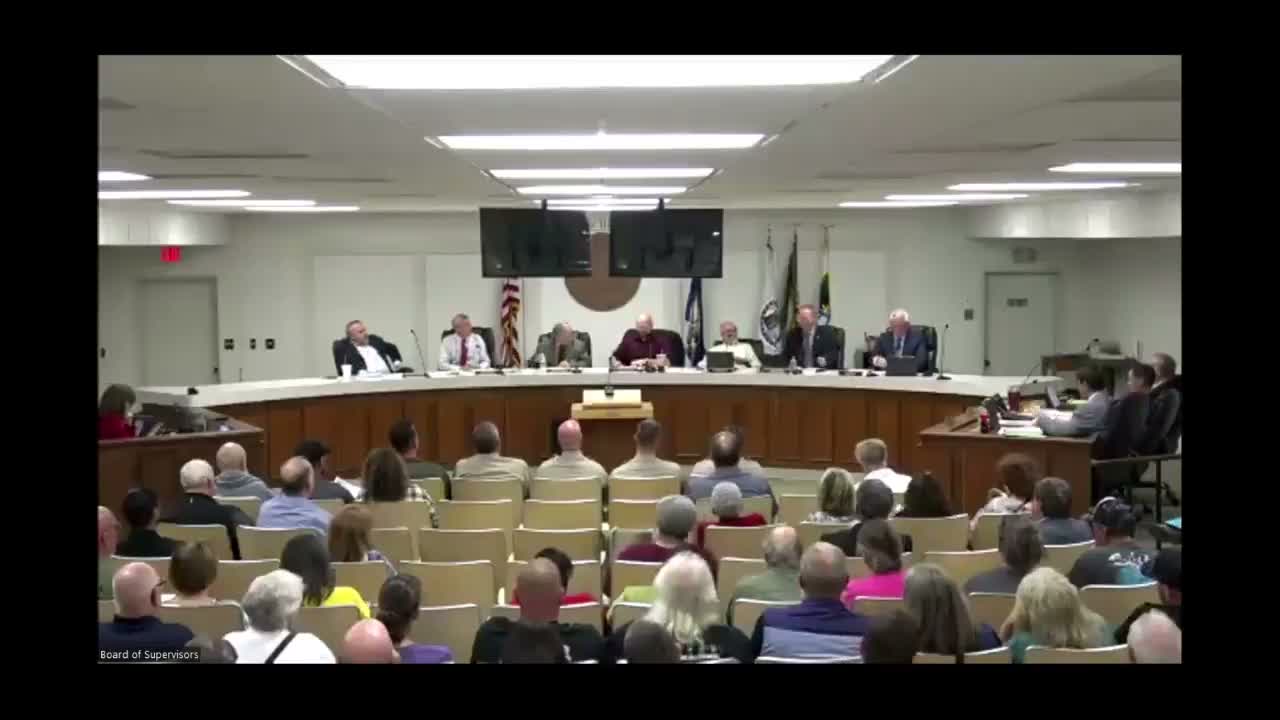
The Board of Supervisors voted 5–2 on Oct. 7 to deny a request to remove protective proffers on an industrial parcel at Richmond Highway and Cabinfield Road, a decision driven in part by concerns that the change could ease siting for a data center or other intensive uses.
The Board of Supervisors voted 5–2 on Oct. 7 to deny a rezoning request (PL‑25‑13050) that would have removed protective proffers tied to an industrial parcel near Richmond Highway and Cabinfield Road. The vote followed public comment and earlier hearings; the public hearing had been closed in a prior meeting.
Supervisor Tom Klein moved to deny the applicant’s request to remove the proffers; during the debate he emphasized the original intent of those proffers was to protect nearby residential properties. Klein told the board proffers were submitted roughly 25 years earlier at the time of the original rezoning to ensure industrial uses would be compatible with adjacent homes.
Several supervisors said the application had become focused on the prospect of a data center or similar high‑intensity industrial use. Supervisor Dalton and others urged the board to study data centers and consider stronger local controls, including potentially requiring special‑use permits for data centers rather than allowing them by right in heavy‑industrial zoning. County staff reminded the board the public hearing had closed previously and that additional public comment at this meeting would be unusual.
Board discussion recapped the parcel’s zoning history and past CIP conversations about appropriate development and minimal state requirements for facilities; staff said architectural design and final scope would determine whether a given budget level would meet applicable state standards. Klein and other supervisors emphasized that, if the county invests capital or allows development on a parcel, the board wants clarity that neighbors’ protections remain intact.
Outcome: The motion to deny the rezoning request passed 5–2, the county clerk recorded. No permit or zoning amendment was approved for the property, and the existing proffers remain in effect.
Ending: Several supervisors said staff should pursue a separate review of data‑center policy and consider whether special‑use permitting is a better framework than by‑right allowances in heavy‑industrial districts. No separate ordinance changes were adopted at this meeting.