Get Full Government Meeting Transcripts, Videos, & Alerts Forever!
Get email alerts on the Homelessness Policy topic
No spam. Unsubscribe anytime.
Council debates homelessness ordinance options, emphasizes services and displacement concerns
Summary
Jacksonville council members discussed a proposed homelessness/camping ordinance, expressing concerns about displacement, enforcement, public health and the need for partner services rather than solely punitive measures.
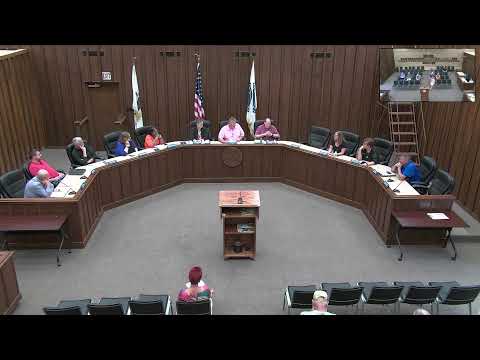
Jacksonville City Council members spent a portion of their meeting discussing a proposed ordinance addressing homelessness and public camping, with several members urging that any ordinance be paired with services and planning for where people would relocate.
An unnamed council member said the draft ordinance had been circulated and suggested the item could be placed on the agenda for a first reading if council members were ready. That council member noted the draft was modeled on an ordinance used in O’Fallon and said Chief Thompson had discussed the approach with O’Fallon representatives.
Multiple council members raised the practical challenges of simply prohibiting camping on city property. “If we pass the ordinance and we say no camping on city or public property, these individuals are going somewhere. Where?” one council member asked, underscoring concerns about displacement without housing alternatives. Another member said a local encampment east of the art gallery has created ongoing cleanup and aesthetic issues.
Members discussed enforcement limits, including whether littering laws could be used when personal items and furniture are left behind. Several said issuing littering citations would likely result in municipal-court appearances that people could not pay, and that the city lacks an obvious mechanism to compel compliance. Council members repeatedly framed the issue as both a public-health and public-safety concern and as an aesthetic issue for downtown streets and city facilities.
Suggestions offered during the discussion included designating a single allowable site with rules, providing portable toilets and dumpsters, partnering with local service organizations and ensuring transportation options for people who need to move to allowable locations. One council member said the city would need to expend resources to staff any program that required active relocation or regular cleanups.
Council members repeatedly requested input from city attorney and police leadership before advancing the ordinance. At least one member asked whether Attorney Beard and Chief Thompson had been in conversation about the draft; the transcript records that the city attorney had not yet been consulted directly on that proposal. The council did not vote on an ordinance at the meeting, but members signaled they could place the draft on the agenda for a first reading and refine it prior to any second reading.
The discussion included repeated emphasis on coordination: several members said the city should partner with nonprofits and social-services groups and plan for transport and shelter placement for people displaced by enforcement. One member framed the issue as an ongoing, unresolved problem and said communities with greater resources still struggle to find a definitive solution.
No formal direction to staff or a binding vote was recorded in the transcript; the matter remained a policy discussion at the meeting and could return for first reading if the council chooses to place it on a future agenda.