Get Full Government Meeting Transcripts, Videos, & Alerts Forever!
Get email alerts on the School Attendance topic
No spam. Unsubscribe anytime.
Topeka USD 501 reports falling chronic absenteeism; principals point to outreach, incentives and daily data monitoring
Summary
District officials presented a chronic absenteeism update showing declines since the COVID spike and described school-led strategies — home visits, counseling, incentives, school vans and daily dashboards — to keep seat time up.
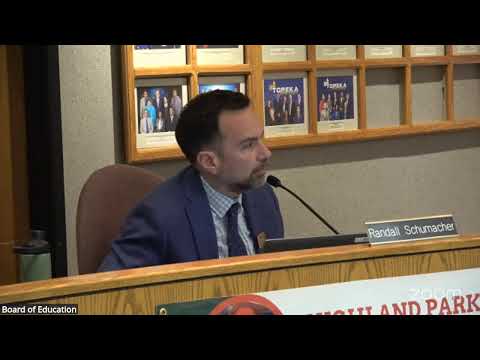
Topeka Public Schools leaders told the board Tuesday that chronic absenteeism — defined in the presentation as missing 10% or more of school days — rose during the COVID era but has been declining in the last four years, and district staff said they aim to reach the state benchmark of about 19%.
District staff said chronic absenteeism is counted as missing about 18 days per year (district calendars vary and the district uses roughly 170 days as a baseline). The district presentation emphasized the difference between truancy (unexcused absences governed by Kansas law) and chronic absenteeism (excused or unexcused missed seat time).
District leaders and principals credited several strategies for recent declines: daily data dashboards that let principals and counselors identify and triage at-risk students, home visits and counseling, incentives such as school stores and monthly prizes, partnerships with community organizations for transportation and food support, and targeted interventions such as a school van used to bring students to school.
“Once we get them through the doors and they understand that, hey — I can be rewarded just for being here at school — that’s been a huge motivator,” said Todd Hague, principal at Jardine Middle School, describing an attendance-points system. Kelly Hoffman, principal at French Middle School, said her team personally greets students at entry points, conducts home contacts and uses counselors and the school resource officer to make home visits.
Principals gave current snapshots of their school rates: French Middle around 9–14% (reported figures varied by update), Topeka West High School about 13.4% so far this year, McCarter Elementary about 9%, Quincy about 19%, and various middle schools ranging from roughly 12–16%. Principals noted high free/reduced lunch rates at many of the schools reporting strong attendance, underlining that poverty-related factors — transportation, health conditions, housing instability — are among the leading causes of missed days.
District staff described a daily-monitoring workflow supported by the district’s student information system (Synergy). “They can drill down to the kid level and say, okay — now this kid is chronically absent,” a district administrator said; principals and counselors then use that feed to pull groups and conduct check-ins.
The board asked for more documentation of school goals and demographic context; district staff said they will provide a spreadsheet listing each school’s chronic absenteeism goal and free/reduced percentages as an attachment to the update.
Board members and principals said mental health challenges (anxiety, school avoidance) remain a growing barrier, particularly at middle- and high-school levels, and that continued family engagement and community partnerships will be central to further reductions.