Get Full Government Meeting Transcripts, Videos, & Alerts Forever!
Get email alerts on the Tree Canopy And Planting Methods topic
No spam. Unsubscribe anytime.
Board discusses tree canopy grant, planting methods and coordination with INDOT and trail projects
Summary
Board members reviewed plans to finish a street-tree grant by next spring, debated survival rates of balled‑and‑burlap versus tube trees, discussed protective staking/caging, and raised coordination issues with INDOT mowing and trail plantings.
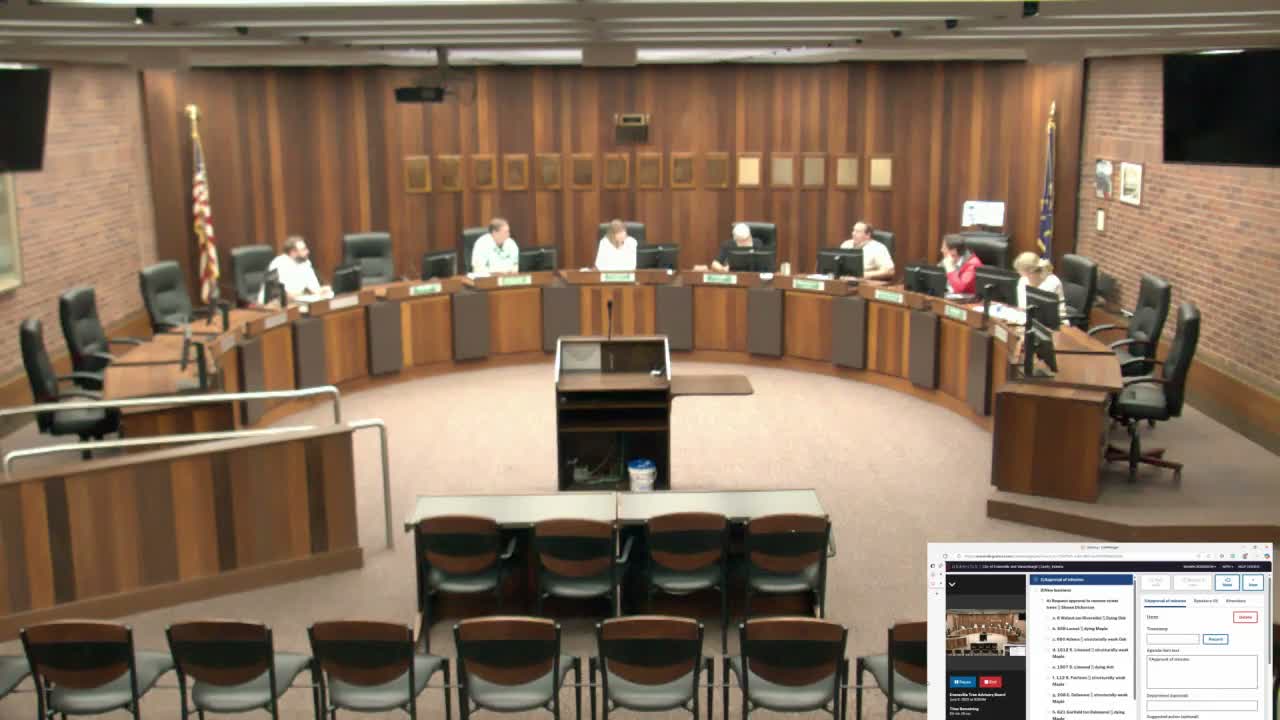
Board staff and members spent much of the June 5 meeting reviewing fall planting plans tied to an existing grant, debating planting methods and long-term survivability, and noting coordination needs with Indiana Department of Transportation (INDOT) mowing schedules and ongoing trail projects.
Sean, the board’s staff member, said the grant-funded plantings must be completed before the grant period ends next spring and that fall plantings are being planned with Parks and Westman Woods. He added that any trees not planted this fall would be completed the following spring.
Members debated tree stock and survival. Sean and others said many balled‑and‑burlap (b&b) trees and container trees planted in prior rounds have struggled or died after the warranty period, while smaller “tube” trees have shown better early survivability but are more vulnerable to mower damage, vandalism and wind. Sean said contractors’ warranties typically last two years and that staff will inventory specimens before contacting contractors about replacements. He described experimenting with protective measures: a staking and caging system to shield tube trees until they are large enough to remove the protections.
The board also discussed recent plantings at Claymore Park (on an old landfill), Deaconess Sports Park and along the Walnut Street/Next Level Trail corridor. Paul Bausman said new trail plantings connect Walnut Street south to Lincoln and then through the park and across the pedestrian overpass, and that the trail work will link to downtown. Board members noted differing species and survival rates across sites.
Separately, members raised concerns about INDOT mowing cycles along urban corridors (including Lloyd), saying reduced mowing frequency can leave tall growth that is difficult to cut back later and can create rodent habitat; they also noted that reduced mowing can benefit young street trees by keeping mowers farther from trunks. The board said it will continue coordination with INDOT and the parks/trails teams as projects proceed.
No formal votes specific to the grant or planting protections were recorded at the meeting; the discussion produced follow‑up tasks to inventory trees under warranty and to plan fall plantings.