Get Full Government Meeting Transcripts, Videos, & Alerts Forever!
Get email alerts on the Short Term Rentals topic
No spam. Unsubscribe anytime.
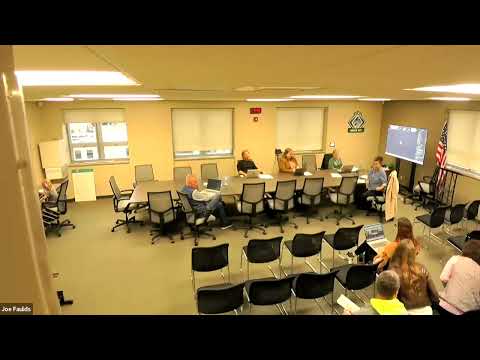
Green Bay commission forwards short-term rental recommendations after hours of public comment
Summary
The Green Bay Equal Rights Commission voted to refer recommendations — including a proposed seven-day minimum stay and a 180-day annual cap for short-term rentals — to city council after more than a dozen public speakers described economic and housing impacts.
The Green Bay Equal Rights Commission voted Oct. 27 to forward a set of recommendations on short-term rental rules, including a proposed seven-day minimum stay and a 180-day annual cap, to city council for further consideration.
The commission’s action follows nearly two hours of public comment from short-term rental owners, managers and long-term landlords, who described competing concerns about local economic activity and housing availability. The commission’s referral will send the recommendations — and an accompanying draft ordinance referenced as 44-15880J — to the planning commission and then to city council for final action.
The recommendation packet, prepared by Aldo Presley and other commissioners, outlines measures intended to curb conversion of housing into year-round short-term rental inventory. Chair (name not specified in the transcript) described the effort as an attempt to “find a balance where our community members here can have a basic right, which is having a roof over their head,” while acknowledging the economic contributions short-term rental operators described.
Short-term rental owners and operators told the commission the rules proposed would sharply reduce their businesses. Melissa Peterson, who identified herself as a short-term rental owner at 1844 South Oneida Street, said, “for 8 years, I’ve never had anybody stay longer than 4 nights. So, essentially, it would just put people right out of the rental business.”
Brook Tassell, a local real-estate investor who said she manages three listings, provided estimated local economic impacts: she said her three listings generated roughly $65,000 in vendor and guest spending last year and that “89% of my bookings over the last 4 years have been under 7 days.” Property manager Mark Danan and other hosts described cleaning, maintenance and local-contractor work that they said depends on short-term rentals.
Several speakers emphasized that many short-term listings are not low-end vacation homes but higher-value properties. Tyler Leroy, who said he owns a high-end Green Bay property managed by Wisconsin Getaways, told the commission his listing grossed roughly $440,000 last year and said a seven-day rule would make such properties unprofitable.
Speakers advocating for restrictions pointed to housing availability and affordability. Commissioners cited city data and past commission work showing a shortfall of low-cost rental housing, and one commissioner referenced the city’s estimate that up to 7,500 new rental units will be needed by 2040. Commissioner Krishna Minton, who represents many renters, said the rules are one of several steps aimed at improving housing access for lower-income residents.
A point of factual detail raised during the hearing: a staff member said the number of permitted short-term rentals had climbed from roughly 120 in 2022 to slightly over 500 by 2025. The transcript also records a commission comment that state law allows municipalities to adopt a seven-day minimum and an annual-day cap (180 days) as part of short-term rental regulation, and that any local ordinance changes would likely take effect with the next permitting cycle (the commission was told July 1 of the following fiscal year is the expected effective date if council adopts changes).
After deliberation, the commission voted to refer the recommendations to city council. The motion passed with recorded aye votes by a majority of commissioners, one recorded nay and one recorded abstention (Commissioner Marcus Greeno). The motion’s mover and seconder were not identified by full name in the transcript. The commission and staff noted additional public hearings and Planning Commission review are scheduled before council action; the planning commission will consider related zoning proposals Nov. 3 and council will consider zoning and ordinances Nov. 11, according to commissioners.
The commission encouraged residents and property owners to testify again before the planning commission and city council. Commissioners also noted the recommended changes are part of a broader set of housing initiatives — including zoning reform and a community land trust — that the city is pursuing to expand affordable housing supply.
Votes at a glance: the Equal Rights Commission voted to forward recommendations on short-term rental regulation, including a seven-day minimum stay and a 180-day annual cap, to the planning commission and city council (motion carried; 1 recorded abstention, 1 recorded nay). The draft ordinance referenced during the meeting is 44-15880J and will be considered by the planning commission and council on the dates above.
Commissioners and staff asked the public to monitor the planning commission and city council agendas and to provide written or oral testimony at upcoming hearings.