
Sandoval County consultants release draft timeline for updated wildfire protection plan; public meetings planned
Get AI-powered insights, summaries, and transcripts
Sign Up Free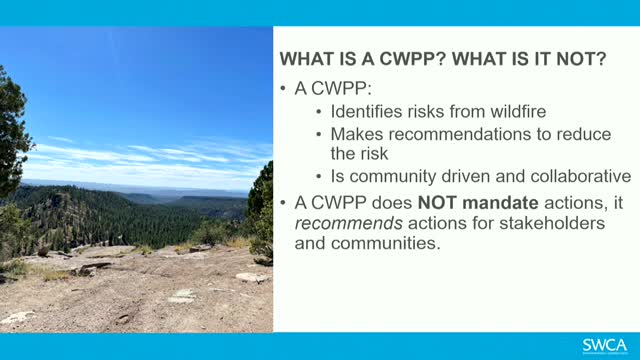
Summary
Consultants described the third iteration of the county’s Community Wildfire Protection Plan, explained that the plan offers non‑mandatory, community‑driven recommendations and announced upcoming public meetings and field assessments in Corrales and Placitas.
A consultant leading Sandoval County’s Community Wildfire Protection Plan (CWPP) update told commissioners on Jan. 20 that the county is nearing completion of the third iteration of the plan and will release a draft for core‑team review in March, followed by a public comment period in April.
Cody Stropke, a watershed scientist and fire ecologist with SWCA Environmental Consultants, summarized the CWPP’s purpose and schedule. Stropke said the plan identifies wildfire risks in communities across the county, prioritizes projects to reduce those risks and recommends actions to improve first responder safety and structural survivability. He emphasized that the CWPP’s recommendations are voluntary: the plan “is a community‑driven plan,” he said, and the county only acts as a fiscal agent if it chooses.
Stropke said the project team will hold public outreach meetings, including a meeting in Corrales and a separate meeting targeting Placitas; field assessments will follow, with evaluators rating community and structural risk as low, moderate or high under state forestry guidelines. The draft CWPP will be available for core team review in March, and a public draft will be released for comment in April.
Commissioners and staff discussed the plan’s implementation schedule and funding. Stropke said the CWPP is state‑funded through the New Mexico State Forestry program for this update. He told the commission the group will seek federal and state funding for implementation where available and will begin outreach and field assessments immediately.
Commissioner Jones asked how the county will avoid missing the periodic update timetable; Stropke and emergency manager Dan Hirdy said the county uses a five‑year planning cycle and aims to start work roughly two years before a plan’s expiration so communities do not lapse in eligibility for grants that require a current CWPP.
Ending note: Stropke encouraged commissioners and community members to use the project’s web hub and online survey to submit feedback and project ideas during the public comment window.