Get Full Government Meeting Transcripts, Videos, & Alerts Forever!
Get email alerts on the Public Safety Dispatch Broadband topic
No spam. Unsubscribe anytime.
Sandoval County outlines PSAP transition, mapping overhaul and broadband push ahead of July go‑live
Summary
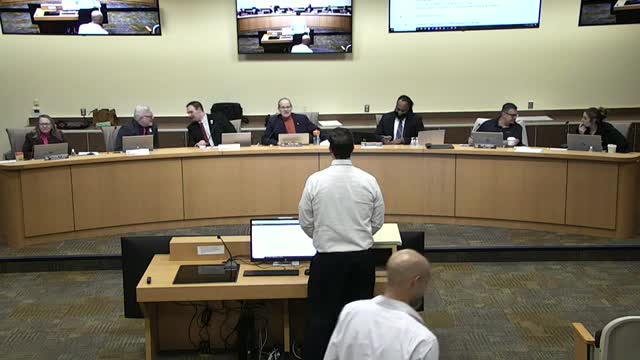
Sandoval County officials and outside consultants told the Board of County Commissioners on Jan. 20 that the county’s new public safety answering point (PSAP) and associated dispatch systems are on a path to become operational in July 2025, while staff continue parallel work on computer-aided dispatch, GIS mapping and a broadband plan.
Sandoval County officials and outside consultants told the Board of County Commissioners on Jan. 20 that the county’s new public safety answering point (PSAP) and associated dispatch systems are on a path to become operational in July 2025, while staff continue parallel work on computer-aided dispatch (CAD), record management, GIS mapping and a broadband plan to serve unserved areas.
The update came from Chief Masterson, Michael McGrady of MCM Consulting Group and Larry McDonald with Hewlett Zollars during a presentation to the commission. McGrady said county contractors expect a clean room in the PSAP facility by February, allowing installation of 911 equipment and furniture, and a phased schedule leading to a July go‑live date.
Why it matters: a locally operated PSAP will centralize 911 call handling, preserve historical call data and let the county control CAD and record management systems for police, fire and EMS. The presenters said the transition is intended to minimize disruption on cutover day through extensive testing and training ahead of the switch.
McGrady described the schedule and technology elements. The county will host its own server for CAD and RMS while converting historical data from the existing system so caller alerts and medical history carry forward. The radio consoles, logging recorder and dispatch furniture are in procurement or production, and a post-sales transition team and a project manager have been assigned. McGrady said a kickoff with radio console staff is planned for Feb. 10.
On staffing and training, Masterson said the county has filled an assistant director and operations manager position; job postings for 911 supervisors and telecommunicators close Feb. 5, 2025. McGrady and Masterson described a multistage training program: classroom instruction and certifications (including emergency medical dispatch), ride‑alongs with police, fire and EMS, on‑the‑job training, stress management and quality assurance. Amber (operations manager) was named as a staff member who will be “instrumental” in cultural and geographic aspects of training, the presenters said.
The presenters also described a comprehensive GIS and addressing effort to make every livable structure routable for emergency response. McGrady said consultants have been meeting with pueblos, towns and villages and that the first six months of work will focus on immediate, high‑impact corrections — mismatched address parity, non‑routable addresses and alias road names — while continuing longer‑term cleanup. He said the county will upload corrected data to the state’s addressing system and that the data will also support planning, utilities and economic development.
Broadband planning was discussed alongside PSAP work because the county is preparing a broadband equity, access and deployment (BEAD) grant design. McGrady and Larry McDonald said the county has identified 1,306 unserved areas and is developing an iterative design that balances fiber and wireless approaches. The consultants described opportunities to co‑locate broadband infrastructure on towers that could also support public safety radio coverage and noted that grant rules often require shared access to fiber strands. They set a delivery target for a draft design early in the week following the presentation so the county can price options ahead of a March grant deadline.
Commissioners asked about schedule, budget and NextGen 911 features such as real‑time video. Commissioner Jones asked whether FaceTime/video calling capabilities will be implemented; McGrady said multimedia call handling (a NextGen capability) is still developing at the state and federal level and county implementation decisions have not been finalized.
Chief Masterson and McGrady said the transition plan calls for system installation and testing in May, a month of burn‑in and training before going live in July. "How long does it take to cut over a 911 center? I always say 20 minutes because we've worked for two years to get to that 20‑minute time," McGrady said, adding that extensive prior testing and training aim to limit issues on cutover day.
Commissioner Brook and others pressed for assurances on GIS accuracy and cultural/geographic training for dispatchers; presenters said they will perform field assessments, edge mapping to eliminate duplicate ranges, ride‑alongs across jurisdictions and Pueblo consultations. Presenters also identified coordination with state GIS staff and local governments as part of the validation and alias/address work.
The county’s consultants and Chief Masterson emphasized that the project is being coordinated with partner agencies and that policies and procedures for call taking and dispatch will be created with input from police, fire, EMS and emergency management.
Ending note: consultants asked the public and the commission to expect continued outreach and data collection over the next several months; the commission and staff will return with procurement and training milestones as the project proceeds.