Get Full Government Meeting Transcripts, Videos, & Alerts Forever!
Get email alerts on the Early Childhood Preschool topic
No spam. Unsubscribe anytime.
Denver Preschool Program reports stable reach, outlines 0–3 pilot and continued provider support
Summary
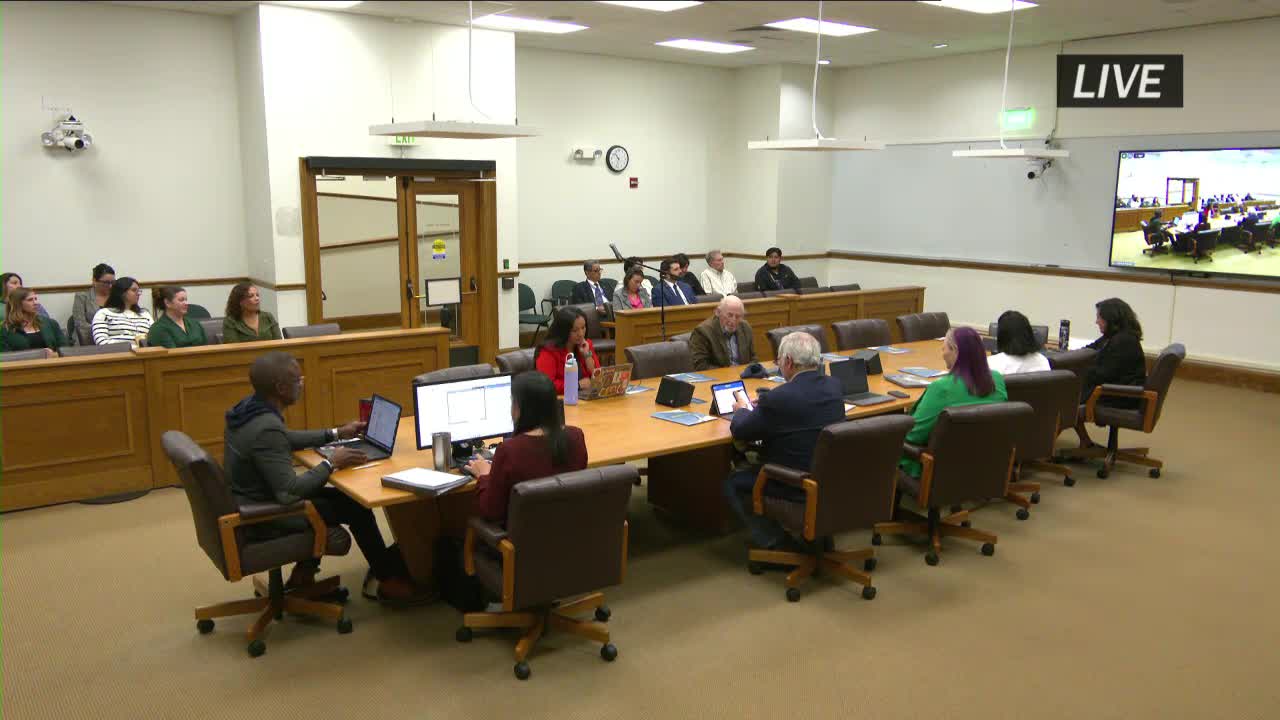
At an Oct. 8 Health and Safety Committee briefing, Denver Preschool Program leaders reported long‑term enrollment and funding figures, described a pilot to expand services to ages 0–3 and requested continued local support for providers amid state and federal funding shifts.
The Denver Preschool Program (DPP) told the City Council Health and Safety Committee on Oct. 8 that it continues to fund preschool access and quality improvements across the city and is launching a pilot to study services for children aged 0–3.
DPP Chief Executive Elsa Holquin Ogin presented the program’s annual report and said, “This is our annual report to city council. And, yes, as a reminder, the Denver Preschool Program is the funder for universal preschool for the city of Denver.”
The presentation said DPP has provided about $184 million in tuition credits since inception and has served roughly 78,000 students. The program reported it has invested about $29.6 million in quality improvement and $6.3 million specifically in its three‑year‑old expansion, which launched three years ago. Ogin said DPP now supports about 264 high‑quality providers citywide and that “we are serving 60 percent of all the 4 year olds in Denver,” roughly 4,500 children.
Nut graf: DPP framed the briefing around two priorities: sustaining provider quality and exploring expansion of early care. Officials said local funding and targeted grants allow DPP to supplement state and federal programs and to provide coaching, training and stipends to centers at a time when many providers are operating under financial strain.
Program details and quality work DPP described a tiered tuition support scale that targets higher subsidies to families with greater economic need; Tier 1 serves families at 135% of the federal poverty level or below and Tier 2 up to 270% of poverty. Ogin said the program supports a range of provider types—Denver Public Schools sites, community nonprofit and for‑profit providers, faith‑based programs and family home providers—and uses incentives, coaching and grants to raise Colorado Shines quality ratings. She said when DPP began it had 42 high‑quality providers; the program now works with about 264 providers and aims to move and maintain centers at higher Colorado Shines levels.
DPP reported last year’s quality investments totaled about $3.6 million, supporting 264 providers including 86 Denver Public Schools sites, six family childcare homes and 172 childcare centers. The presentation said 87% of participating providers are rated at Colorado Shines level 3 or higher.
Expansion, pilot and strategic planning Ogin told council members the DPP board has authorized a pilot to assess services for children from birth through age 3. The pilot partners named in the presentation include Lifespan (a community organization) and Blossom House, a Southwest Denver child‑care site that will be run by Mile High Early Learning during the pilot. Ogin said the organization is doing multi‑year strategic planning to guide potential growth over the next five to ten years.
Funding interplay with state and federal programs Committee members pressed DPP about how it will coordinate with state universal preschool (UPK), county CCAP child‑care subsidy changes, and how the programs reduce family costs. Ogin noted averages presented in the briefing: DPP’s highest monthly tuition support for the lowest‑income families can be as much as $1,300, and she described a rough example where a typical cost of care averages $1,500 per month with DPP and UPK contributions reducing the family’s unmet need. She said DPP recently signed data‑sharing agreements and is coordinating with Denver Department of Human Services to identify families on CCAP wait lists the program can help reach.
Outreach, evaluation and data Ogin emphasized a long‑running emphasis on evaluation: DPP has longitudinal data tracking cohorts of participants and said its database is one of the largest in the country outside Head Start. The program described outreach that includes community workers, partnerships with council members and nonprofits, presence at roughly 95 community events, enrollment tools on its website and translation services. DPP said it provides family‑facing calculators and an improved online application to help families find providers and estimate support amounts.
Council discussion and next steps Council members thanked DPP for the briefing and asked follow‑up questions about the pilot, outreach, quality metrics and partnerships with the Office of Children’s Affairs (OCA). Ogin described OCA as the city’s contract administrator for DPP and said the office receives audits and financial reporting.
Ending: Ogin and DPP asked to return for a fuller discussion as the pilot and strategic plan progress; no formal council action or vote was taken during the committee briefing.