Get AI Briefings, Transcripts & Alerts on Local & National Government Meetings — Forever.
Riley County approves KDOT roadside weed-treatment contract; officials urge caution on proposed Amur honeysuckle listing
Loading...
Summary
The county approved the 2025 contract with the Kansas Department of Transportation to treat roadside noxious weeds, and the county’s noxious-weed director warned that adding Amur honeysuckle to the state noxious list could impose major treatment burdens on local government and urban parks.
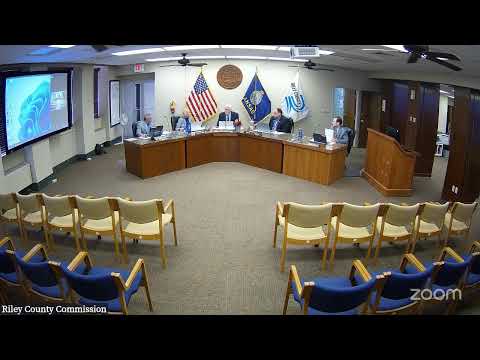
Riley County commissioners voted to approve the county’s 2025 contract with the Kansas Department of Transportation for roadside noxious-weed treatment, continuing an annual agreement under which the county charges labor and overhead to treat state rights-of-way.
Michael Boehler, director of noxious weeds and household hazardous waste (HHW), briefed the board on several weed-control items and hazardous-waste programs. Boehler said the KDOT contract contains the county’s labor and overhead recovery rate (about $4,896 this year, a modest decrease tied to staffing changes) and that the arrangement neither generates profit nor a loss for the county but ensures county crews treat roadside infestations.
Boehler flagged a pending proposal at the Kansas Department of Agriculture to add Amur honeysuckle (an ornamental, invasive shrub/tree) to Kansas’s noxious-weed list. He said Amur honeysuckle typically grows 15–20 feet tall in woodlands and park edges and that broadcast glyphosate treatment—commonly used on low plants—would be impractical for tall shrubs and trees; treating trunks after cutting is labor-intensive. He said much of the local infestation is within Manhattan city limits and warned that requiring counties to treat large woody shrubs could saddle county budgets with substantial new costs. Boehler said the city of Manhattan was aware and that Riley County would continue to follow the state process.
Boehler also updated the board on household hazardous waste operations: the Big Lakes Regional HHW program’s 2025 budget was set at $115,000; the Riley County HHW facility held a collection in December with six participants and will host another on Jan. 11, 2025; and the facility is giving away recycled latex paint accumulated during seasonal clean-outs. He added that Riley County joined K-State graduate researchers on a federal grant application to study safer storage and processing of lithium-ion batteries.
After discussion, the board voted to approve the KDOT contract for 2025 roadside noxious-weed treatment. Boehler said he would keep commissioners informed on the Amur honeysuckle rulemaking and recommended the board monitor likely resource implications if the plant is listed.