Get Full Government Meeting Transcripts, Videos, & Alerts Forever!
Get email alerts on the Licensing Discipline topic
No spam. Unsubscribe anytime.
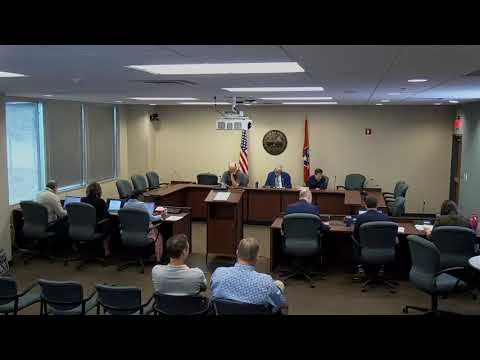
Tennessee Board of Land Surveyors issues warnings, dismisses multiple complaints and defers drone-survey probe
Summary
At its Aug. 28 meeting the Tennessee Board of Land Surveyors reviewed 10 complaint files. The board issued letters of warning or instruction in some cases, dismissed several complaints after expert review, and voted to defer a high-profile inquiry about drone/LiDAR services for further consideration at the next meeting.
The Tennessee Board of Land Surveyors reviewed ten complaints at its Aug. 28 meeting and took a mix of disciplinary and administrative steps, including letters of warning, letters of instruction, several dismissals and a postponement for further review of a complaint alleging unlicensed drone-based surveying.
The board’s legal presenter summarized each file and the expert reviews the staff obtained. For complaint 2025011191 (an energy-company survey related to easement acquisition), the board voted to issue a letter of warning after the expert found technical deficiencies and an incorrect accuracy statement for GPS/remote‑sensing items. For complaint 2025020721 (a missing north-arrow source on a preliminary plat) the board approved a letter of instruction requiring that the missing note be added before plat approval. Several file reviews found no evidence of violations and were dismissed, including complaint 2025024061 (parcel subdivision vs. zoning disagreement), 2025021781 (alleged surveying tied to a fence dispute), and 2025035431 (billing/family dispute over survey scope and payment).
A different case, 2025026821, was opened after the respondent self-reported discipline in Nevada involving a failure to record a survey within the state-required 90 days; the board voted to issue a letter of warning noting the out‑of‑state discipline and the respondent’s self‑reporting and sanctions in Nevada. Related files tied to an earlier May matter about responsible‑charge questions (complaints 2025029721 and 2025029741) were handled together: the board issued a letter of warning for the licensee who signed multiple plats in a narrow transition/merger context and dismissed a related complaint where the facts showed no responsible‑charge violation.
A complaint about alleged on‑site alcohol use while surveying (2025033801) prompted board members to discuss professional appearance and public confidence; the board approved a letter of instruction asking the licensee to maintain professional conduct. The board also considered a high‑profile complaint (2025034961) alleging that a private company’s drone/LiDAR/topographic products and website marketing constituted unlicensed land surveying. Legal staff read Tennessee’s statutory definition of land surveying to the board and summarized two federal district court rulings from other states that found similar commercial drone mapping to be the practice of surveying. Board members agreed the matter raised significant legal and policy issues and voted to defer formal action until the full board (including an absent member) could consider the record and, if needed, an expert review.
Board votes were taken on each recommendation; motions to dismiss, to send letters of instruction, and to send letters of warning all carried by voice vote. The board also asked that the verbatim legal report and the corrected Tennessee code citation be presented again at the next meeting for public record.
The board’s legal presenter told members they could request additional expert review before the next meeting if the board desired more technical analysis of drone workflow or deliverables. Several members said they were concerned that marketing language and post‑production claims that non‑licensed firms can provide “topographic maps” or “certified elevation data” risked undercutting public protection if not paired with licensed surveyor control or certification.
Ending
The board closed the legal agenda after taking individual votes on each file and scheduling the drone/LiDAR marketing complaint for further review at the board’s next meeting.