Get Full Government Meeting Transcripts, Videos, & Alerts Forever!
Get email alerts on the Drainage Legacy topic
No spam. Unsubscribe anytime.
Livingston Parish planning panel backs adding legacy drainage policy to master plan
Summary
The Planning Commission voted to send a resolution asking the master plan update team to include a new section on legacy drainage problems — notably detention/retention ponds and who is responsible for their upkeep — after hearing from the Master Plan Review Committee.
The Livingston Parish Planning Commission voted July 8 to send a resolution asking that the parish’s upcoming master plan update include language directing review of legacy drainage issues such as aging detention and retention ponds and the question of ownership and maintenance.
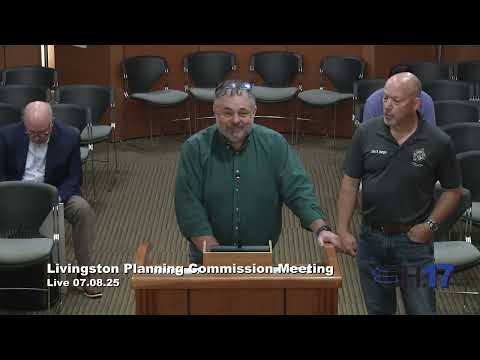
The proposal came from Ralph Burgess, chairman of the master planning committee, who told commissioners the committee wants the new master plan to set out a path for addressing drainage problems in existing subdivisions. “Tonight, we have a recommendation to bring to you guys regarding legacy issues, regarding drainage… detention ponds,” Burgess said during the meeting.
The recommendation asks the master plan update team to add a section that would identify who owns and is responsible for maintenance — homeowner associations, individual property owners or the parish — and to create assessment criteria including pond type (wet or dry), whether civil engineering review is required, how long the problem has persisted, how many homes are affected and estimated remedy costs.
Commissioner Gerald Clemons, the motion’s author on the review committee, said the goal is to give future councils “a set series of rules” to defend decisions about which legacy problems to fix when resources do not allow fixing all of them. “We have to have a good reason why we fix this one and not that one,” Clemons said.
Residents and committee members urged the commission to treat the resolution as an introduction that would go to the master plan consultant, WSP, for inclusion in the comprehensive update. John Mangus, a resident who said he formerly served as an HOA president, stressed that some ponds perform pass-through drainage for other neighborhoods and that public health and safety reasons can justify parish intervention when HOAs lack funds.
Legal counsel Mike Irving explained the process: submissions to the master plan team will be incorporated into the draft; the draft will return to the planning commission as an advertised public hearing where commissioners could request changes. That process, he said, offers additional opportunities for public input and formal review.
After discussion about timing — the parish is already close to delivering a new master plan update — commissioners agreed the committee should transmit the material to the WSP consultant and the administration. The commission approved the resolution to send the recommendation to parish staff for submission to WSP. The roll call vote in favor included Burns, Engler, Clemons, Guidry, Wack, Dana and Farris.
The action establishes only a recommendation to the master plan update process; it does not itself change policy or create an enforceable regulation. The committee and staff said any specific requirements (for example, civil-engineering studies, funding sources or who can perform repairs) would be developed later and would follow required public‑hearing procedures.