
Warren County sheriff seeks agreement to embed deputies with ICE; commissioners approve
Get AI-powered insights, summaries, and transcripts
Subscribe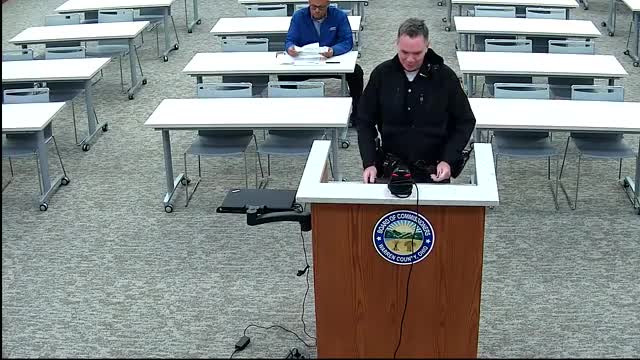
Summary
Sheriff Barry Riley asked commissioners to approve a memorandum of agreement with U.S. Immigration and Customs Enforcement (ICE) to participate in a 287(g)-style task force model. Commissioners discussed civil‑liberties and jurisdictional concerns before approving the measure by roll call.
Sheriff Barry Riley asked the Warren County Board of Commissioners to approve a memorandum of agreement with U.S. Immigration and Customs Enforcement that would allow county deputies to be embedded with ICE and participate in a 287(g)-style task force.
Riley told commissioners the agreement would permit sheriff’s deputies to receive training, be informed when ICE operates in the county and ensure people in custody are “treated humanely, processed according to the law.” He said he had ordered county jails not to honor ICE detainers until local criminal charges are resolved and that nine people in the county jail currently have ICE detainers.
Commissioners raised concerns about the county taking on federal responsibilities, citing a recent case in Butler County in which a chaplain at Cincinnati Children’s Hospital was detained for 72 days before his immigration status changed. Commissioners said they wanted assurances that county involvement would not lead to prolonged detentions or improper procedures. Riley said the agreement contains an out clause and that he would report back to commissioners if the arrangement did not meet expectations.
After discussion, the board considered a resolution authorizing the county to enter the memorandum of agreement with ICE on behalf of the Warren County Sheriff’s Office. A motion was made and seconded; a roll-call vote recorded “Yes” from Commissioners Jones and Young and the resolution passed.
The commissioners and the sheriff described the agreement as intended to improve local knowledge of federal operations, deconflict responses and ensure humane treatment of individuals encountered by ICE. Riley emphasized that people in the county jail with pending local criminal charges would remain in county custody until those charges were resolved.
The board did not specify implementation dates or the full terms of the agreement during the public discussion; Riley said he had been working with ICE for months and had delayed pursuing a formal agreement until staffing in his office had increased.
The county also moved to an executive session later in the meeting under Ohio law to discuss pending or imminent litigation and matters required to be kept confidential by statute.